



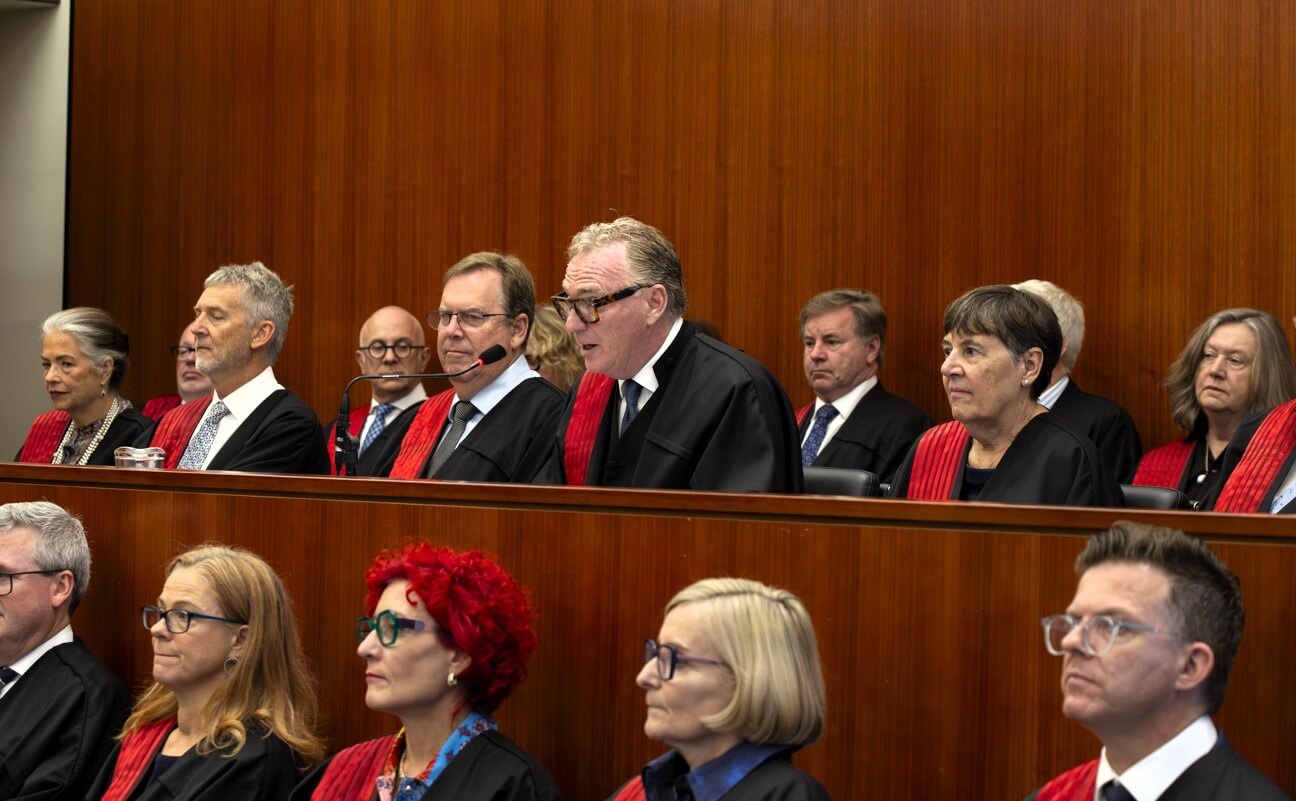
Queues formed around Australia 50 years ago this month as lawyers lined up to help their clients secure no-fault divorces in the new Family Court.
That was one of the reflections made at Friday’s ceremonial sitting of the Federal Circuit and Family Court of Australia (Division 1) by the Honourable Chief Justice Will Alstergren AO who addressed the Melbourne courtroom.
The Family Court started operations on 5 January 1976, following the introduction of the transformative Family Law Act 1975 by the Whitlam Government. It was Australia’s first federal court dedicated to helping families resolve their disputes. The Act also introduced other significant reforms, such as recognising the best interests of the child as the paramount consideration in parenting matters.
“On this first day of the Court’s operations, queues literally formed around the country, with practitioners and parties waiting to lodge divorce applications under the new system indeed with no fault,” His Honour said.
“And parties wanting to lodge divorce applications in that time were vast.
“Indeed, they also required more privacy.

“By its 10th anniversary, the Court had processed almost half a million divorces.”
The Honourable Elizabeth Evatt AC, who was Chief Judge from 1976 to 1988, said: “The Family Court opened in January 1976 and hundreds of people, if not thousands of people, came to the Court because they had been waiting patiently for the Act to come in so they could get their divorce without fault, so we were swamped with work.
“Despite the challenges, there was very good morale. Everyone that worked in the Family Court, all of the judges appointed to the Court, they were all highly committed to the principles of the Family Law Act, and the services to help people resolve their disputes.
“We all loved that and we all wanted it to work.”
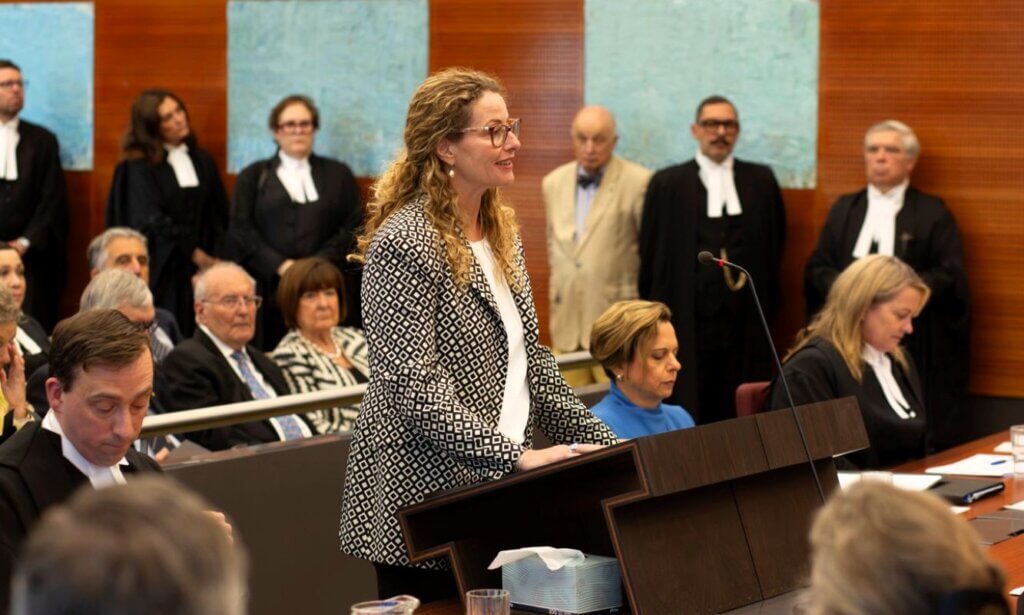
Law Council of Australia President Tania Wolff said it was a privilege to appear on behalf of the LCA and the legal profession on this significant milestone and to congratulate the court on 50 years of service to the community.
“Today, we mark more than the anniversary of an institution,” she said.
“We recognise 50 years of a national commitment.
“But when families fracture, when children’s lives are disrupted and upended, when questions of safety and care must be resolved, Australia will respond through a court system that strives to be both authoritative and humane.
“The Federal Circuit and Family Court of Australia Division One, formerly the Family Court of Australia, is a specialist court established at a time of profound social change.
“Today it is entrusted with the most complex family law trials and an appellate system, a system of work that gives coherence and guidance to the entire system.”
Ms Wolff said its appellate role was not abstract.
“It’s how consistency is built across a continent and how fairness becomes more predictable for the families who rely upon it,” she said.
“Fifty years on, it’s easy to forget how visionary this court’s establishment was.
“It reflected a recognition that family law required not only legal authority, but a system capable of responding to human complexity with compassion and with dignity.
“From its earliest conception as a helping court, that ambition was clear, that law could be delivered with humanity and without sacrificing rigor or independence.
“What has sustained that ambition over five decades is the Court’s willingness to evolve.”
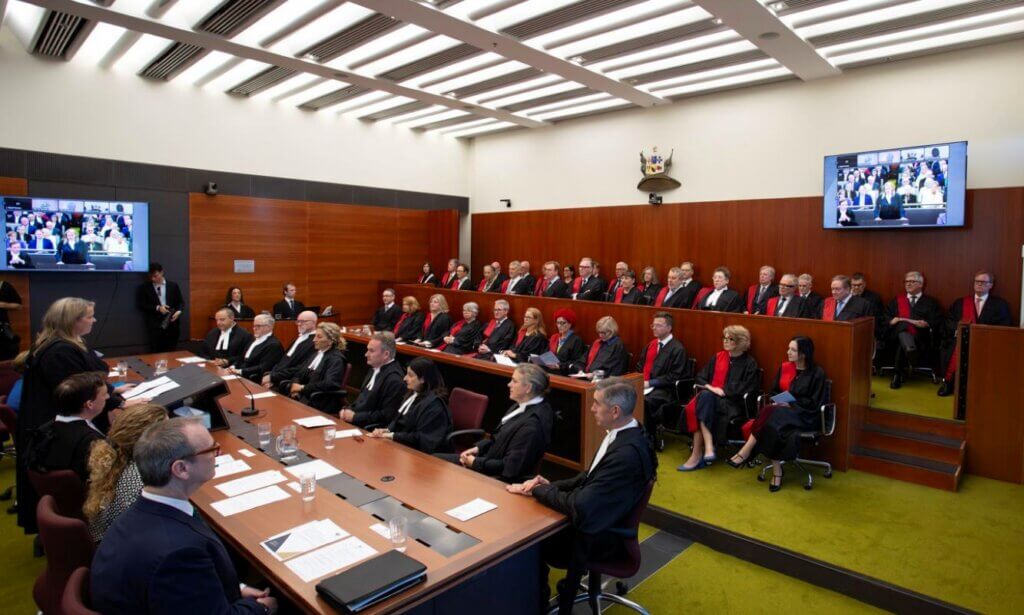
The Chief Justice harked back in time, saying: “On the 25th anniversary of this Court, Justice Nicholson, or Chief Justice Nicholson as it was, reflected on what he saw as the future of this Court in the coming years.
“I believe that we will continue to be at the forefront of innovation in the area of family law and in the wider areas of courts generally with respect to case management, court governance and information technology because we build and learn from the past and from the court and this court is well placed to meet the challenges that lie ahead.
“I’m happy to say that I think that Chief Justice Nicholson’s words ring true.
“Just as families have changed over some time, so has this court.
“The mirror that we hold up to the Australian community means we must be quicker to adapt and change.
“It is my hope that in another 50 years the court will continue to be at the forefront of innovation and continue to play an important role in the social fabric of this nation.
“We have achieved so much in the last 50 years but I have no doubt the next 50 will be even more challenging and require more achievements and more energy.”
His Honour said the Court had supported more five million Australian families in their most challenging times.
“Over 180 Judges (past and present), together with CEOs, Registrars, Court Child Experts, and all other staff, should be incredibly proud of their contribution in helping families resolve their family law disputes, when they were unable to do so themselves,” he said.
“I think the ideals that Prime Minister Whitlam had when he originated this Court, has pretty much been borne out with the Court model we have now. I believe the originators of this Court would be very proud of the legacy created.
“To see the Court thrive as a superior court of record over 50 years is quite remarkable. Although often shrouded in controversy because of the emotive nature of the work, it has always been a world-leading and innovative Court with Judges who are incredibly committed to dispensing justice in the best interests of the child, with fair and equitable hearings.”
A short film about the Court’s history has been made available online.







Share this article