


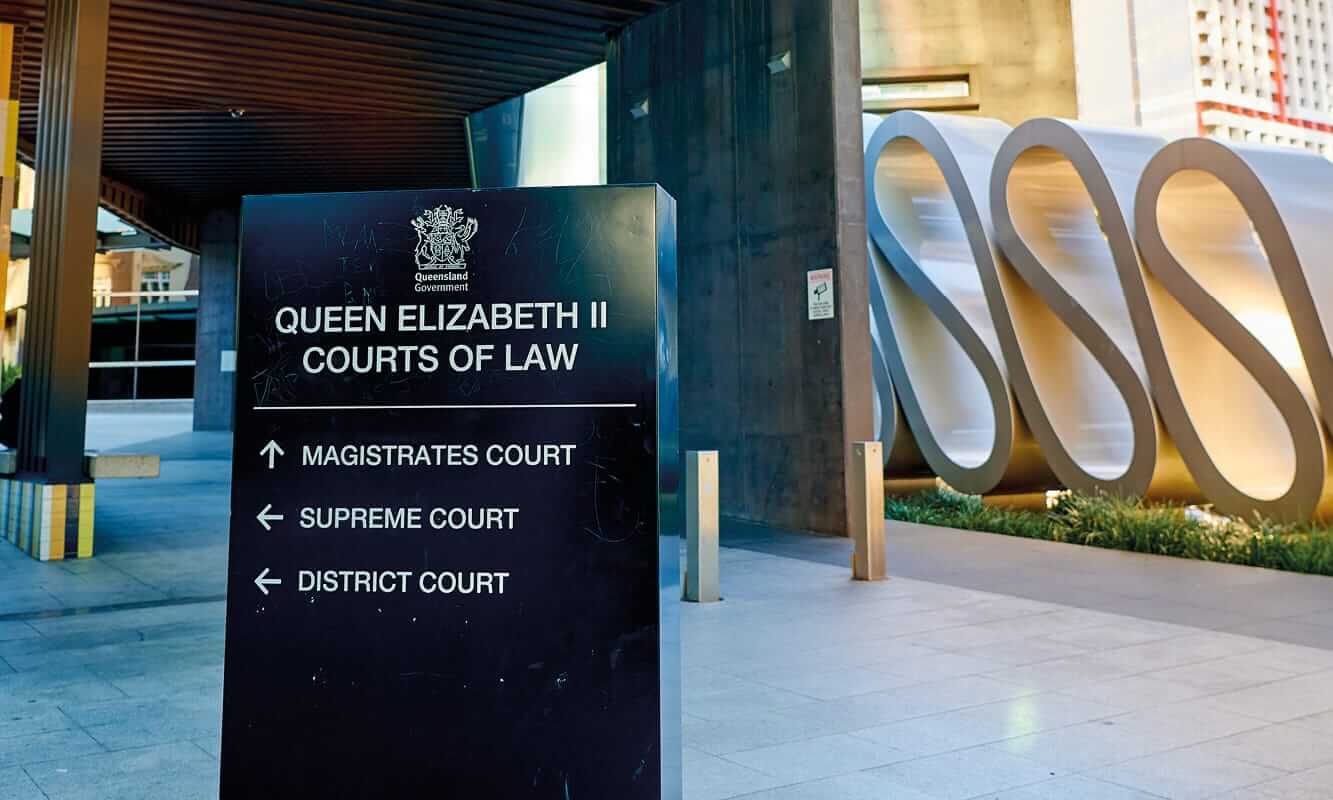
Police discontinuing a charge after case conferencing, then recharging the person with the same offence two weeks later, is not an abuse of the court’s processes, the Magistrates Court has ruled.
In his decision delivered on 1 July, Brisbane Magistrate Aaron Simpson refused an application for a stay of proceedings from the recharged defendant, concluding there had been no unfairness which required intervention.
The defendant was initially charged on 24 June 2024 under Section 205A of the Criminal Code Act 1899 (Qld), after he allegedly failed to comply with a court order that he provide police with the PINs to his seized mobile phone.
The matter was listed for hearing in Brisbane Magistrates Court on 8 September 2025.
At case conferencing in late August, the defendant’s solicitor pointed out what he said were deficiencies and incurable errors in the prosecution case.
On 3 September, the original charge was discontinued by the prosecution after it offered no evidence to the court.

On 18 September, the defendant was charged with the same offence, arising from the same facts. Nothing about the law or evidence had changed since the previous charge had been discontinued.
Magistrate Simpson said case law showed that defendant’s application for a stay would succeed only in exceptional circumstances after balancing various factors.
In this matter, those factors were: confidence in case conferencing; whether discontinuing a charge was a bar to a recharge; the nature and seriousness of the charge; and whether the recharge created an unfairness where nothing could be done to overcome its consequences.
He said Magistrates Court Practice Direction No. 9 of 2010 encouraged the prosecution and defence to use case conferencing for each case.
“Since the Moynihan Reforms this practice has been extensively used for the proper disposition of charges in a very busy court of summary jurisdiction,” he said.
“It is essential to good case management and in my view must be used in the spirit of justice and fairness.
“It signalled a charge from former times when the parties would often not speak to each other or negotiate.
“Defence counsel and solicitors would often keep their cards close to their chests and hope that the prosecution case fails after a trial.”
He noted, however, that case conferencing was not compulsory and remained a forensic judgment by a defendant’s lawyer.
The defendant’s submission that the prosecution restarting a prosecution would undermine public confidence in the administration of justice was “an argument with some force on its face”, but must be balanced with other factors, he said.
Magistrate Simpson said the discontinuance of a charge without a determination on the merits or the calling of evidence did not bar a subsequent prosecution.
Further, s 205A of the Criminal Code was viewed by the courts as a “very serious breach of a court order” and there was a legitimate public interest in the disposition of such a charge.
In regards to unfairness factor, he questioned whether the prosecution should be held to its decision to discontinue, and whether a deviation from that should be deemed unfair.
“In my view, the restarting of the prosecution when nothing has changed in the evidence seems counter to the theme of negotiation encouraged by case conferencing practice direction,” he said.
“However, the parties are at liberty not to engage in case conferencing if they so choose. It is a forensic choice about what is discussed and what is hoped as a result of those discussions.”
Magistrate Simpson said there was always a risk in the case conferencing of this matter, in that the prosecution might not have accepted its case was fatally flawed, remedied the shortcomings and proceeded to a hearing.
“So whilst (the defendant) is entitled to feel that the recharging of him was not in the spirit of cricket, it does not in my view go so far as to undermine the public’s confidence in the administration of justice,” he said.
“He has not lost any advantage in the law or evidence. The case for the prosecution has not improved. He retains his right to argue the merits of the case before a magistrate. He has not lost any right to apply for costs should that arise.”
Read the case here.






Share this article