



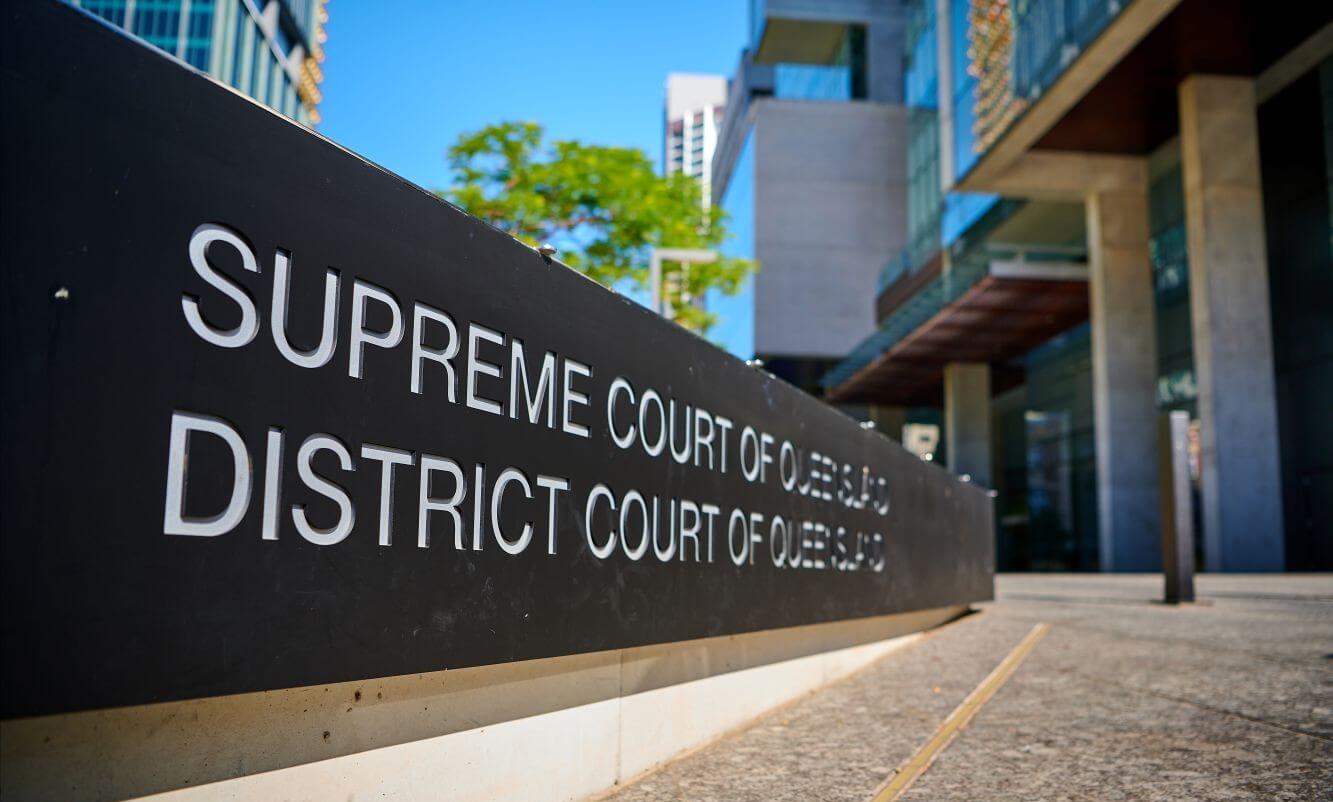
Queensland’s District Court received fewer criminal lodgements in the past financial year but recorded “small but concerning” increases in the proportion of cases older than 12 months and 24 months from the date of indictment presentation.
The figures are detailed in the District Court of Queensland Annual Report 2024–2025, tabled in Parliament last month alongside the annual reports of the Supreme and Magistrates Courts of Queensland.
Lodgements were down across all jurisdictions compared with the previous year.
The report noted:
- New criminal lodgements decreased by 4.3 per cent;
- 3928 civil lodgements were received, a decrease of 4.1 per cent;
- The Planning and Environment Court received 288 lodgements, a decrease of about 12 per cent;
- Childrens Court of Queensland (CCQ) lodgements fell by seven per cent;
- The number of trials commenced dropped from 664 to 630, with an average trial duration of 3.6 days.
Chief Judge Brian Devereaux SC observed in his overview that, despite the reduction in filings, “the District Court of Queensland remains one of the largest and busiest of the higher courts in Australia”.
In the criminal jurisdiction, the Court received 6373 lodgements, compared with 6659 in the 2023–2024 financial year.

At year’s end, 3065 matters remained outstanding, and 6373 matters had been finalised.
Of the active cases, 24.7 per cent were more than 12 months old from date of indictment presentation and 7.7 per cent were more than 24 months old.
“This represented small but concerning increases in the percentage of cases older than 12 months and 24 months,” the report stated.
The report noted the court regularly examines the “backlog” cases.
“Of course, a case might remain active for a long time for several reasons. It might be a retrial after a successful appeal or a hung jury,” the report said.
“There are still some long delays while parties wait for the results of DNA testing of potential exhibits. In some cases, a defendant has been arrested after having absconded.
“Others, because of the complexity of the indictment or because of legislative provisions, require numerous pre-trial hearings. Some matters are suspended pending a determination in the Mental Health Court.
“Also, some cases are delayed while parties await a restorative justice process.”
In the civil jurisdiction, the Court received 3928 lodgements in 2024–2025, down from 4096 in the previous year.
The Court received 3,928 civil lodgements in the financial year and finalised 3947 matters, resulting in a clearance rate of 100.5 per cent. This was an increase in matters finalised from 3838 in 2023–2024.
At the end of the reporting year, 4300 matters remained active. Of these, 25.6 per cent were more than 12 months old and 5.7 per cent were more than 24 months old.
In the appellate jurisdiction, 60 civil appeals were lodged during the year and all finalised, while 286 criminal appeals were lodged, 273 of which were finalised.
For Planning and Environment Court, 288 new matters were lodged compared to 328 in the previous financial year. The Court completed 333 matters.
Of the 210 outstanding matters, 26.2 per cent were more than 12 months old from the date of filing and 6.6 per cent more than 24 months old.
While a separate annual report of the Childrens Court of Queensland (CCQ) is prepared under the Childrens Court Act 1992, this report noted criminal lodgements in the CCQ were seven per cent fewer than the previous year, and 18 per cent per cent fewer than two years ago.
The Court heard 43 Sentence Reviews and 96 bail applications.
Speaking to the departure and arrivals to the judiciary, Chief Judge Brian Devereaux SC noted, “the diverse backgrounds, wide community and social interests outside the law and varied paths by which the judges have come to sit on the District Court is to be celebrated.”
“What the judges have in common is deep learning and intellect, experience in the law and of people and an industrious will to serve the community,” His Honour said.


Share this article