




Small businesses, not-for-profit organisations and farms, particularly in North Queensland, face challenges in accessing affordable and adequate insurance, Queensland Law Society representatives told a public hearing in Brisbane on Monday.
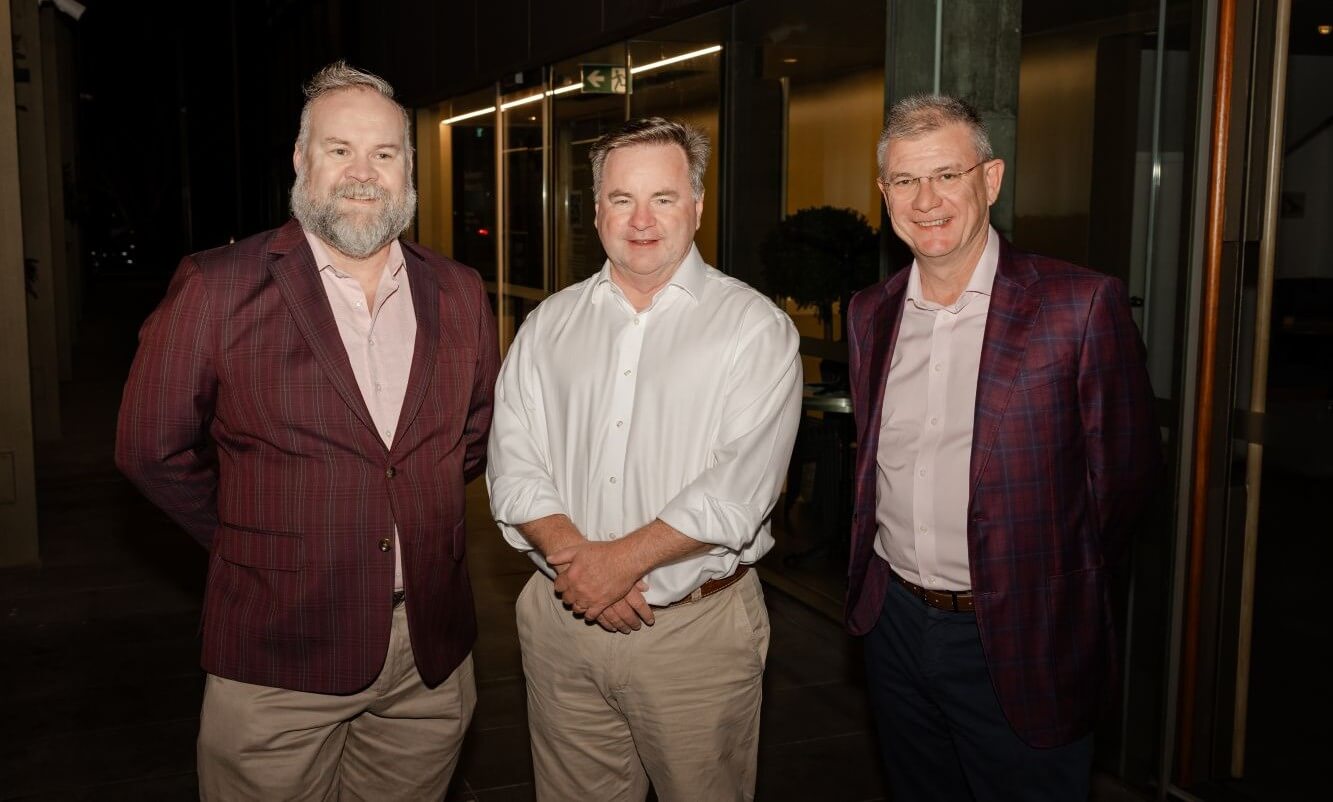
QLS Deputy President Sarah-Jane Macdonald, Deputy Chair of the Accident Compensation and Tort Law Committee Luke Murphy and Competition and Consumer Law Committee member Paul Holmes spoke before the Parliamentary Joint Committee on Corporations and Financial Services’ Inquiry into small business insurance.
“QLS appreciates the importance of this inquiry to small businesses across Australia and in particular across Queensland. Many of our members’ practices are small businesses and many of our members act for small businesses,” Ms Macdonald said.
“Our submission highlights the difficulties faced by small businesses in obtaining and affording adequate insurance, particularly in regions of Queensland that are subject to natural disasters such as flooding.
“We are aware that there are no easy answers to these difficulties; rather there are a range of levers to be pulled in terms of mitigating risk and initiatives such as reinsurance pools.”
In response to a question about risk mitigation, Mr Holmes referred to an ACCC northern insurance inquiry to address the issue.

“A lot of their recommendations, although focused on residential areas, I think have a parallel application to small business,” he said.
“So what you’re looking for are things like many Queensland towns are now starting to have levees built around them.
“The other example I will refer to looks to things like mitigation measures done on individual properties, so individual businesses, because as it stands at the moment, when businesses get insurance renewals, there’s no indication to them of what they could do to that individual property to reduce their insurance costs.
“That’s just not something that they’re told about.
“And so what we would say is that if you gave businesses a clue that, for example, if you put one of your buildings up higher so that any flood would pass underneath it, your insurance premium might go down by 10, 15 (per cent).
“But if you make that sort of information public, businesses will make a business decision and say, ‘yeah, actually it’s worth it because I might have to pay five or 10 grand now to raise it. But over the next three or four years, that will save me 30 or 40 grand in cost’.”
In a follow-up question about whether that sort of information should be individual customer focused or broad guidance, Mr Holmes said a combination of both would be beneficial.
“I think it’s probably a combination of both because I think you can give some broad guidance about the sorts of things that might help or help risk or manage risk,” he said
“But I think to get the full benefit of doing something like that, you need to give that specific information on a business level, because the reality is that properties next door to each other have different topography.
“And what works on one property might not necessarily work to mitigate the risk on the one next to it.”
Mr Holmes said insurers had access to data which would help with risk assessments and give business operators “clues” if shared and possibly influence business risk mitigation actions.
“If a business has been affected by two floods and it’s gone through a property at two metres, one of the obvious things that if I’m an insurer I would hope I’d want to do is say to that business owner, ‘if you manage to get your power points up at three metres, that’s going to reduce your risk of having a major impact when this flood comes through again’ and ‘that’s going to reduce your insurance premium’ by however much that is,” he said.
“There are obviously other government fees involved in an insurance premium which you can’t affect by managing risk, but consumers and businesses should be given that opportunity to at least make a decision to try and reduce those costs.”
Ms Macdonald said in terms of liability insurance, the QLS submission extensively addressed that there was “no need for significant reform of civil liability settings in Queensland”.
“Queensland enjoys a stable environment across the motor accident, workers’ compensation and public liability spheres,” she said.
“QLS submits there are a number of aspects of the Queensland schemes, particularly our pre-litigation procedures, that can be a model to other jurisdictions.”
Mr Murphy said in the context of the Queensland jurisdiction, our WorkCover regime was the “most financially stable WorkCover regime in the country”.
“Our CTP regime is one of the, if not the most financially stable and sustainable CTP regime, in the country,” he added.
“They have had pre-court procedural processes in place since 1994. It started in the motor accident jurisdiction and then in WorkCover in 1996.
“What we believe within the Queensland jurisdiction is that a number of the procedural structures that have been in place for some time have underpinned that stability. I should add (they’ve) also been enhanced by very, very good management of both schemes for a considerable period of time.
“The financial management in contrast to the Victorian and the New South Wales WorkCover regimes, it holds up.
“So coupled with the very competent and economic administration, the fundamental frameworks that have operated within the Queensland jurisdictions across all three main areas of practice have assisted enormously in maintaining a viable and a sustainable system of compensation for claimants.”
In relation to a question about increased litigation in Australia contributing to rising premiums, Mr Murphy said it “would be a potential contributing factor certainly along with many others”.
“To make a suggestion of the nature that I think the expression was Australia is now the most litigious society, I don’t think that there is any hard basis for that, with one exception possible and that is the potential in relation to the class action area,” he said.
“Within the Queensland jurisdiction, less than two per cent of personal injury claims actually go to trial.
“The vast majority are settled, a significant proportion of those without the institution of legal proceedings because of the pre-court processes that have been in place … and it varies from the motor accident to the work cover to the public liability jurisdictions … it’s certainly in the order of 50 per cent that would be resolved without the institution of legal proceedings.
“It could be higher. The idea that Australia is more litigious (than any other country) is not something that we would accept.”
QLS highlighted in its submission and at the hearing that Queensland’s current legislation allows the courts to appropriately consider and limit the extent of liability for matters such as nervous shock.


Share this article