



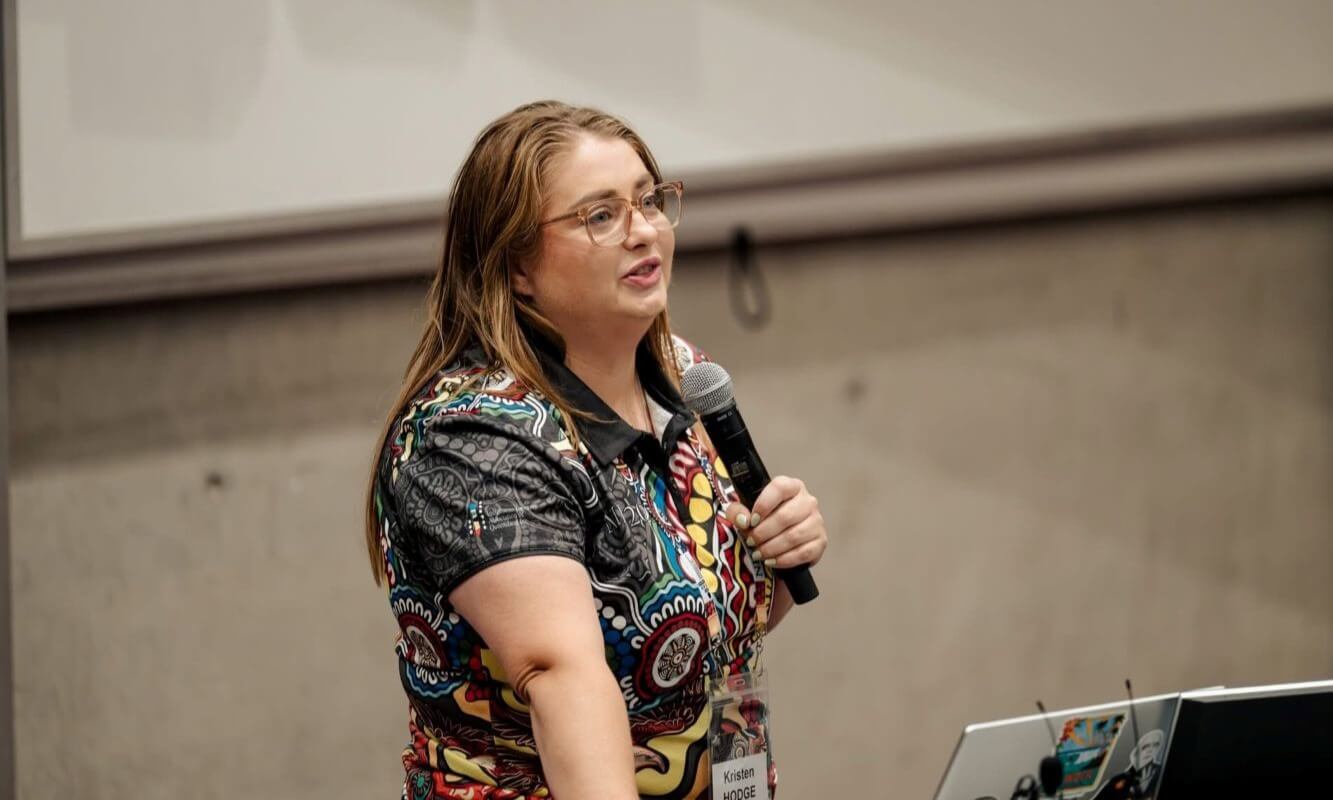
Kristen Hodge likes to joke that she is a Queenslander for 359 days of the year.
“I always tell people I’m a Queenslander for all but six days a year, the days the men’s and women’s State of Origin games are played,” she laughs.
It is a fitting answer from someone who has spent much of her life navigating two worlds. Born and raised near Forbes on the Galare (Lachlan) River in New South Wales, Ms Hodge left home at 18 and drove north to study law at Griffith University, the first person in her family to do so.
More than two decades later, she has lived longer in Queensland than she ever did in her home state. Yet her identity remains deeply anchored in her Wiradjuri heritage and connection to Country.
That connection has shaped a career dedicated to one of Australia’s most complex and consequential legal spaces: native title, cultural heritage and the rights of Aboriginal and Torres Strait Islander peoples.
Today, Ms Hodge is President of the Indigenous Lawyers Association of Queensland and the founder of her own legal practice, White Gum Mediation and Law. But ask her what first drove her to law, and the answer is surprising.

“I wanted to keep my cousins out of jail,” she says matter-of-factly.
Growing up in regional New South Wales, Ms Hodge watched too many members of her extended family become entangled in the criminal justice system. Initially, she imagined law as a way to intervene directly. Yet an early university placement working on native title and cultural heritage matters changed everything.
“I became obsessed with land issues, tenure and land rights. I realised that instead of trying to keep my cousins out of jail, I wanted to address the root causes. For me, that was disconnection from Country,” she says.
It was a profound insight, one that would guide the course of her professional life. Over the next 20 years, Ms Hodge worked across every side of the native title equation. She advised government agencies, developers, mining and energy companies, and Traditional Owner groups. Few practitioners can claim such a panoramic view of the system. The experience left her with a unique perspective, and growing frustration.
“For 20 years, the conversations in these rooms haven’t really changed. We’re still talking about employment, training and scholarships in much the same way we were talking about them in 2006,” she says.
What troubles Ms Hodge is not a lack of opportunity, but a lack of empowerment. She has spent years watching Aboriginal corporations rely heavily on external advisers, lawyers, consultants and negotiators, who hold the knowledge, control the process and often remain the only constant as boards and leadership structures change.
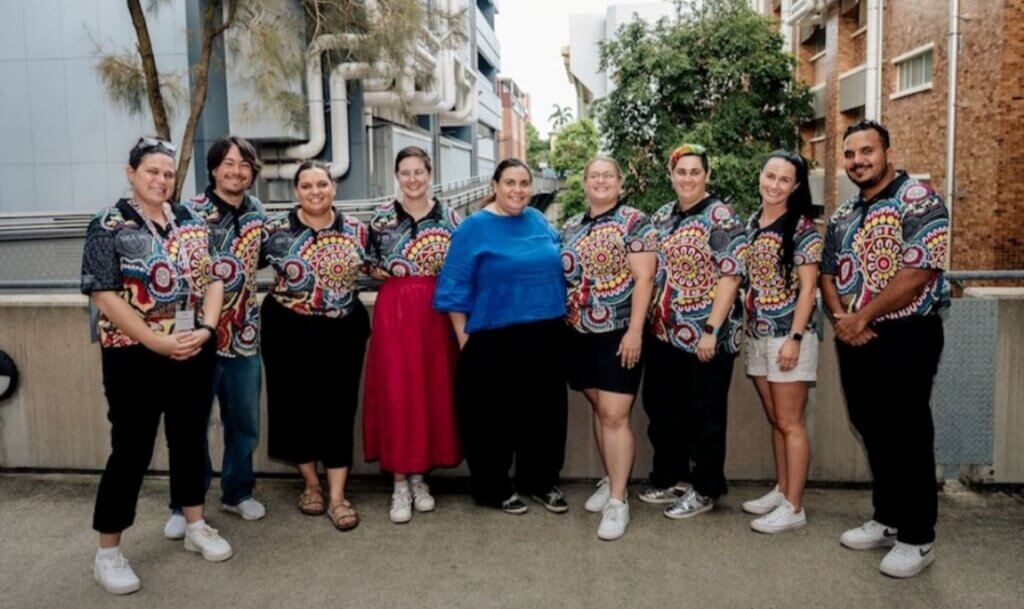
“My goal is to get to a point where the directors are in the room negotiating themselves and I’m not there. If they need legal advice, they can step out and call me. But it should be their meeting, their negotiation, their future,” she says.
That philosophy sits at the heart of her decision to establish her own practice, White Gum Mediation and Law, earlier this year. After decades in government and corporate environments, Ms Hodge realised that real change would require a different model, one centred not on dependency, but capability.
“I was sick of seeing expert advisers overshadow people. We’re talking about communities with extraordinary strength, resilience and knowledge, but too often they’re made to feel like they can’t operate without someone holding their hand,” she says.
The result, she argues, is that many Traditional Owner groups never fully understand the agreements negotiated on their behalf, the rights they possess or even the money they are entitled to receive.
Ms Hodge recalls one community whose previous advisers had negotiated agreements worth millions yet had never followed through to ensure the funds were actually received.
“The groups don’t always know what they’re entitled to, because nobody has ever sat down and taught them; that’s where the real work is,” she says.
The approach she champions is grounded in self-determination, rather than constantly negotiating for scholarships, employment targets or training programs, she wants communities to think bigger – ownership stakes, commercial ventures and long-term economic independence.
One client is developing an native nursery business with support from state and local governments, infrastructure stakeholders and industry partners. Another is exploring opportunities linked to capital in renewable energy projects on Country.
“There’s so much untapped potential. Sometimes all it takes is someone sitting at the table and saying, ‘Have you thought about doing it this way?’,” Ms Hodge says.

For a lawyer who is often described by colleagues as a force of nature, she is unexpectedly reluctant to speak about herself.
Much of the conversation returns to others, directors she is mentoring, young lawyers entering the profession, or the senior Aboriginal practitioners and government mentors who guided her own journey. She speaks with genuine warmth about the mentors who guided her, including Isabel and her daughter Avelina Tarrago, an Aboriginal barrister, and fellow Aboriginal lawyer Cassie Lang. Their influence helped form her understanding of leadership, responsibility, and service.
“I’ve had this beautiful network of people who have invested their time in me, and that’s made all the difference,” she says.
It is no coincidence that mentorship is one of the themes she returns to when discussing this year’s NAIDOC Week celebrations.
The 2026 theme, “50 Years of Deadly,” resonates deeply.
“It’s about honouring the people who came before us, the Elders, the activists and the leaders who stood up when it wasn’t safe to do so. Their legacy is what allows me to sit here today as a lawyer, a business owner and President of the Indigenous Lawyers Association of Queensland,” Ms Hodge says.
More importantly, she says, it is about passing knowledge forward.
“The most important thing we can do is share what we’ve learned with the next generation. That’s why I’ve started this practice, to take everything I’ve learned over twenty years and pass it on.”
The idea echoes Ms Hodge’s own story. A young Wiradjuri woman from a farming community outside Forbes arrives in Brisbane uncertain about whether she belongs. Twenty years later, she stands among the state’s most respected Indigenous legal leaders, helping shape the future of native title and cultural heritage law.
Yet her ambitions remain remarkably practical, she wants stronger communities, better governance, more Indigenous-owned businesses and directors who walk into boardrooms confident in their own authority.
Most of all, she wants Aboriginal and Torres Strait Islander people to be the protagonists of their own story.
“I’m here to help mob build something of their own, not something that depends on funding forever, something sustainable that reflects the values of community,” she says.
For a lawyer who spends her days dealing with legislation, negotiations and complex legal frameworks, it is ultimately a simple vision.
A vision guided by Country, carried by knowledge, and handed forward, one generation at a time.





Share this article