



Law is a profession built on rules, precision and precedent. At first glance, neurodivergent lawyers might not seem like the obvious fit.
But what if the very traits often misunderstood as challenges are also the traits that make someone a sharp advocate, a creative problem-solver and a deeply effective legal thinker?
About 18 months ago, I was diagnosed with ADHD, combined type, meaning both inattentive and hyperactive, and ASD level 1, high functioning. I had suspected for some time that I was neurodivergent, but suspecting something and having it confirmed are two very different things. For a long time, I was not quite ready to know. The question that kept holding me back was not whether I could accept the diagnosis personally, but whether it would change the way I saw myself professionally: if I am neurodivergent, what does that mean for my career as a lawyer?
The misunderstood narrative of ADHD
Attention Deficit Hyperactivity Disorder (ADHD) and Autism Spectrum Disorder (ASD) are often narrowly viewed through a deficit lens.
ADHD, often characterised by impulsivity, distractibility and disorganisation, is commonly reduced to the image of someone who fidgets, struggles to sit still, interrupts, forgets things or jumps from one task to the next.
ASD, often characterised by sensory differences, challenges with communication and interaction, and restricted or repetitive behaviours, is commonly used to describe someone who might not fit into the mould that society considers “normal”.
While those traits can be part of the picture, they are not the whole story. Dig a little deeper, and you’ll find qualities that are increasingly invaluable in a fast-paced, evolving legal landscape, such as innovative and quick thinking, creative problem-solving, high energy, high levels of organisation and a relentless drive to pursue what matters.
Neurodiverse lawyers often think differently. They make connections that others miss. They question the status quo. They bring a sense of urgency, passion, and commitment to causes they believe in – especially helping others. In the legal field, where systemic change, advocacy, and innovative solutions are needed more than ever, this is not a liability, it’s a superpower.
The hidden strengths of neurodivergent professionals
Neurodivergent professionals offer diverse cognitive styles that can challenge legal orthodoxy in powerful ways: the ability to hyperfocus on complex work, recognise patterns and inconsistencies others may miss, think deeply and precisely, and communicate with clarity and honesty. They often question assumptions and approach complex issues from a different angle. Many also bring empathy and lived experience of marginalisation, giving them a deeper understanding of clients, systems and justice – because neurodiversity is everywhere.
A profession in need of diverse minds
The legal profession is at a crossroads. Challenges such as access to justice, digital transformation, and mental health in law demand fresh perspectives and disruptive thinking. Yet traditional pathways into law and throughout a legal career exclude (or make it incredibly challenging) for those who don’t fit a narrow mould of what a “lawyer” is expected to be.
By embracing neurodivergent professionals, law firms can tap into new and diverse potential. Neurodiversity is not just about equality – it’s about strategic advantage; we just need to change the way we view it.
To benefit from neurodivergent talent, the profession must first make room for it. The path forward is not about making exceptions, it’s about change. The legal system should represent and reflect the diversity of the people it serves.
How I have channelled ASD and ADHD into my biggest asset
When I first received my diagnosis, one of my immediate thoughts was; what if my colleagues think I can’t do my job as well as my neurotypical peers? It was a confronting thought, particularly in a profession where competence, composure and attention to detail are so highly valued.
But, in true ADHD style, I did not stay in that uncertainty for very long. Once the initial fear passed, my focus shifted from worrying about how other people might perceive me to asking a much more useful question: what do I need in place to support myself properly, do my job well, and build a sustainable legal career?
That shift has been one of the most important parts of accepting my diagnosis. It has allowed me to stop measuring myself against systems that were not necessarily designed with my brain in mind and instead build practical strategies around the way I actually think, work and process information. Here’s how I did this:
- Executive functioning is one of my biggest challenges. Time management, task initiation, staying on track and moving efficiently between tasks do not always come naturally to me, so I have had to be very deliberate about creating structure around my day. I use visual systems wherever I can, including colour-coding my diary and calendar, using written reminders and creating visual cues that make deadlines, priorities and competing demands easier to process at a glance.
- I rely heavily on daily checklists. There is something very grounding about writing tasks down, breaking them into manageable steps and physically ticking them off. It gives my day shape, helps me prioritise and gives me a sense of progress when my brain feels like it is jumping between ten things at once.
- I try to match the work to my energy. I am much better at complex drafting, difficult advice, detailed documents and strategic thinking in the morning, when I am fresher and more focused. Later in the day, when my attention is more easily pulled away, I move to shorter, simpler or more administrative tasks. That is not laziness; it is task management.
- For larger pieces of work, I block out chunks of time in my calendar so I can minimise interruptions and give myself permission to focus on one thing. Without that protected time, it is very easy for emails, calls and small tasks to take over the day.
- When a thought pops into my head, I write it down immediately or email it to myself, even if that happens at 2am. If I do not capture it then and there, there is every chance it will disappear as quickly as it arrived.
- In training sessions, I sometimes need to do something small with my hands or work quietly on emails while listening. To someone else, that might look like distraction. For me, it can actually help me retain information because it gives my brain just enough stimulation to stay present.
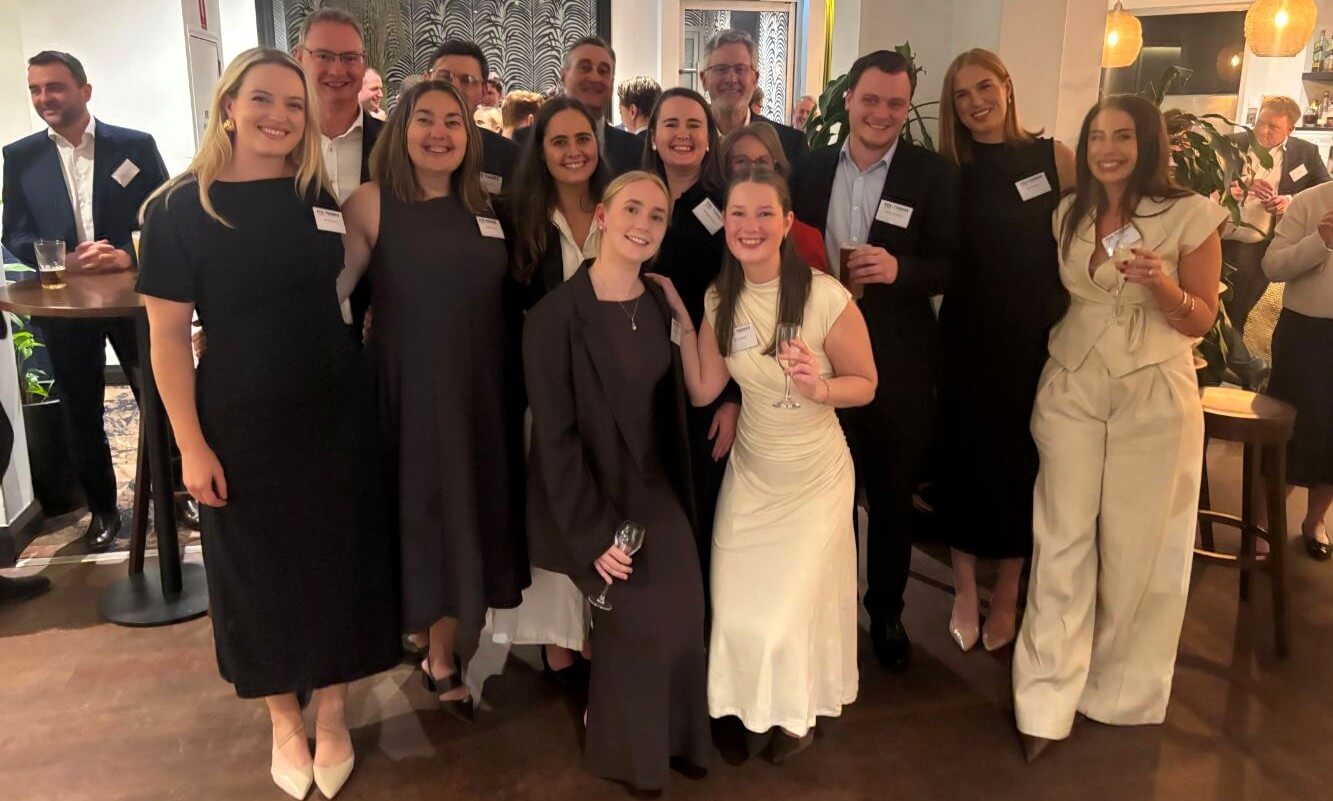
- At work events, I find name tags incredibly helpful because names can be difficult for me to retain in busy social environments. It is a small adjustment, but it removes a lot of unnecessary stress and allows me to engage more confidently. Loud environments can be difficult, particularly large events where there are multiple conversations, background noise and competing sensory inputs. Rather than forcing myself to network in ways that drain me, I focus on settings where I am stronger, such as smaller events, one-on-one conversations and more structured interactions. I also manage noise and distractions where I can, whether that means using earplugs, listening to ambient sound or choosing a quieter space when I need to concentrate.
- Most importantly, I have learned the value of being open with the people I work closely with about my diagnosis, strengths and challenges. It is not about asking for special treatment. It is about giving people the information they need to work with me well and giving myself permission to work in a way that is sustainable.
One of the most effective supports in my working life has been having colleagues who understand how ADHD affects the way I work, particularly my wonderful paralegal. With the working relationship and rhythm between a lawyer and their paralegal and/or support team being fundamental, she has come to understand how I work best and actively helps manage that. Practical strategies such as addressing priority issues early in the day, recording tasks and ideas, protecting focused work time and managing interruptions help me stay organised and productive. Recognising natural fluctuations in attention and energy can also make a meaningful difference. She also, wisely, encourages me to take leave from time to time – partly for my wellbeing and partly, I suspect, so everyone else has a fighting chance to catch up with the pace at which I think and work.
These adjustments are relatively simple, but they highlight an important point: understanding how people work best often leads to better outcomes for both the individual and the broader team.
What’s your superpower?
So, to the barrister who cannot sit still, the paralegal who struggles to follow verbal instructions but thrives when they are written down, and the solicitor who performs brilliantly under pressure but finds routine painfully difficult: you are not broken. You are built differently. And that difference is not a defect; it may be one of your greatest advantages.
The legal profession needs people who think differently, question differently and solve problems differently. It needs people who can see the pattern no one else has noticed, ask the question no one else has asked, and approach a problem from an angle no one else has considered.
Speaking openly about my neurodivergent diagnosis in the context of my professional career has felt vulnerable. In law, there is often an unspoken expectation that we present as composed, certain and unaffected. This sits a little outside that mould. But maybe that is exactly why it is worth saying.
These conversations matter. They matter in law, in leadership and in every profession where people are still expected to succeed by fitting neatly into systems that were not designed for every kind of mind. They create room for understanding, support and a broader view of what capability can look like. Neurodivergence does not mean being less capable. It simply means taking a different path to reach the same outcome and sometimes seeing possibilities along the way that others might miss.
So, my hope is that the next time someone wonders whether a neurodivergent person can succeed in law, they’ll see not limitations, but superpowers waiting to be harnessed.






Share this article