




Back yourself in a bid to learn, two judicial officers told emerging lawyers at Law Society House in Brisbane on Tuesday night.
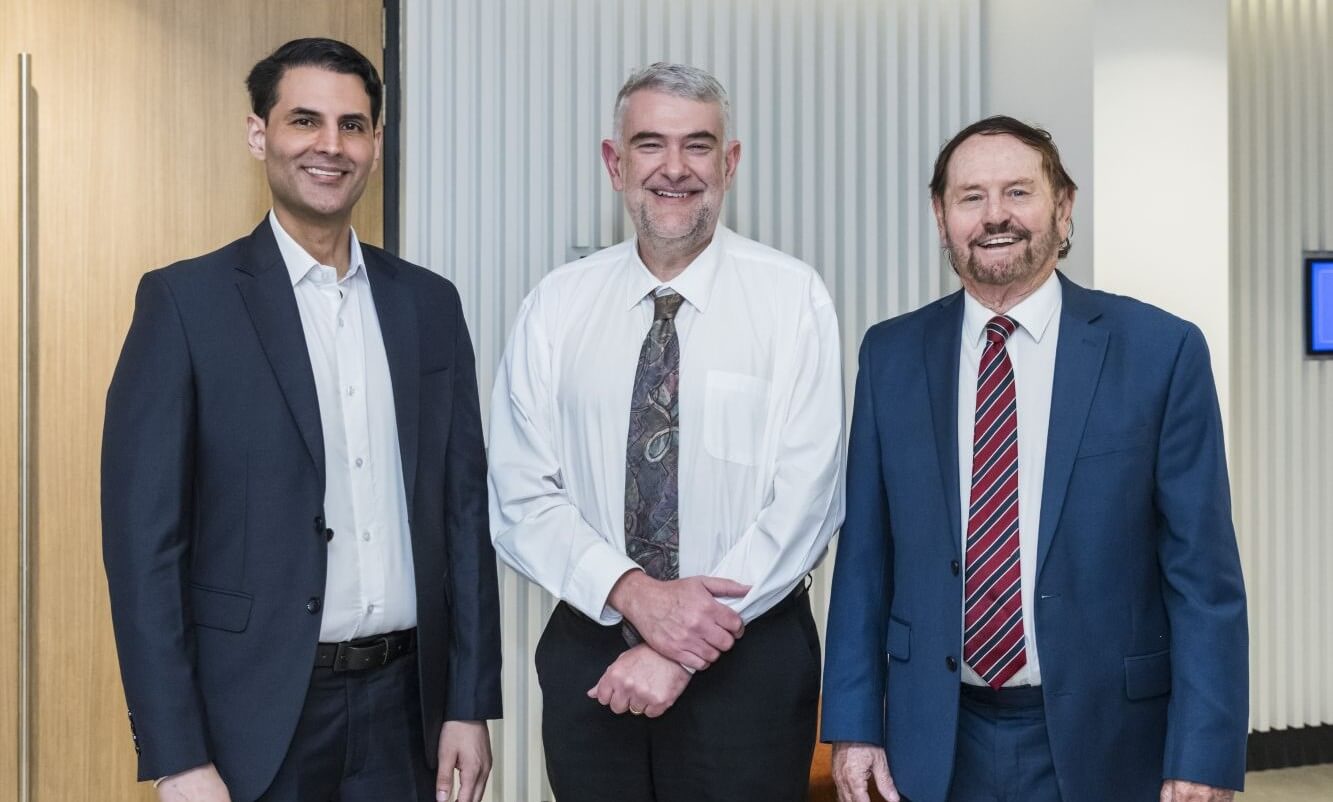
Judge Michael Williamson KC and Judge Nicole Kefford, of the Planning and Environment Court, spoke of their experiences appearing before and on the bench, for Lecture Two of the QLS Modern Advocates Lecture Series for 2025.
“You have to remember, whether you are a barrister or solicitor, you are being paid a fee. Your skill, what you’re charging for, is forensic decision-making,” His Honour said.
“You have to make decisions. You cannot and should not delegate upwards to us. It’s not up to me to work out necessarily what the next points are. I’ll work out why something should win but it’s not my job to look at absolutely everything that is said and work out the wheat from the chaff.
“And it’s not easy but you have to make decisions. And the sooner you learn to make those decisions, with guidance from mentors and senior people, the fewer those gaps become.”

Judge Nicole Kefford

Judge Kefford, who was appointed to the Planning and Environment Court in 2016, said judgment came from experience.
“If calls aren’t made and forensic judgments not brought to bear, then you might find yourself in an uncomfortable position where you start getting questions from the bench, forcing you to defend your decision-making,” she said.
“It would be unfortunate to get to that position where we’re having to ask the questions and put you on the spot in order to force you to exercise what you should proactively be doing because that’s what your client is.
“And that’s, at the end of the day, why you have insurance.
“It’s only developed through experience. There’s no faster way to learn than through failure.”
Judge Williamson, who was appointed to the Planning and Environment Court in 2018, spoke of the gambles taken as a barrister.
“No one knows what a judge is going to do. You’re giving advice to the best of your ability where you think a judge will go, which involves assessing not just the facts and the law, but the personality and the likes and dislikes of the judge,” he said.
“Sometimes I got it right, sometimes I got it wrong. I had to learn from when I got it wrong. But the sooner you can learn, the better is my view.”

Judge Michael Williamson KC
His Honour also spoke about the change in perspective when he moved from the bar to the bench.
“Winning is not a thing. Judges don’t win. You make decisions – so you look at problems very differently,” he said.
“You look at them through a lens of ‘I have to solve this problem, I have to solve it quickly and I have to tell the parties in a rational way that they can understand and get on with their lives’,” he said.
“An advocate doesn’t look at it like that. An advocate has ‘I’ve got to win this. How am I going to win it? If I’ve got bad points, I’ve got to try to bury them …and I’ve got to try and get the judge, even if I’m only 30 per cent right, to my answer’.”
Her Honour spoke about her difficulty in adjusting to life on the bench when she was accustomed to being told the outcome sought and having to argue for it.
The pair spoke about the impact of December 2023 Practice Directions, which helped to address the problem of hearings being prioritised.
“When you prioritise hearings, you have to forgo something, because we’ve only got so much time,” Judge Williamson said.
“My concern really was that there were a number of inefficiencies born of the fact that hearings were prioritised at all costs. And that was largely driven, it struck me, by the court – we were our own worst enemy.”
He said cases were now better prepared, and ran more smoothly, and that part-heard cases were now the exception to the rule rather than the norm.
“One of the benefits is not only dropping the eyeline, but I hope, that among the profession, there’s a good sense of what’s expected, what’s required,” he said.
“And if you don’t do what’s required, then you understand the consequences i.e. you don’t get a hearing date or whatever it might be, and it’s in black and white, you don’t have to guess.
“It’s been heartening to see them (PDs) embraced, and in fact at least the solicitors’ branch (has) flourished with them, and they’ve provided hopefully much-needed guidance for some junior practitioners who I wasn’t entirely confident were being properly trained.”
The session, designed for emerging lawyers, ended with networking drinks.
A recording of the lecture will soon be available online for members.






Share this article