



What is a good decision and how do you make it?
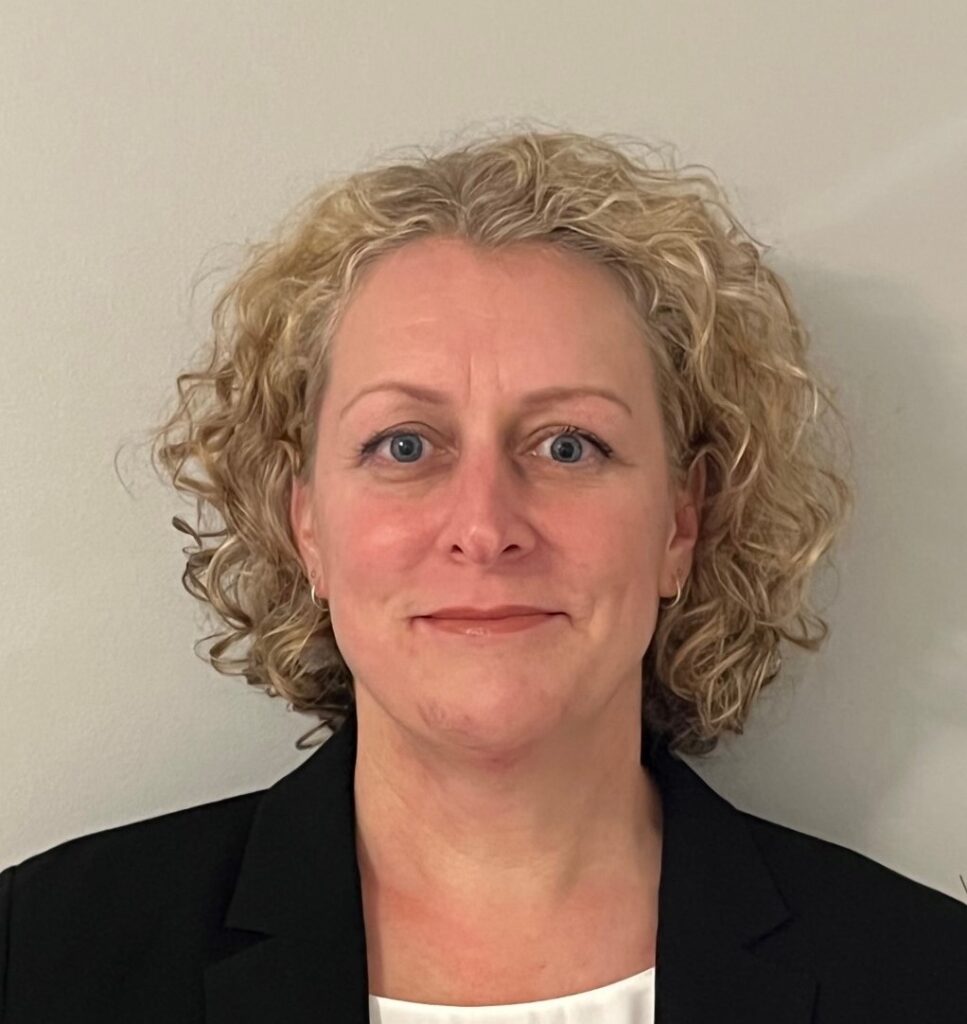
District Court Judge Bernard Porter answered this question at the recent Succession and Elder Law Conference by sharing lessons he learned through decades of caring for a severely disabled sibling.
Judge Porter shared heartwarming and humorous anecdotes about his late brother Anthony, when he delivered the keynote address at the Queensland Law Society’s annual professional development event in Brisbane.
He was one of more than 20 presenters across two streams at the full-day event at the Pullman Brisbane King George Square.
His presentation Making good decisions, not just lawful decisions pointed to the shortcomings of the General Principles contained in the Power of Attorney Act 1998 (Qld) and the Guardianship and Administration Act 2000 (Qld).
“In my respectful view, the General Principles are rather too long and too ambiguous to provide workable guidance as to how to actually carry out the task of making a substituted decision,” Judge Porter said.

“Let’s face it, if you tried to write a list of relevant, neutral and irrelevant considerations for a decision based on the General Principles, it would cover pages and pages.
“The General Principles themselves cover five pages of the statute, and they are singularly lacking in practical guidance as to how you actually do some of the things they beg you to do.
“What I want to do with the General Principles is to note they exist, recognise that they’re full of good ideas, but also recognise they are not long on practical advice.
“It is to the pragmatic and prosaic task of actually making a substituted decision that I want to turn to.”
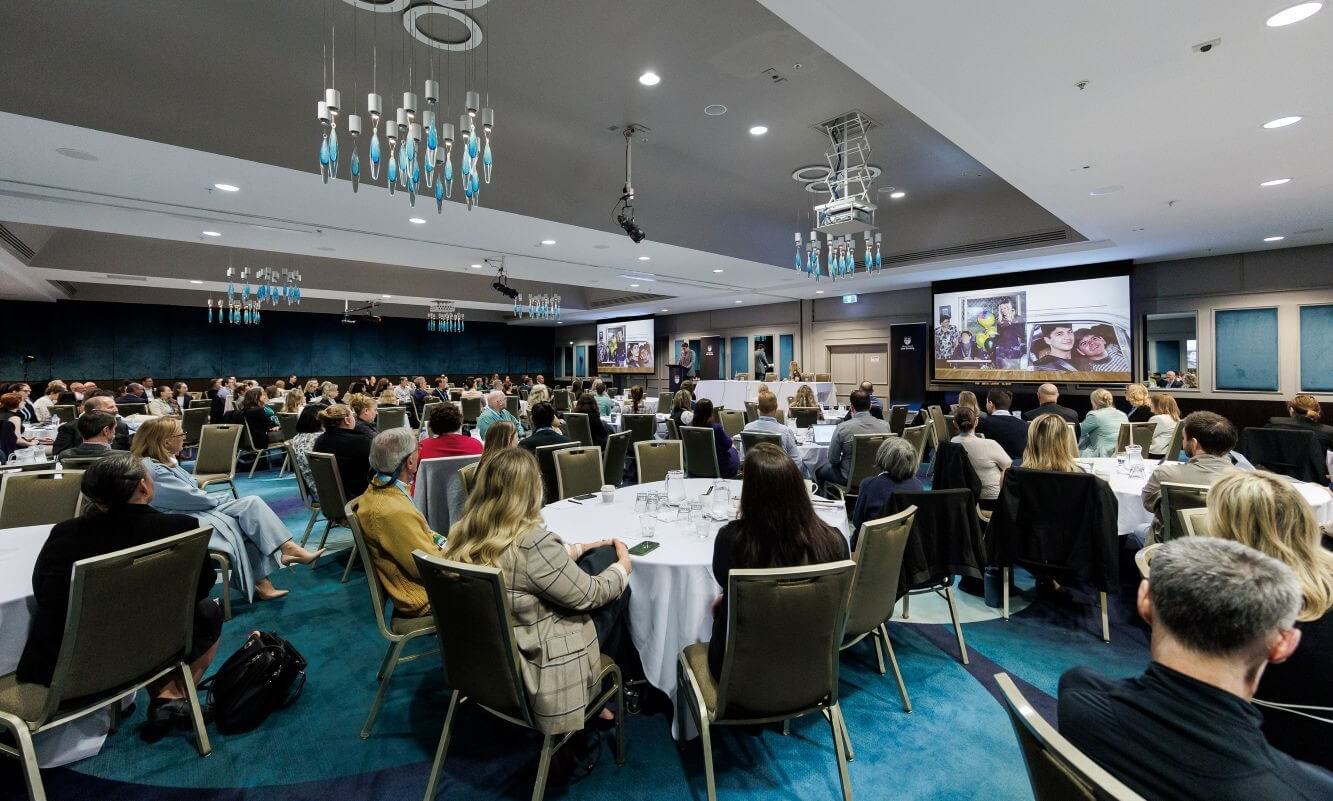
Judge Porter described life with his late brother.
Judge Porter said his suggestions for how to do this were based on 25 years’ experience of informal substitute decision-making.
“Anthony provided a particularly good case study for thinking about how to apply the General Principles, because while we usually had a pretty good idea about what he wanted, his disabilities and his idiosyncratic way of managing his world meant he needed very subtle, empathic and patient support when making a decision,” he said.
“And because he was a person of very strong views, he actually provided feedback on our efforts, including bad-tempered ones when he thought we were being particularly stupid.”
He said his involvement in Anthony’s care, and in the lives of many other disabled people who needed help with decision-making, had informed his distillation of substitute decision-making into five steps: be clear about the task; adopt the right mental approach; obtain relevant and useful information; make the decision; and watch out for pitfalls.
He said a key barrier to good substitute decision making was the inability of the decision-maker to escape from their own world view when thinking about the task.
“Because for people with incapacity, the challenge of seeing the world from their perspective is multiplied because their world is so different,” he said.
Witnessing suffering, helplessness or disadvantage was hard but practitioners needed to be aware of resistance to seeing things which were embarrassing or painful to them, he said.
“In summary, in mentally preparing to make your decision, you’re endeavouring to open your mind, as well as your eyes, and trying to see what is really happening for the person and understand what it means to them in the context in which they find themselves,” he said.
Gathering that information could include visiting the person in their home and talking to their support network.
He also warned that disabled people were like other members of society in that they could be “greedy, cruel, manipulative, sly or rude”.
“Do not fall for the trap of ascribing virtue to disability,” he said.
Judge Porter also warned of the pitfalls associated with the task, including laziness, officious people, and a tension between a human-rights-driven decision-making process and a person-centric decision process.
He said the decision-maker’s job under legislation was to make a decision after doing their best to inform themselves.
“Making the decision will sometimes take courage, it will sometimes be unpleasant, it might force you to be the person who says no, it can mean making a decision which the person disagrees with, it can mean making a decision which attracts criticism from those around the person … that’s the task – you shouldn’t shirk it,” he said.
Judge Porter concluded by emphasising that lived experience was useful but “not everything” and that decision-making was “not very easy to do well”.
“It takes thought and effort and wisdom and I wish every person who caries that burden the best of luck,” he said.
Other topics covered at the conference included capacity frameworks, drafting testamentary trusts, the role of the Independent Administrator, and legislation updates.
The in-person-only conference, worth seven CPD points, was followed by networking drinks and canapes.







Share this article