



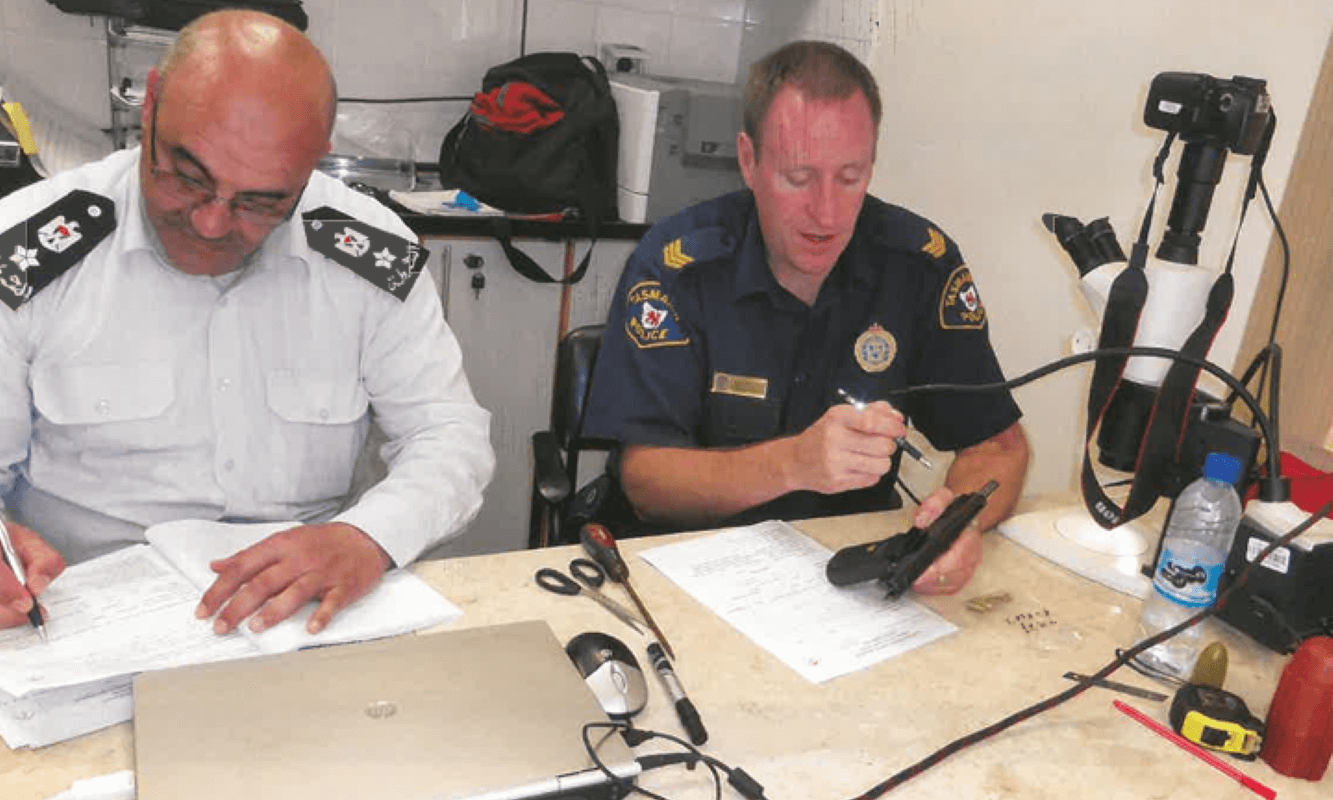
When Gerard Dutton entered the police force as a young constable, he expected a conventional career – uniform shifts, frontline duties, perhaps a path into detective work.
What he did not anticipate was a four‑decade journey spent in laboratories and courtrooms, becoming one of Australia’s foremost authorities on forensic ballistics — nor that his work would place him at the centre of some of the country’s most well-known criminal investigations, from a mass shooting that reshaped national gun laws, to a series of backpacker murders that gripped global headlines, to the targeted killing of one of Australia’s most respected surgeons.
His route into the specialty was by chance. After only a few years in general duties, the appeal of policing had begun to dull.
“Going to domestics and dealing with drunks every day – it wasn’t my cup of tea,” he recalled.
A chance conversation with the head of the ballistics section opened the door to a niche he scarcely knew existed. It was not the firearms that intrigued him, but the discipline itself – ordered, technical, anchored in logic. It suited him immediately.
Within months, he realised he had found his calling. “I’m very structured and very methodical, and the work calls for that,” he said.

More unexpectedly, the field offered a form of intellectual rigour. “Up until the day I left, I was still learning something new. It never stopped. How wonderful to find such a profession.”
Now retired from police service but still a sought‑after expert, Mr Dutton continues to share that depth of knowledge — including as a guest speaker at this year’s Symposium, where he will discuss the evolving science of firearms identification and the realities behind some of the cases that shaped his career.
The evolution of a discipline
In the early years, ballistics work was almost entirely manual. Examiners relied on comparison microscopes, years of accumulated visual memory and careful record‑keeping. But over his career, Mr Dutton watched the discipline shift with the writing of a national training curriculum which standardised the ballistics training given in all Australian policing jurisdictions.
The rise of digital imaging and national searchable databases was one of the most significant innovations – the ability to scan fired bullets and cartridge cases and store their microscopic profiles as digital data.
These systems meant that evidence entered in one state could be matched to a firearm used in another months or years earlier, linking crimes that would once have remained unrelated.
“You enter something in Tasmania, and it might match something entered in Brisbane months earlier,” he said. “That kind of connection simply wasn’t possible before due to the time needed.”
For Mr Dutton, this digital advancement in the scanning of the surface topographies of microscopic marks on bullets and cartridge cases, offered empirical confirmation of something examiners had long maintained – that the microscopic marks left by firearms are sufficiently consistent to be identifiable with proper training.
The technology didn’t replace judgement, but it strengthened it.
Of course, digital certainty has limits. Some bullets are damaged or incomplete. Some scenes produce imperfect evidence.
“Sometimes you just can’t tell,” he said. “It’s not a failure — it’s a limitation of the evidence.” But the combined weight of experience and technology created a more robust discipline than the one he entered in the 1980s. Subjective assessment has been confirmed and bolstered by such objective analysis.
Inside the job
Although crime‑scene attendance is the most visible part of the job, it is only a fraction of it. Most ballistic examinations happen well away from flashing lights and police tape — in laboratories filled with reference firearms, controlled test‑firing setups and microscopes and other specialised equipment capable of revealing details invisible to the naked eye.
A typical case might involve a seized homemade gun, a firearm used in an assault, or ammunition linked to an illegal cache. Mr Dutton spent much of his career assessing these items under specific legal definitions – Is the weapon considered a firearm under the Act? Does it meet the threshold of a pistol? Is it functional? Was it capable of firing in the configuration in which it was found?
Some of the most technically interesting work had nothing to do with homicide, many cases turned on whether a crude improvised weapon met the criteria for a charge. “Most of them are of rudimentary construction — they usually work, only just, but they are still lethal” he said.
The Backpacker Murders – a bolt hidden in a wall
Of all the investigations Mr Dutton contributed to, the Ivan Milat backpacker case is the one he speaks about with the most clarity. The technical challenge was high, especially with the media pressure at the time to solve the case.
By the time police searched Milat’s house, the killer had dismantled the rifle used on two of the victims found in the Belanglo Forest. Components were scattered throughout the dwelling – some in cupboards, one part in a boot, one in an attic space. The missing piece was the barrel, but a single part proved decisive – a Ruger model 10/22 breech bolt hidden deep inside a wall cavity accessed only from the roof space.
Mr Dutton recognised it instantly as it had been firmly established this was the make and model of the murder weapon.
Back at the lab, he fitted the bolt into an identical reference rifle, test‑fired it and placed a murder‑scene cartridge case under the left stage of the comparison microscope. The fresh test‑fired case went under the right.
What happened next became one of the defining moments of his career.
“As soon as it came into focus, I knew,” he said. Years of examining and comparing test‑fires from other Ruger 10/22 rifles meant he was intimately familiar with the position and features of the marks on the murder cartridge cases, he knew the pattern of marks left by that model, and more importantly, the individuality of the marks he had recorded from the Belanglo crime scenes. The correspondence was instant, precise but importantly, immediately recognisable.
The match provided the first unequivocal forensic link tying a rifle component in Milat’s house to the killings in the forest. The evidence stood up through trial, cross‑examination and subsequent scrutiny.
“People often think the big moments come with some fanfare,” Mr Dutton said. “In reality, they come quietly. You’re alone in a lab with a microscope.”
Port Arthur – forensics under pressure
Port Arthur was different. The difficulty was not technical complexity but scale, urgency and the confronting reality of the scene.
When Mr Dutton entered the Broad Arrow Café, chairs were overturned, personal belongings scattered, and 20 victims remained inside. “It’s the logistics that hit you first,” he said. “Where do you start? What’s most critical? What resources are needed?”
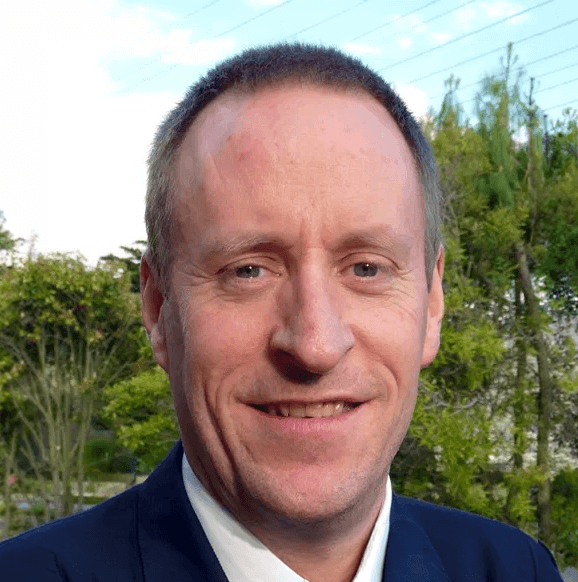
Gerard Dutton
Political pressure to remove bodies quickly meant forensic teams had limited time to complete detailed recovery work. Under ordinary circumstances, examiners might have many hours and even days to document and gather ballistics evidence. At Port Arthur, that was not an option. Priorities had to be set, locate cartridge cases, identify bullet trajectories, record positions, then move on.
“You know you won’t recover everything,” he said. “You focus on what matters most for the court.”
In scenes like that, the science doesn’t change — but the constraints make every decision heavier.
The New Zealand murder trial – a week in the witness box
The case Dutton often calls the most technically challenging of his career unfolded not in Australia, but in Blenheim, New Zealand.
A bikie‑related shooting had left one man dead. The weapon was coincidentally, another sawn‑off Ruger 10/22 rifle, but the bullet recovered from the victim did not carry the standard rifling detail that examiners rely on. The New Zealand scientist handling the case had classified the result as inconclusive.
Mr Dutton was asked to conduct a full review. He approached it like a puzzle, changing variables, testing hypotheses, ruling out alternatives. “There were rabbit holes everywhere,” he said. “But eventually the picture became clear.”
Instead of relying on the usual rifling marks, he identified multiple independent microscopic features — unusual, unexpected, but consistent — that unequivocally tied the bullet back to the gun.
The trial lasted two weeks with the second week of that just on ballistics.
“Four defence barristers for the four accused, every day,” he recalled. “They threw everything at it.”
He welcomed the scrutiny. “I’ve always taken the view, if it’s in my report, I can justify it.”
The accused was convicted. But what Mr Dutton remembers most was the moment after he left the witness box for the final time. The barrister for the main accused sought him out privately.
“He just said, ‘Well done.’ And then walked away. I really appreciated that gesture.”
It was a small recognition — but it validated months of exacting work.
The cases that don’t make headlines – home‑made firearms
While the major cases attract public attention, much of Mr Dutton’s career involved examining improvised and modified firearms seized from back sheds, car boots and suburban bedrooms.
These matters often hinged not on ballistics but on definitions – whether a crude device met the legal threshold of a firearm or pistol under State legislation, whether it was capable of firing, and whether a charge could be supported.
Occasionally, a weapon surprised him.
“There was an elderly bloke who had made beautifully machined pistols,” he recalled. “Better than some commercial ones.” The man wasn’t connected to organised crime, he simply possessed rare mechanical skill and curiosity. “He shouldn’t have made them,” Mr Dutton said. “But you couldn’t not admire the workmanship.”
3D‑printed weapons – the new frontier
In recent years, Mr Dutton has watched the steady rise of 3D‑printed firearms in Australia. Early versions were brittle and unreliable but that has changed.
“They’re still mostly plastic,” he said. “But they can now handle low‑powered pistol cartridges and fire multiple shots without failure.”
Digital plans circulate widely online and some jurisdictions treat even the possession of these files as an offence while others only criminalise actually 3D printing them. For ballistics examiners, the challenge lies in assessing functionality and classification. “They’re not going away,” he says simply.
The cases that stayed with him
When asked which case has stayed with him the longest, Mr Dutton hesitates. There are many -homicide scenes in remote bushland, improvised weapons recovered from hidden rooms, confronting crime scenes and reviews of work that fell short of proper standards.
But the New Zealand case, with its complexity and long arc of testing, stands out.
“It was intellectually demanding,” he said. “Every answer created another question. It was intensely satisfying to finally understand exactly what happened and why I was seeing the highly unusual marks on the fatal bullet and how they occurred.”
In that sense, It reflected the work he enjoyed most – unclear evidence, challenged assumptions, and science pushed beyond the usual boundaries.
The work after retirement
Though retired from police service, Mr Dutton remains deeply engaged in the field, conducting case reviews — often for defence teams — with the same neutrality he applied in uniform. “If my findings help their client, fine. If they don’t, that’s fine too. My job is the same.”
At times, he encounters work that failed to meet proper standards. He reports what he finds. “The evidence is the evidence. You can’t colour it depending on who hired you.”
You can hear more from Gerard Dutton at QLS Symposium 2026 on 13 March.




Share this article