

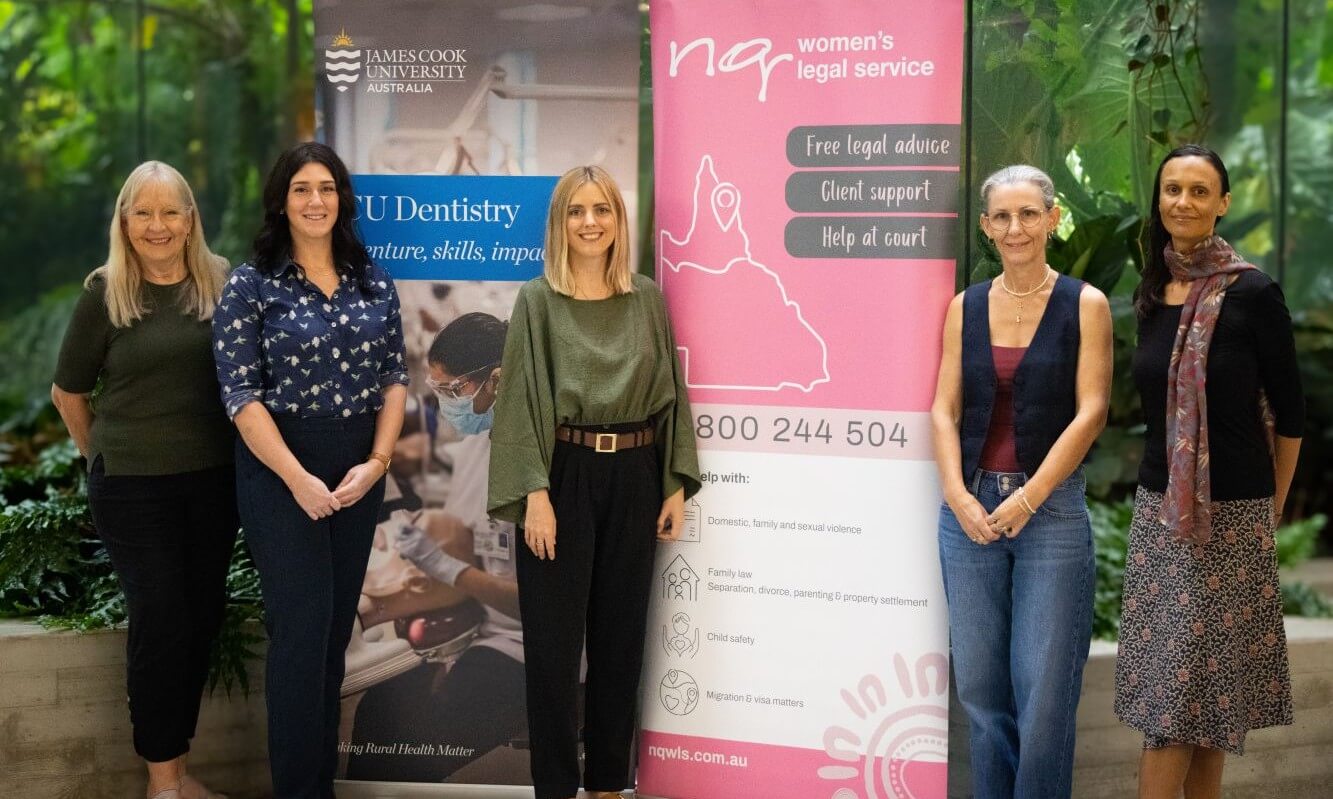
North Queensland Women’s Legal Service (NQWLS), James Cook University and Be Conscious, a counselling and complex trauma practice in Cairns, have launched a new legal guide for dental professionals.
The guide was launched digitally this month via the NQWLS website aligning with Domestic and Family Violence Prevention Month.
The launch also supports the NQWLS prevention initiative, #DefyTheNorm, which challenges harmful attitudes, gender stereotypes and social norms that enable violence. By strengthening community understanding of legal rights, respectful relationships and early intervention pathways, the initiative aims to support safer communities across Far North Queensland.
The resource provides practical, easy-to-understand guidance to support dentists in navigating complex legal and ethical issues when working with patients who may be experiencing domestic and family violence.
The significance of this guide lies in recognising dentists as emerging frontline responders whose records, disclosures and referrals may materially affect legal outcomes for clients experiencing violence.
As a first-of-its-kind collaboration, this guide brings together expertise from law, dentistry, and social work. By integrating multiple disciplinary perspectives, it goes beyond a purely legal summary and supports critical thinking and reflexive practice, with a focus on practical, trauma informed application in dental settings.

Community Engagement Lawyer Ashleigh Lawrence said: “At NQWLS, we see firsthand the legal and safety challenges faced by victim-survivors of domestic and family violence.
“Dentists are often uniquely positioned as frontline identifiers – particularly in regional and remote communities – where they may observe injuries, behavioural indicators, or patterns that others do not, yet many receive limited training on the legal considerations involved in responding to domestic and family violence.
“This guide aims to bridge that gap by equipping dental professionals with the knowledge and tools to respond in ways that are safe, lawful, and trauma informed.”
The guide covers key areas including:
- consent and decision-making capacity;
- documentation and clinical record-keeping, including the role of dental records as potential evidence;
- privacy, reporting obligations, and the limits of confidentiality, including information-sharing frameworks;
- recognising and responding to signs of domestic and family violence in a dental setting.
Dentists as frontline identifiers of domestic violence
Dentists are uniquely positioned as frontline healthcare workers to identify domestic violence due to the nature and location of many injuries associated with abuse. The head, face and neck are common targets, meaning oral health professionals may be the first clinicians to observe suspicious bruising, fractures, lacerations or dental trauma.
Beyond physical signs, dentists often develop long-term, trusting relationships with patients, enabling recognition of behavioural indicators such as anxiety or frequent missed appointments. A dentist may also observe signs of financial abuse where a patient delays or declines necessary treatment or needs permission from a partner to proceed. Routine dental visits may also be one of the few healthcare encounters victim-survivors can attend without alerting an abusive partner.
Dentists therefore have a professional and ethical responsibility to recognise red flags, respond sensitively and document findings accurately. However, many dental practitioners report hesitancy, largely due to insufficient training and inconsistent guidance, policies and procedures. With appropriate education and clear referral pathways, dental practitioners can support early identification, intervention, and improve patient safety and public health outcomes.
Why dental records matter to lawyers
Dental records can become powerful evidence in both criminal and civil proceedings; clinical notes, photographs, treatment histories, and recorded disclosures may support applications for protection orders, criminal prosecutions, family law matters, personal injury claims and coronial investigations.
In Queensland, an initial disclosure made to a dentist during treatment may become relevant as “preliminary complaint” evidence under the Evidence Act 1977 (Qld), particularly where it helps establish how, when, and to whom violence was first disclosed.
The guide highlights that dental records may be subpoenaed and reviewed by courts, legal representatives, and in some cases, the person using violence. It emphasises the importance of clear, objective, and contemporaneous documentation – avoiding assumptions or subjective interpretations, recording direct quotes where possible, and accurately noting injury patterns and clinical observations.
By supporting dentists to create precise and reliable records, the guide helps strengthen evidentiary outcomes, protect victim-survivors, and reduce the risk of further harm.
Strengthening dental practice as part of the legal response to DFV
As a first‑of‑its‑kind legal guidance document for dentists, this resource is particularly significant because it addresses long-standing uncertainty about professional boundaries, obligations and risk.
Traditionally, many dentists have been reluctant to act on concerns about domestic violence due to fear of breaching confidentiality, legal repercussions, or acting beyond their scope of practice. This document provides clear, authoritative guidance on dental clinicians’ legal responsibilities, including what constitutes appropriate documentation, and the circumstances under which information can be shared to protect patients.
Importantly, the guide aligns legal, ethical and clinical expectations, translating complex legislation into practical, dentistry‑specific information. By outlining step‑by‑step processes, referral pathways and protections for practitioners acting in good faith, the document empowers dentists to respond with confidence and consistency.
As a pioneering resource in this space, it also formally recognises dentists as legitimate contributors to domestic violence identification and response, strengthening their role within multidisciplinary, trauma‑informed care systems and supporting safer outcomes for patients.
Limits of confidentiality and the information-sharing obligations
Many lawyers may not realise that victim-survivors first disclose violence in a dental setting (rather than to counsellors, police or lawyers). This creates important issues around confidentiality, consent and information-sharing that can later affect client safety and legal proceedings.
While confidentiality is fundamental, it is not absolute. Beyond subpoenas, dental records may be shared where authorised under the Domestic and Family Violence Protection Act 2012 (Qld) in response to serious threats to life, health or safety – even without the client’s consent.
For lawyers supporting clients experiencing violence, understanding the limits of confidentiality is important. Clients may assume disclosures to their dentist remain private, when in reality, those records may later become evidence in court.
he guide gives dentists a framework to explain the limits to clients clearly and safely. By helping dentists navigate confidentiality, consent and information-sharing obligations transparently, the guide strengthens trust, supports informed decision-making, and enables earlier intervention, stronger referral pathways, and safer legal and clinical responses for victim-survivors.
Understanding risk and victim-survivor decision-making
Legal responses to domestic and family violence are intended to support victim-survivors and should not be used in ways that replicate coercive control by removing their agency. Victim-survivors are often best placed to judge risk because they understand the patterns and behaviours of the person using violence.
For lawyers and dentists alike, assumptions made (without training) that leaving the person using violence is straightforward – or that reporting will automatically improve safety – can be dangerous. Even in good faith, this can overlook barriers such as financial insecurity, limit supports, cultural or family pressures, disability-related constraints, and risks linked to separation. The period leading up to separation, during separation, and the weeks after leaving can be a time of heightened risk of serious harm, including homicide.
The guide emphasises that where it is safe and practicable, dentists should prioritise informed choice, seek consent, and support empowerment and autonomy. Before sharing information, they must consider whether the action is necessary for safety, proportionate, and aligned with the victim-survivor’s wishes wherever possible.
When dentists, lawyers and support services work with a shared understanding of risk and trauma-informed practice, victim-survivors are more likely to experience coordinated responses, earlier access to support services, and safer legal and clinical outcomes.
Training and professional judgement
Domestic and family violence training, alongside this guide, supports dentists to make sound professional judgements. Training helps explain why a situation that feels urgent or confronting may not warrant immediate external intervention, and why reporting can sometimes increase risk. It also builds realistic understanding of service-system constraints, including limited housing and crisis accommodation, and variable capacity for police and courts to pursue criminal charges or secure effective protections.
Collaborative training for dentists in domestic, family and sexual violence, together with the development of this guide, has brought knowledge and expertise from diverse disciplines to practitioners new to this area, strengthening their capacity to respond to this social issue.
The authors suggest that similar collaborative training for legal professionals – integrating expertise in domestic, family and sexual violence and the social theories that inform these understandings -would further enhance legal practitioners’ responses when working with victim-survivors and people who use violence.
Such training is available through organisations such as:
- Be Conscious: https://www.beconscious.com.au
- DFSV Integrated Service Responses:
Domestic and family violence situations are complex and context-specific: an action that increases safety for one person may increase risk for another. Training, professional judgement, and an understanding of domestic and family violence dynamics when interpreting and applying the law is essential. Finally, all responses must prioritise victim-survivor safety, minimise unintended consequences or harms, and keep accountability on the person using violence.
Victim-survivors may disclose first in a dental chair, not a lawyer’s office. Recognising this shift – and responding to it through strong multidisciplinary partnerships – is essential to improving safety outcomes for clients.
Ashleigh Lawrence, Community Engagement Lawyer at North Queensland Women’s Legal Service, Dr Alex Dancyger, JCU Senior Lecturer of Clinical Dentistry, Dentistry, and Dr Ann Carrington, JCU Adjunct Senior Lecturer, Medicine and Dentistry all contributed to the information in this article.






Share this article