


Proposed e‑mobility legislation could unfairly impact Queenslanders with a disability by introducing unintended financial and administrative barriers, a public hearing was told on Friday.
Representatives from the Queensland Law Society also raised concerns about the parental responsibility offence provisions under the Transport and Other Legislation (Managing E‑mobility Use and Protecting Our Communities) Amendment Bill 2026.
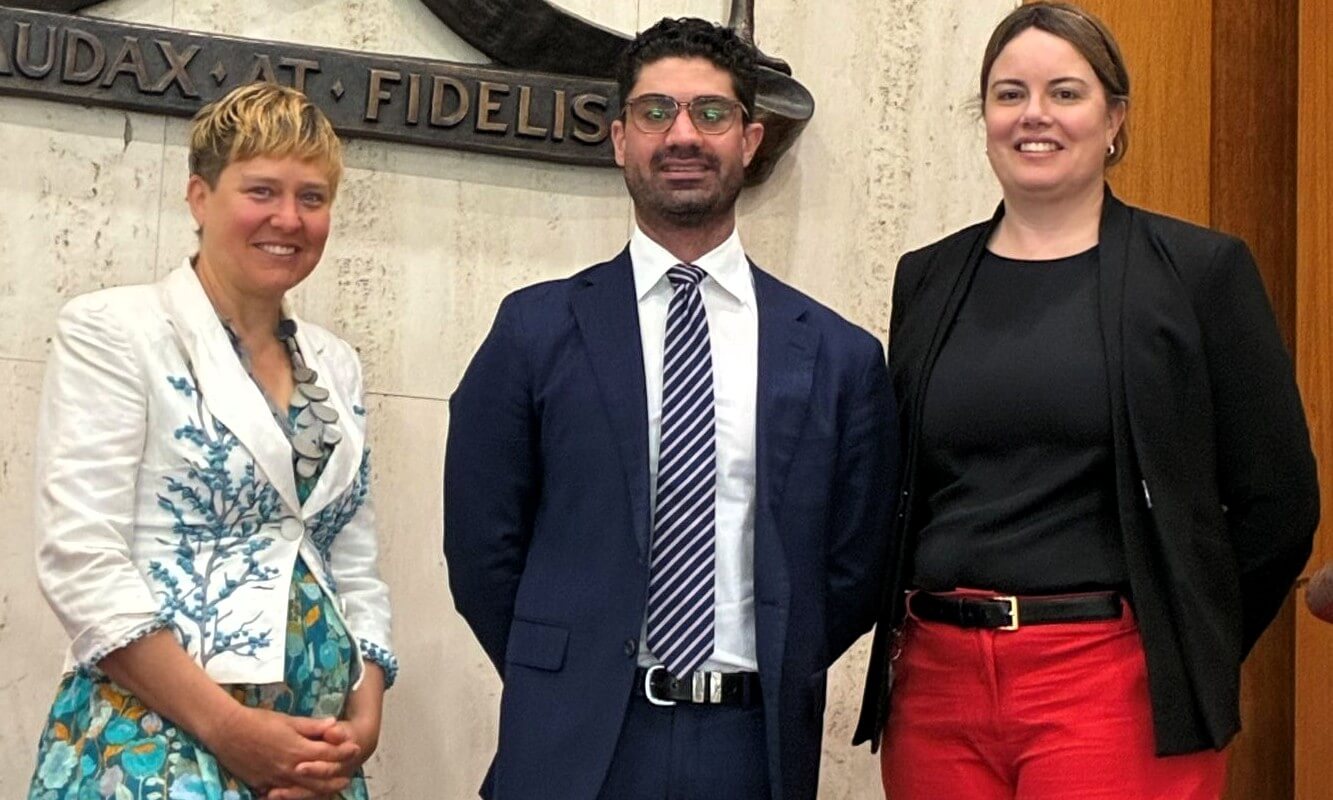
QLS Special Counsel Hayley Stubbings, who appeared alongside QLS Human Rights and Public Law Committee co-chair Matilda Alexander and QLS Criminal Law Committee member and Accredited Specialist in criminal law Adam Moschella, said the Society recognised the significant level of community concern regarding illegal e‑bike and e‑scooter use.
“However, while we support the overarching goal of enhancing public safety, our submission highlights several areas where the Bill will create additional barriers to mobility and independence for some Queenslanders,” she said.
“Primarily, the Society holds concerns regarding the appropriateness and proportionality of the proposed licensing framework. While we understand the policy intent is to ensure basic road rule knowledge, the requirement for all riders to hold at minimum a learner’s permit creates a substantial and potentially discriminatory barrier.
“It is vital the Bill recognises the accessibility benefits these devices provide, including removing mobility barriers and enhancing independence for people with disability.”

Ms Stubbings said further consultation was required with people who had lived experience, including a broader and more diverse range of users such as people with disability, to better understand how the reforms would operate in practice and to ensure reforms were fair and practical.
The Society also warned the committee that broader insurance gaps associated with e‑mobility devices remain unresolved, potentially limiting access to appropriate compensation for people injured in incidents involving e‑mobility devices.
Under the Bill, the minimum rider age for an e‑mobility device would be set at 16 and riders would be required to hold at least a learner licence. Police enforcement powers and penalties for unsafe behaviour would be strengthened, along with the introduction of clearer standards for devices and where they may be used.
The changes also place greater responsibility on parents, allowing action to be taken where children under 16 ride legal devices unlawfully or ride unlawful devices unless the parent can prove they did not know of the child’s conduct or all unless reasonable steps were taken to prevent the behaviour. Shared e‑mobility providers would also be subject to stricter compliance requirements.
When asked whether the new laws could be subject to legal challenge, Ms Alexander told the State Development, Infrastructure and Works Committee that the reforms could create confusion and lead people to seek legal advice.
“Some people with disability have purchased devices using NDIS plans or other subsidised plans are relying on those for day-to-day access to the community,” she said.
“There will be a lot of confusion about does my bike count, can I get a licence?
“The test for driving a car at more than 100 kilometres an hour down a freeway is completely different to the medical test for whether you can safely ride a bicycle, so I think that there will be certainly a lot of confusion for people with disability.
“They will be seeking legal advice and looking at whether or not these implications could certainly be indirectly discriminatory or directly discriminatory against people with disabilities.”
Pressed again on the possibility of legal challenges, Ms Alexander said the laws needed to consider real‑world human impacts.
“People with disability already have so many financial barriers, administrative barriers, and now there are going to be more financial and administrative barriers, not only to the vehicles they already own, but to any new ones to be purchased,” she said.
The hearing was also told the proposed parental responsibility offence represents a significant departure from fundamental legislative principles, by attributing criminal liability to one person for the conduct of another and reversing the onus of proof.
The Bill follows the committee’s public inquiry into e‑mobility safety and use in Queensland, launched in May 2025, with a final report tabled in parliament on 4 March 2026.
The committee is due to table its current report on 8 May 2026.
The QLS submission on the Bill can be found here.







Share this article