



Admission isn’t just the final step after law school – it’s a Supreme Court application that demands honesty, precision and full disclosure.
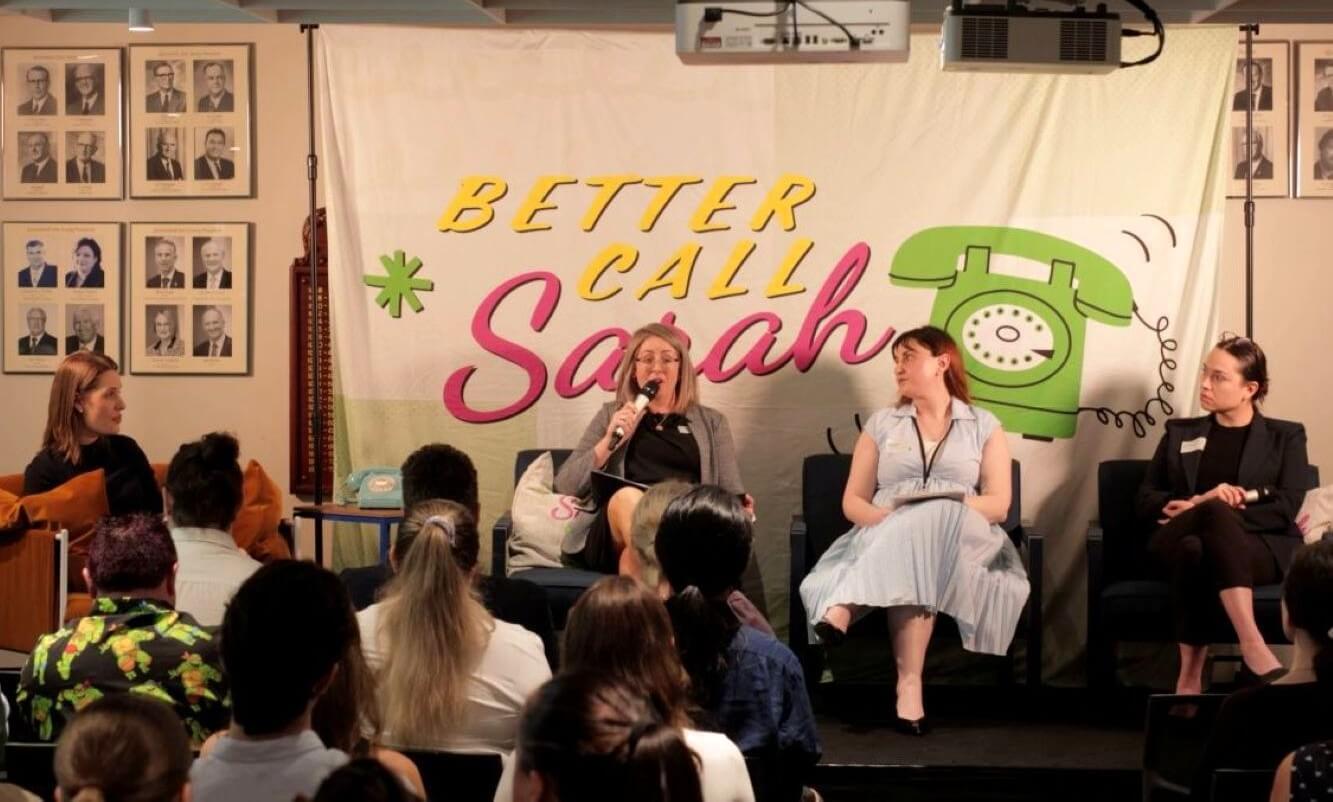
That message set the tone at the latest Queensland Law Society Better Call Sarah event, where law students heard candid advice on admissions, disclosure and suitability, and learned exactly what stands between graduation and joining the profession.
The event was hosted by former Future Leaders Committee president Sarah De Jong, with panellists Amy Hayes, Director of Licensing, Operations and Policy at QLS, Sherrieanne Hutchins, former Admissions Compliance Officer and solicitor at the Legal Practitioners Admissions Board, and Chloe Parsons‑Pope, recent law graduate, commercial litigation solicitor and QLS Councillor (2026–27).
Ms De Jong began by grounding the discussion in what admission actually represented, reminding students that it is a formal legal process rather than an administrative formality.

“Admission is effectively the process of joining the profession,” she said. “It is, at its core, an application to the Supreme Court.”
She explained that once academic requirements and practical legal training were completed, students lodged an originating application, followed by a structured series of filings leading up to admission.

“There’s a sequence of dates where you need to file additional material – things like references, court documents and university transcripts – all before your admission day,” she said.
Admission day, Ms De Jong noted, is a court appearance, with a practitioner formally moving the applicant before a Supreme Court judge.
“Someone from the profession stands up, says a few words about you, and applies to move you,” she said.
She also emphasised that being admitted did not automatically mean being able to practise.
“You still need to apply for a practising certificate if you want to practise as a solicitor, or complete the bar course if you want to go to the bar,” she said.
With the framework established, the conversation quickly turned to the dominant theme of the night: disclosure.
Ms Parsons‑Pope explained why admissions bodies place such a strong emphasis on disclosure and integrity at the student and graduate stage.

“For the profession, it’s important that we recognise there are some risks when entering practice,” she said. “If you do have disclosures that relate to dishonesty or public trust, we want to know about it before you get into the profession.
“It’s a risk‑mitigation strategy. There’s a duty to the court, a duty to clients and a duty to the profession. We need to make sure, as a profession, we know those risks first.”
Ms Hutchins addressed one of the most common areas of confusion for applicants – what full and frank disclosure actually meant in practice.

“It’s really common for applicants to misunderstand full and frank disclosure,” she said. “The board wasn’t there when the event occurred, so you need to provide enough detail that they can read it and say, ‘okay, this is exactly what happened’, without having follow‑up questions.”
She cautioned against providing only minimal detail or attempting to deal with disclosures later in the process.
“I often saw applicants cherry‑pick information or leave things out and think they’ll put it in their affidavit later,” she said. “Don’t do that. The admissions team are very thorough and it can cause delays.”
Her message to students was clear.
“When in doubt, disclose,” Ms Hutchins said. “Use your commonsense but if you’re concerned, there’s nothing wrong with over‑disclosing.”
She went on to outline some of the common suitability matters students may need to disclose, noting that even resolved or dismissed issues remain relevant.
“Applicants often don’t disclose dismissed criminal matters – but any criminal matter should be disclosed,” she said. “The same applies to academic misconduct, infringements and fines, late tax lodgement, and mental health diagnoses – whether it was two months ago or 20 years ago.”
Ms Hayes also explained how suitability was assessed both at the admissions stage and again when applying for a practising certificate.
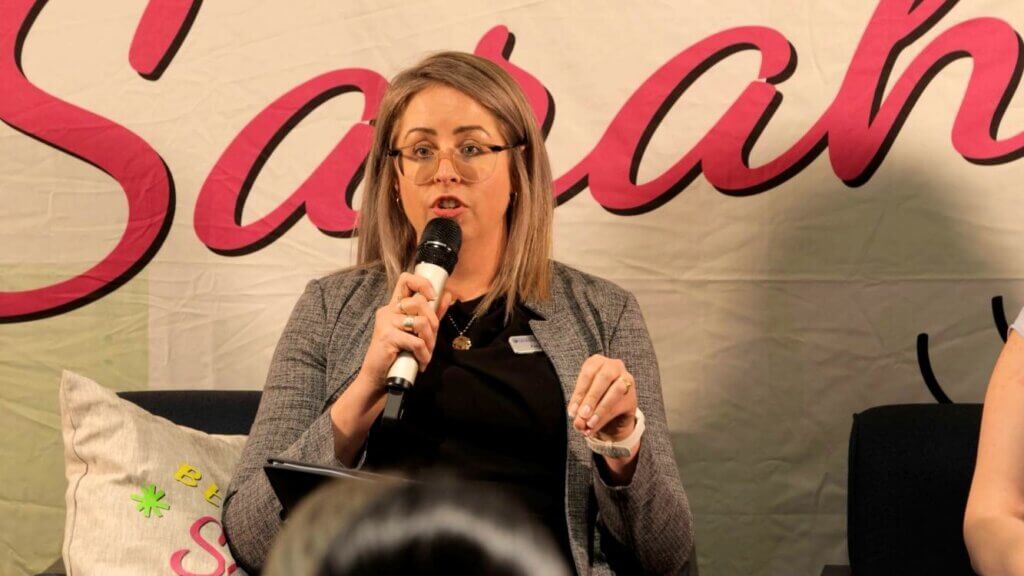
“The matters themselves are very similar,” she said. “But when you apply for a practising certificate, you’re also being assessed under additional provisions of the Legal Profession Act.”
She stressed the seriousness of the practising certificate declaration.
“That declaration is a legal document,” she said. “If you later turn out to have disclosed something incorrectly or misled the regulator, that’s extremely serious.”
Despite the volume of material discussed, all panellists were keen to reassure students that the system is not designed to punish applicants.
“The regime is not punitive – it is protective,” Ms Hayes said. “We’re not trying to stop people from entering the profession.
“We want a thriving profession, but we also need to mitigate risk and protect consumers and the public.”
The panel also discussed practical steps students can take to prepare their applications, particularly when disclosures are required.
Ms Parsons‑Pope said: “Once you identify a suitability matter, you need to think about what evidence is required.
“If it’s a Centrelink overpayment, you need evidence it was repaid. If it’s an infringement, you need proof that it’s been dealt with.
“If you need documents from a government body or court, request them early,” she said. “It takes time.”
As the session came to a close, Ms Hutchins encouraged students to engage with the information available and to ask questions early.
“There are admission kits on the Queensland Law Society’s website, and also numbers you can call to speak to the admissions board or QLS ethics team,” she said.
“While we can’t give legal advice, we can help explain what’s required and what full and frank disclosure looks like.”
The takeaway for students was straightforward: admissions may feel daunting, but it is a process designed to be navigated. Starting early, being upfront about disclosures and engaging with the resources available can make the path into the profession far clearer.
Admissions toolkit
The Queensland admissions toolkit is available here: https://www.qls.com.au/practising-law-in-qld/legal-practitioners-admissions-board/admission-kits
Legal Careers Expo
If you missed the Better Call Sarah panel, you can see them in person at the QLS Legal Expo on 11 May to discuss admissions.
The expo is free for current QLS student members. QLS student membership costs $10 per year and is open to all law students studying in Queensland.
Become a student member via the website or contact the Membership team at student@qls.com.au for help confirming your eligibility.




Share this article