



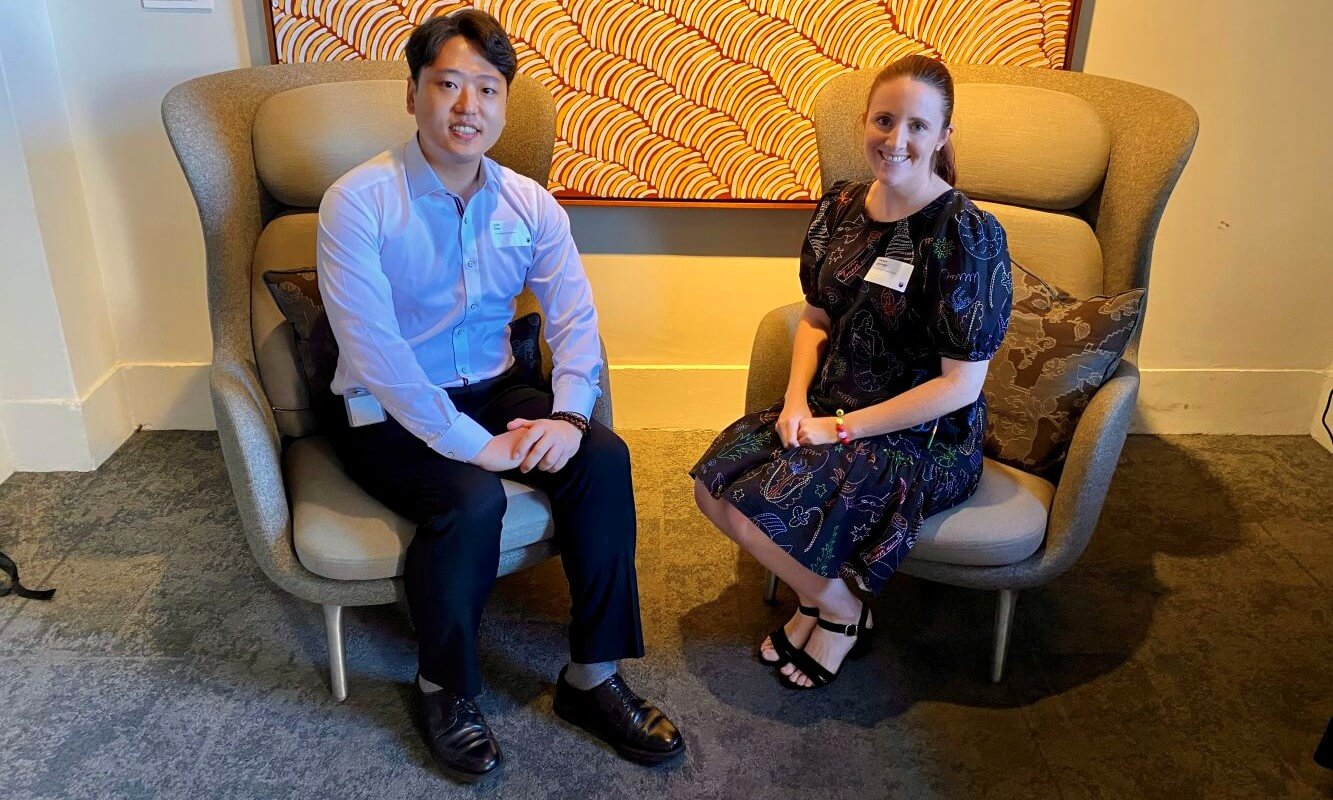
When graduate HWLE lawyer Jun Ki Cho (Luis) started the first day of his pro bono secondment at Cancer Council Queensland, he expected to have assistant-type roles.
Instead, he was surprised to find emails in his inbox from the legal team requesting that he work on active matters – work that would help not only his legal skills but his understanding of how legal teams in not-for-profit organisations operate.
“One of the most surprising aspects of the secondment has been the level of responsibility and trust afforded to me from the outset,” Luis said. “I expected to be involved in assisting roles, but instead I was given meaningful, hands‑on work.
“I was also pleasantly surprised by how closely connected the legal work is to real and immediate community outcomes.
“Seeing how legal advice affects organisations in need has been both eye-opening and motivating and has given me a renewed appreciation of the broader role lawyers and organisations play in society.”
Luis is no stranger to volunteer work and says his career path has not followed the traditional corporate trajectory, even from his first year at university.

“Instead, I began my legal career volunteering at the Refugee and Immigration Legal Service, where I gained invaluable experience communicating with clients from diverse backgrounds, managing files and assisting in drafting correspondence,” he said.
“This experience equipped me with practical skills that also translated seamlessly into corporate legal environments and remain skills that I continue to use and value.”
Luis is one of more than 600 graduates who have passed through HWLE’s national pro bono secondment program since its launch in 2020.
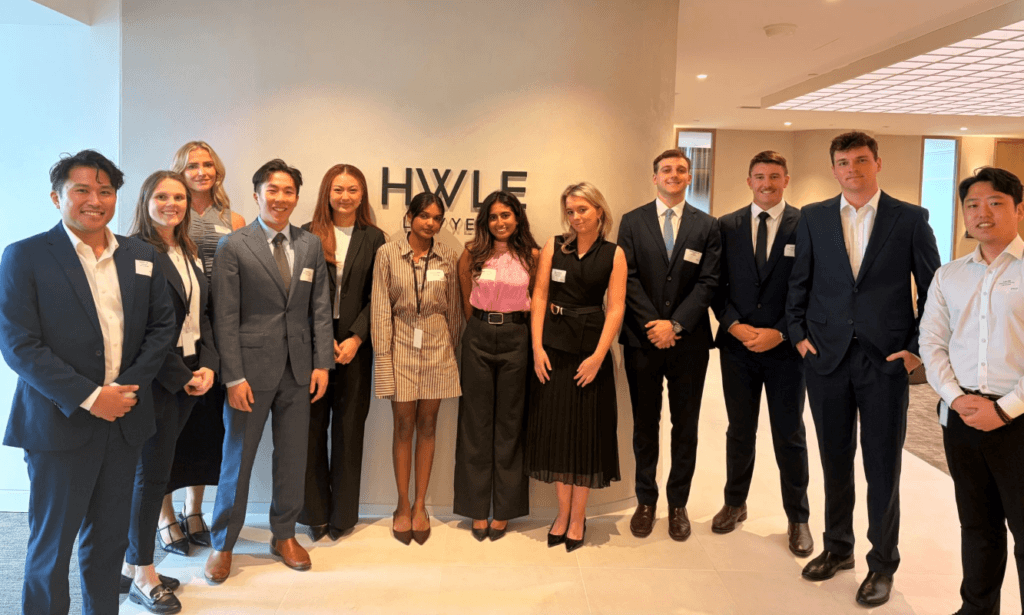
At its core is a simple philosophy: the best way for the firm to meaningfully contribute to unmet legal need is to work alongside the organisations already in the community.
For Karen Keogh, Partner and Head of Pro Bono at HWLE, the program is not charity – it is a strategic partnership model designed for their lawyers to make a genuine contribution.
“It’s the CLCs, charities and NFPs working in the community who are best placed to direct the pro bono practices of large commercial firms to areas of unmet legal need,” Ms Keogh said.
“The HWLE pro bono practice aims to provide legal assistance in areas where it is most needed, working alongside other legal assistance providers where they are unable to assist due to eligibility, expertise or capacity.
“The work is varied and only one component of it is providing secondments both at solicitor and graduate level.”
Ms Keogh said the firm does not target specific client groups or issue areas. Instead, it focuses on organisations with internal legal teams working in the community – particularly those in regional and remote areas, where legal need is often most acute.
Placements are determined by the volume of pro bono requests, the nature of the work required and the capacity and workload of the practice groups in which graduates are placed. The secondment program is compulsory, and graduates are required to do six weeks over a 12-month period.
However they may take different forms depending on the partner organisation and state. The result is a program that is both flexible and responsive. The overwhelming feedback from the graduates is that it is a rewarding experience.

Head of Pro Bono Karen Keogh
In 2025, HWLE delivered 43,000 pro bono hours, and Ms Keogh says the practice continues to grow.
“We are always looking for opportunities and partnerships for our lawyers to contribute their time and expertise meaningfully to meet some of the unmet legal need across Australia,” she said.
For Luis, the secondment at Cancer Council Queensland has been an important step and learning opportunity in his early career. He is clear about the three elements that have shaped his experience: community connection, variety of work and the collaborative nature of the team.
“Knowing that the work I produce benefits not-for-profits provides a strong sense of purpose that differs from the corporate litigation environment,” he said.
“Rather than focusing solely on the business aspects of legal work, I have had the opportunity to assist with matters that address everyday issues faced by not-for-profit organisations.
“This has allowed me to further develop my communication skills when working with clients from diverse backgrounds.”
The variety of tasks and level of responsibility has also been “extremely rewarding”. One day he was drafting correspondence; the next assisting with fundraising and donation documents essential to the operations of a not‑for‑profit.
“This exposure has allowed me to build confidence and independence in my legal skills,” he said.
“The collaborative and close-knit nature of the organisation has been a highlight. Working within a smaller team has enabled me to build strong rapport with colleagues across different departments.
“This experience has reinforced the importance of communicating in a way that is accessible and client-focused, rather than relying on technical language that may not always be appropriate.”
The experience has also influenced his long‑term thinking. While Luis still sees a future in corporate law, he says the secondment has reinforced the importance of maintaining a strong connection to community‑focused legal work.
At Cancer Council Queensland, where the legal team consists of only two lawyers and an executive assistant, the arrival of each graduate brings both support and renewed energy.
Theresa Jennings, Senior Legal Advisor, said the organisation has long supported university students and early career lawyers, but joining HWLE’s formal program in 2024 marked an evolution in their support. Since then, Cancer Council Queensland has hosted eight graduate rotations.
“The program has been a positive experience. The graduates have been curious, eager to learn and they’ve integrated seamlessly into our tight‑knit team,” Ms Jennings said. “It’s been a pleasure watching their confidence grow over the course of each rotation as they gain exposure to legal work in a purpose‑driven environment.”
For Cancer Council Queensland, the benefits are twofold. Graduates assist with a range of matters – privacy, contracts, risk management, fundraising and estate administration – while also bringing fresh thinking to a small team.
“Importantly, they also gain insight into how the law operates in a mission‑driven organisation, where advice must be practical, easily understood, technically sound and aligned with organisational values and community impact,” she said.
“We hope graduates leave with a deeper appreciation of the role lawyers can play beyond traditional commercial settings. We also aim to pass on the importance of clear communication, sound judgement, and collaboration.
“Working in a not‑for‑profit means that good legal advice must be practical, accessible, and human‑centred.”
It is a reciprocal learning environment. Graduates gain exposure to community‑level legal need, direct client contact and a broader understanding of how the law operates outside a corporate office. Host organisations gain skilled support, fresh perspectives and the opportunity to shape the next generation of lawyers. And HWLE strengthens its pro bono practice while embedding community‑focused values into its graduate cohort.
Ms Jennings describes it as “learning flowing both ways” and the program reaffirms the value of investing in early career lawyers.
“We are deeply grateful to HWLE for partnering with Cancer Council Queensland through the Pro Bono Secondment Program and for their ongoing commitment to both community impact and professional development,” she said.
“It has been a privilege to contribute in a small way to the graduates’ professional journeys, and we look forward to continuing the program in the years ahead.”
Ms Keogh sees it as a way to ensure the firm’s pro bono work remains grounded in real need.
As HWLE’s pro bono practice continues to expand, the secondment program is set to remain a cornerstone of its national strategy. The firm is actively seeking new partnerships and opportunities to deepen its impact.

And for Luis, he would strongly recommend secondment to others, believing it would be highly beneficial if students were introduced to the concept earlier in their university studies.
“It has highlighted how valuable it is to develop well-rounded skills that balance technical legal expertise with clear communication and social awareness.“







Share this article