

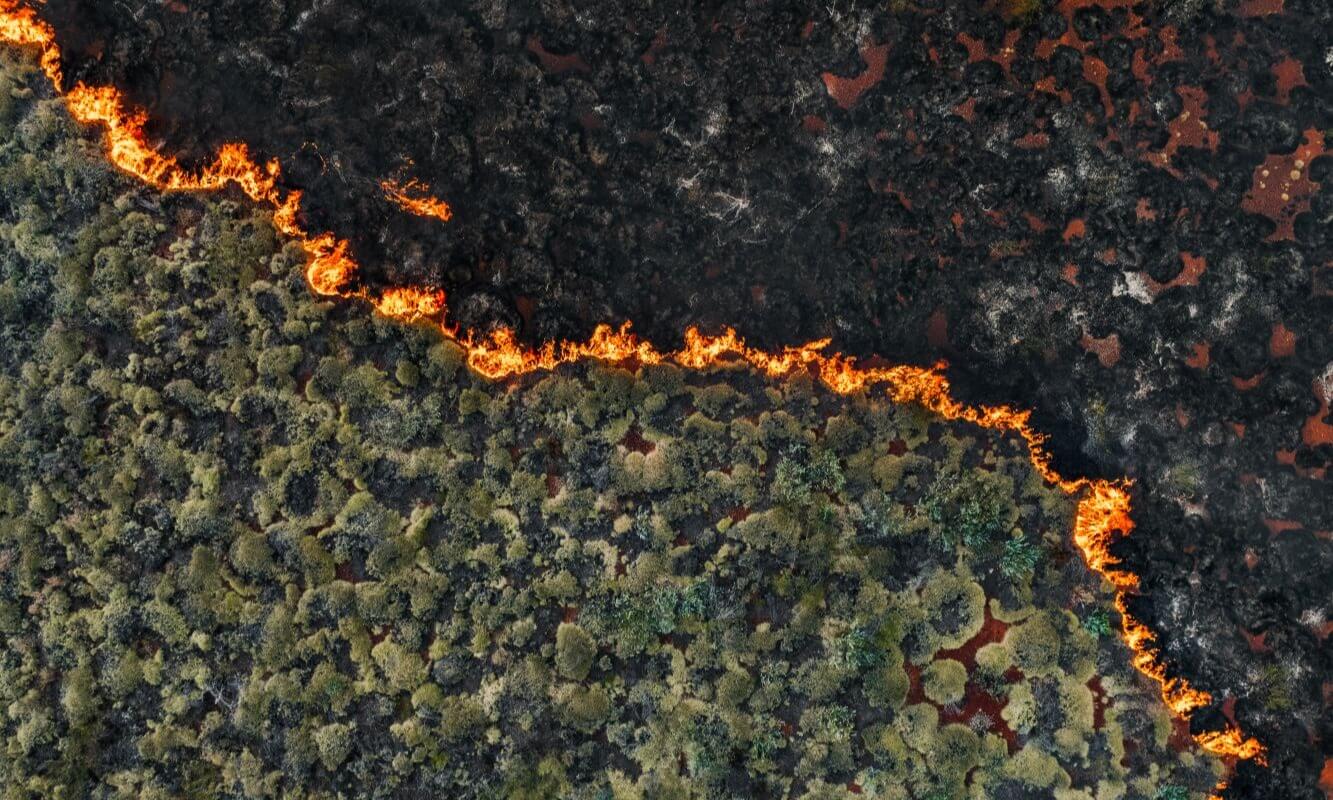
A South Australian farming family has lost its appeal against a finding of liability for a 2021 bushfire which destroyed more than 14,000 hectares of land, buildings and livestock.
Late last month, the South Australian Court of Appeal upheld the primary judge’s ruling of June last year, that the late pastoralist Thomas Brinkworth had set fire to a rubbish heap which smouldered for six months before reigniting and causing the bushfire on 11 January five years ago.
Four groups of adjacent landholders and residents brought claims in negligence and nuisance against the executors of Mr Brinkworth’s estate and the other property owners, including his family members.
They contended that the fire originated from a vegetation heap that was lit in July 2020 and not properly extinguished, such that it smouldered internally for six months until it turned into flames in the hot, dry, windy conditions of 11 January the following year.
The respondents contended that the heap was not lit in July 2020, and that the fire emanated from a tree hit by lightning in November 2020, with the heat smouldering internally for 62 days until it turned into flames.
In her 292-page judgment, the primary judge held that the applicants had proved on the balance of probabilities that a lightning strike was not a plausible or probable cause of the bushfire, and the cause was instead the active heap.
She held that the respondents failed to build fire breaks around the heap, and that if the active heap had been built in line with the CFS Vegetation Pile Burning Code of Practice, the risk of smouldering would have been reduced or eliminated.
She concluded the respondents had breached a duty of care owed to applicants, causing the bushfire and the harm suffered by the applicants.
The Brinkworths challenged the decision on two grounds: that the trial had wrongly accepted that there was a choice between two competing theories and accepted the burn heap theory by default; and that scientific fire spread calculations should have been treated as determinative, excluding the burn heap as the cause.
Court of Appeal President Mark Livesey, Justice Chris Bleby and Justice Ben Doyle stated that the primary judge’s acceptance of the active heap theory did not follow from a rejection of the lightning strike theory, with the latter found to be implausible.
They said the primary judge’s reasons for considering the active heap as the origin of the fire “were not glaringly improbable or contrary to any compelling inference or incontrovertible fact”.
They concluded the appellants had not shown that the finding that the active heap was the cause of the fire was wrong.
The estate is now liable to pay substantial damages to insurers and the 132 affected property owners.
Read the original judgment here and the appeal decision here.






Share this article