

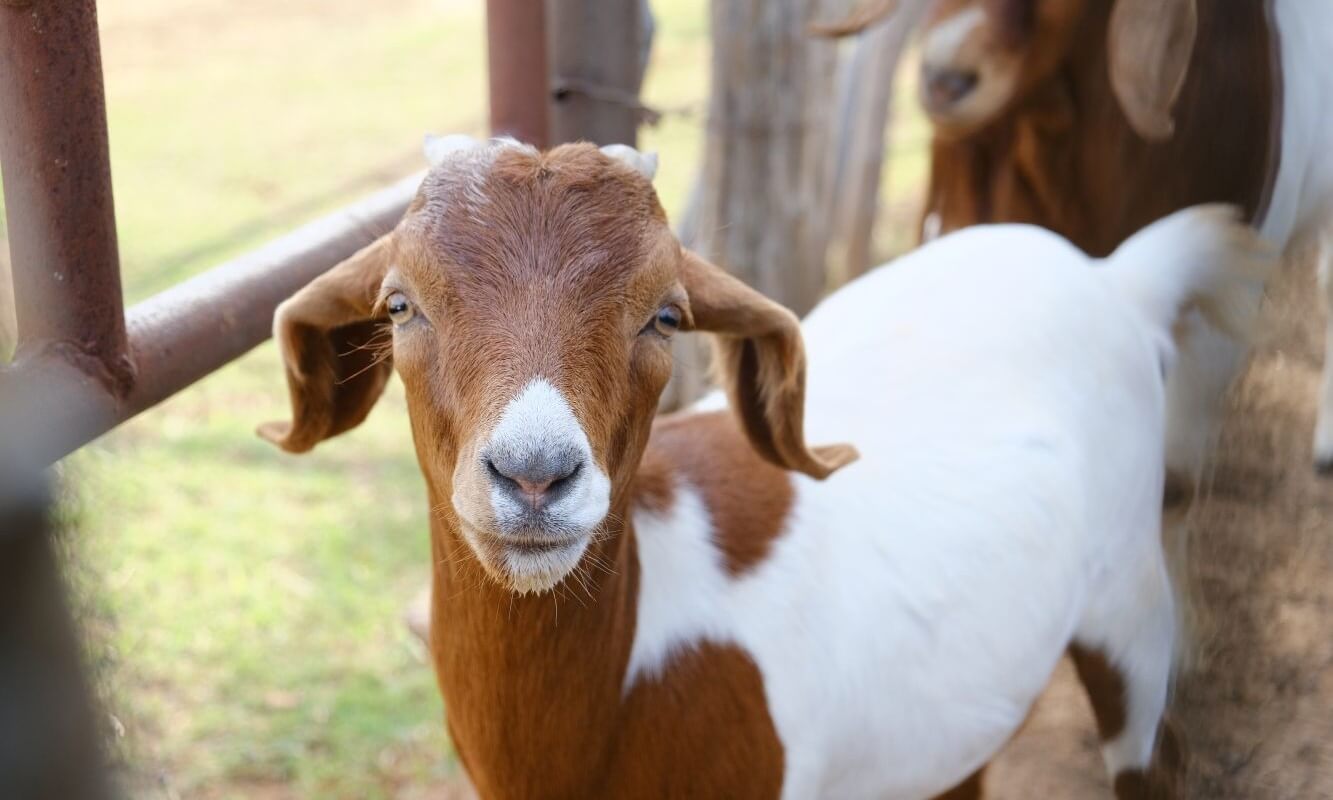
A disgruntled goat breeder banned from the Sydney Royal Easter Show is looking to whistleblower protections to expose what she calls misconduct in the management of the esteemed event.
In a decision on 3 August, the Federal Court found Boer goat exhibitor Tracey Wood may be an “eligible whistleblower” for the purposes of Section 1317AAA of the Corporations Act, as “an individual who supplies services or goods” to the Royal Agricultural Society of NSW (RAS).
Ms Wood claimed she was banned from exhibiting her animals at the 2023 show after she alleged discrimination or unfair targeting of her by the Goat Show Competition Judge and the Chief Show Steward when she exhibited at the 2022 show.
The purported protected disclosures included that from 17 April 2022, the two men were “acting improperly, unethically, discriminatorily and unprofessionally in the exercise of their powers”.
Ms Wood had been an RAS member for about 17 years, exhibiting her Boer goats between 2007 and 2022, through her then business Pacifica Boer Goat Stud.
She pleaded that as a result of the detrimental conduct and threats, she suffered loss and damage, and is seeking exemplary damages from each of the RAS and the judge.
Justice Jane Needham last Monday found the RAS had not met the onus of persuading the court that Ms Wood had no reasonable prospects of succeeding on the question of whether she was an eligible whistleblower.
The question for the court was whether Ms Wood is or had been an “individual who supplies services or goods” to the RAS within the meaning of s 1317AAA(c).
The RAS applied for summary judgment on the basis that Ms Wood was not such an individual.
Ms Wood claimed that between 2009 and 2017, she worked for the RAS as an unpaid volunteer providing marketing and fundraising services.
She also pointed to being appointed the RAS “Breed Captain” for Boer goats in 2013, which required stakeholder management, and being awarded the “Royal Agricultural Society of New South Wales Champion” in 2018, for her services and contribution to the RAS and the goat industry.
The RAS argued it did not use volunteers to perform the kind of work described by Ms Wood in advertising, marketing and fundraising.
The court examined myriad issues including Ms Wood’s role as Breed Captain (which involved “goat bump-in” and “goat bump-out” responsibility); and whether she was a member of the RAS Goat Committee or the Sydney Royal Boer Goat Committee of the Boer Goat Breeders Association of Australia.
In defining “eligible whistleblower” the RAS submitted that “supplies” conveyed that the activity was current, and Ms Wood’s last supply being pleaded was her RAS champion award in 2018.
Ms Wood submitted that the “natural and ordinary meaning of the provision is pellucid” and denied that the word “supplies” was in the present continuous tense, which would be “is supplying”.
“In this enticing debate, I agree with Ms Wood; the present continuous tense requires the present tense of the verb to be (‘is’) and the present participle of the main verb (‘supplying’),” Justice Needham said.
“The tense used here is the present tense, but in the sense of an habitual action…” she said.
“The word ‘supplies’ can refer to the act of supplying, for a short or for a long period, the relevant services or goods. The relevant term needs to be construed, not as a matter of strict grammar, but in the context of the preferable construction with reference to the purpose of the Corporations Act…”
The RAS also referred to the Explanatory Memorandum related to Part 9.4AAA of the Corporations Act, noting that it established a framework designed “to encourage employees, officers and subcontractors engaged by a company to report suspected breaches of the corporations law to either ASIC or internally within the company”.
“The RAS submitted that the disclosures in sub-s 5(c) of the current s 1317AA indicate that this remains the purpose of the whistleblowing legislation, and the Part should be construed to be limited to persons who are making their supplies in a way which enables them to have access to that kind of information,” Justice Needham said.
“It would be a stretch of the normal meaning of the word ‘supplies’ to limit it to ‘supplies contracted for’ or ‘supplies requested to be made’,” she said.
“Certainly, volunteer supplies may be made without specific engagement by the recipient of the supply – for example, by way of fundraising.”
The RAS submitted that the meaning of the supply of services or goods must be of such a nature that the whistleblower has a closeness of connection with the regulated entity so that it is able to “observe or be affected by the organisation’s misconduct” and also to be “at risk of personal or financial reprisal for disclosing that misconduct”.
“There are no cases which assist in a direct way as to the kind of services or goods, or the manner of their supply, necessary to meet the definition of an eligible whistleblower,” Justice Needham said.
“I was not taken to any. I have not been able to find any judicial consideration of the provisions in relation to how to categorise volunteer suppliers of services or goods under s 1317AAA(c).
“From a review of the extrinsic material, and of the various judicial expressions of the purpose, I consider that the legislative purpose is to encourage individuals to disclose corporate and financial misconduct, and to reduce the risks to the whistleblower of such disclosures.
“Section 1317AAA(c) includes suppliers of services and goods to a regulated entity such as the RAS, or a relative of that supplier, such that those suppliers may make disclosures of offences or contraventions of the Corporations Act by the regulated entity.
“I find that the activities pleaded by Ms Wood being fundraising, her membership of the BGBAA Sydney Royal Boer Goat Committee which supported RAS activities, and her appointment as Breed Captain could constitute supplies of services to the RAS.”
Justice Needham determined that Ms Wood should have the opportunity to replead, and made no order as to costs.






Share this article