


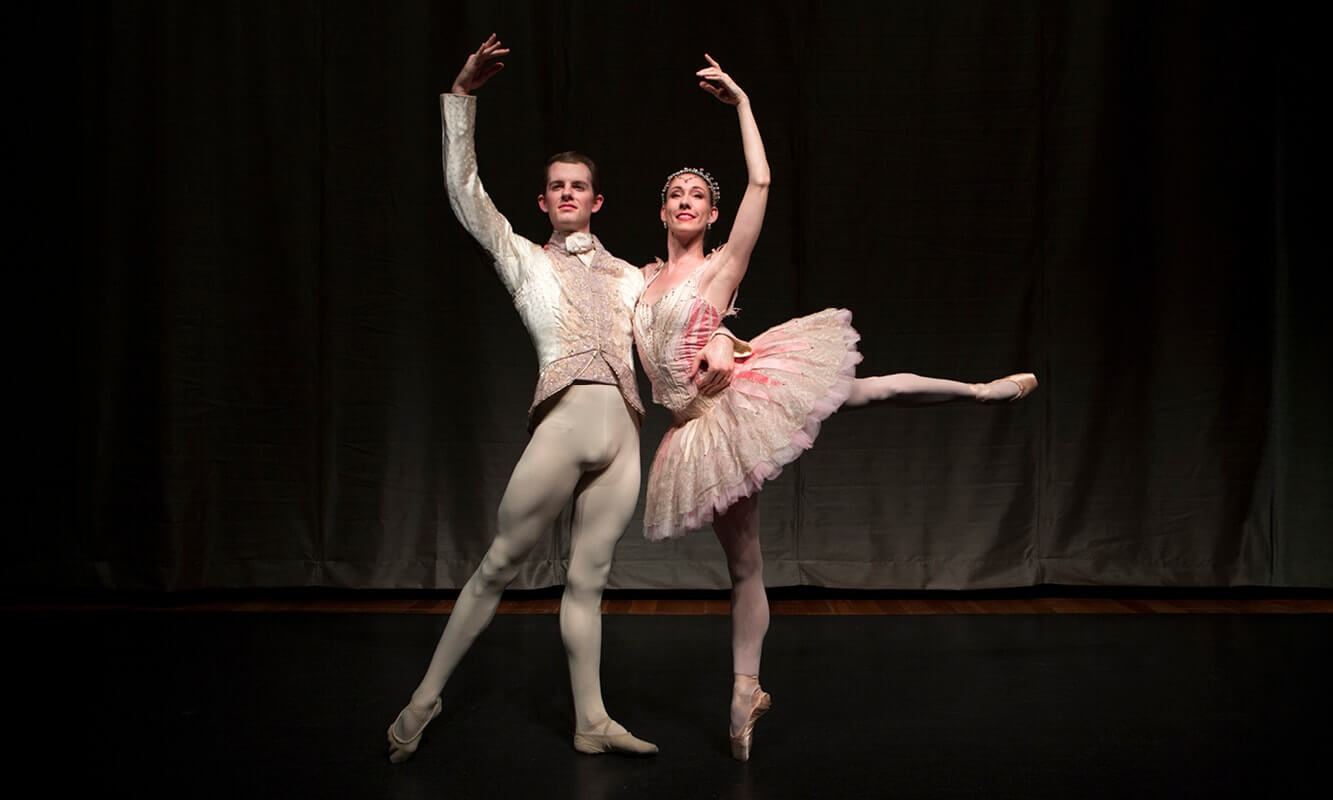
Queensland Ballet Company will receive $2 million from an admirer’s estate after the Supreme Court ruled the executor’s choice of beneficiary was justified.
Brisbane arts enthusiast Glenn Rycen Cooke died in January 2025, with his 1993 will stating that his residuary estate be left:
“… to my Trustee upon trust to be donated to a significant Queensland contemporary dance company in the discretion of the Trustee to form a scholarship for a young dancer or choreographer to assist in the development of such persons’ professional skills”.
Executor Judith McKay opted to donate the late 78-year-old’s money to the Queensland Ballet Company (QB), which prompted a challenge from the Brisbane-based Australasian Dance Collective Limited (ADC).
The ADC contended Dr McKay failed to give real and genuine consideration to applying the gift to it, submitting that QB was not a “contemporary dance company”, and applied for a court order that it receive the funds instead.
Dr McKay applied for a court direction that she was justified in her decision, and on 24 June this year, Brisbane Supreme Court Justice Melanie Hindman ruled she was.

The issues focused on determining the meaning of the words “a significant Queensland contemporary dance company”, and whether the court should make the ensuing decisions such as whether QB fell within the meaning.
Justice Hindman found that it was not possible to conclude on any objective basis that QB was not “a significant Queensland contemporary dance company” and so the issue was properly left to Dr McKay.
“It is noted that Dr McKay’s application is for a direction that she is justified in donating the residuary to QB and does not extend to exercising her discretion for her; what is sought is merely a permissible advisory opinion,” she said.
At the hearing on 6 May, expert evidence was proffered as to the nature of contemporary dance, the nature of the program and works of QB, and the nature of a contemporary dance company.
Justice Hindman said that expert evidence was “doubtfully strictly admissible in the context of this case and has been given no weight by me”.
“That is because the evidence does not reveal that the testator in writing his will used any of the relevant words in clause 10(iv) in any special or technical sense,” she said.
Mr Cooke worked at Queensland Art Gallery/Gallery of Modern Art for nearly 32 years until his retirement in 2013.
His dancing history included formal lessons, then social sequence ballroom dancing with Brisbane Sunday Social Dance Club. He also collected social dancing ephemera from dancing schools and clubs, instructors and venues.
“There is no evidence that Mr Cooke otherwise took any particular interest in the world of dance – either in a professional way or socially,” Justice Hindman said.
“There is no evidence that he attended dance performances or supported any particular dance company or preferred any particular dance style (other than as he participated in as above). There is no evidence he kept up in trends in the world of dance.”
She said however, Mr Cooke was well versed in the arts world, and understood the distinction between traditional or classical art and contemporary or modern art.
“By logical extension, so too I find Mr Cooke had an appreciation at the time of signing his will that there is a distinction between traditional or classical dance styles and contemporary or modern dance styles,” she said.
“I find that at the time of signing his will he had an appreciation that ‘contemporary dance’ is a particular dance style.
“In fact, I consider that any average adult member of the community has an appreciation that ‘contemporary dance’ is a particular dance style, amongst the many dance styles that exist in the world of dance.
“And Mr Cooke was better informed about the arts (which includes dance) than most.”
However, she rejected any submission that Mr Cooke was using the words “a significant Queensland contemporary dance company” in any special or technical sense.
“The use of the words ‘contemporary dance’ as identifying a particular dance style is nothing more than accepted and common usage of the words,” she said.
She said the proper construction of the will was to read the six words as comprising the compound noun “contemporary dance company” (as one vocabulary item) with two adjectives describing the type of contemporary dance company – “significant” and “Queensland”.
“The testator, a person experienced in the arts generally, can readily be taken to have understood, just as contemporary art is a specific visual art style, that contemporary dance is a specific dance style,” she said.
“He was, by the use of the words ‘contemporary dance company’, identifying a dance company that engaged in the dance style of contemporary dance.
“There is no allegation in this case that either QB or ADC insofar as they are both dance companies are not both significant and Queensland.
“The focus of the proceeding has been upon whether QB is properly described as a ‘contemporary dance company’. There is no dispute that ADC plainly is a contemporary dance company.”
Justice Hindman outlined the characteristics of contemporary dance, and when a dance company might be described as a contemporary dance company.
She referred to two cases dealing with the Archibald Prize, and how the definition of “portrait” was determined, to resolve the matter.
“QB is certainly able to be described in a number of different ways including as a ballet company, a modern ballet company, a dance company, and a hybrid dance company, to name a few,” she said.
“It also spends a significant (not de minimus) amount of its time devoted to contemporary dance. That QB might be described in the ways mentioned does not mean it is also not properly described as a contemporary dance company.”
Justice Hindman concluded that Dr McKay’s proposed exercise of power was within the terms of the power and was in accordance with the purposes for which the discretion was conferred.
She also concluded that Dr McKay gave real and genuine consideration to donating the money to ADC, through making reasonable enquiries to identify potential recipients and reviewing information from them.
Justice Hindman said the ”significance” of a recipient was best left to Dr McKay to decide. The word’s meaning in the will could include financial, cultural and profile considerations, she said.
She ordered Dr McKay’s costs to be paid from the residuary estate on a solicitor-own client basis, and made no other order as to costs.
Read the case here.






Share this article