




On a winter morning in the small country town of Biloela in Central Queensland, the local solicitor’s office is unusually quiet.
A will signing is scheduled, a handful of client calls awaits, and in the corner sits five-month-old Kiara, contentedly accompanying her mother to work.
For Madison Kurtz, this is not an interruption to professional life. It is professional life, one built deliberately in the town where she was born and raised.
As regional Queensland grapples with persistent shortages of lawyers and other professionals, Ms Kurtz represents a growing argument for the value of practising beyond the city. Her story is less about sacrifice than opportunity: a career that has moved quickly, a broad legal practice, and a family life deeply rooted in community.
“There was always a plan to come home at some point. I was prepared to go wherever I needed to for work and experience, but if I could be in a regional area, that was always the goal. Going to Rockhampton was perfect because it was close enough to home, but it wasn’t ‘home’. It gave me the chance to build my own career, forge my own path and develop professionally before eventually bringing those skills back to Biloela,” she says.
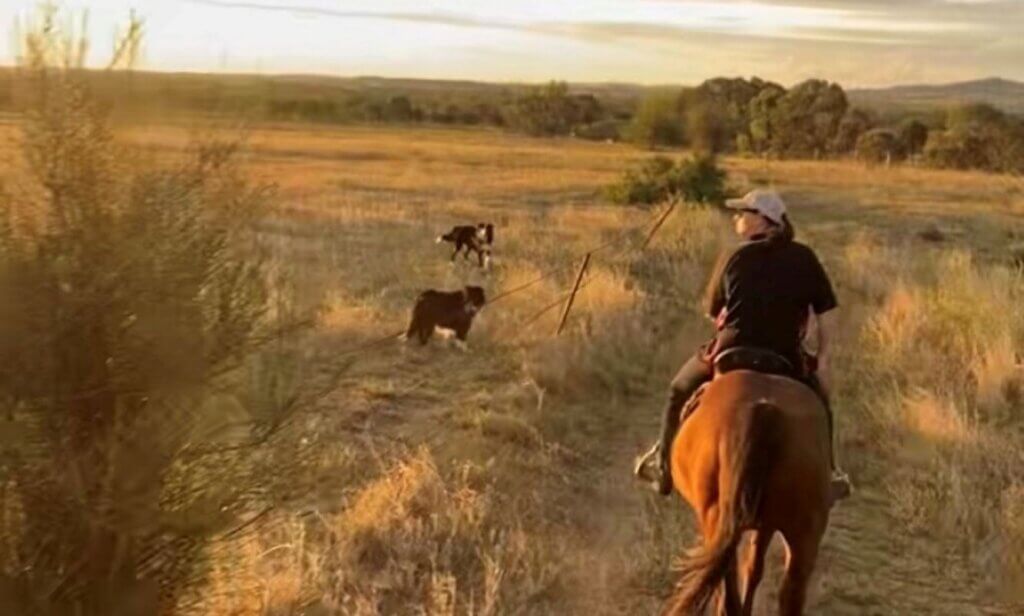
Biloela sits in Queensland’s Banana Shire, surrounded by cattle country and agricultural enterprises, and has a population of 5,800. Ms Kurtz grew up on a beef cattle property outside town, learning to drive in an ageing HiLux, spending weekends checking fences and waters, and riding horses and motorbikes through paddocks that stretched beyond the horizon.

Her parents operated cattle properties across several thousand heactares. Life revolved around the rhythms familiar to many rural families, mustering cattle, pony club, school and community.
“I’ve always been a horse and dog and cat kind of person,” she says with a laugh.
Academic success came naturally, but the path into law emerged gradually. A stint of work experience in an accounting practice left little impression. Law, however, offered something different, intellectual challenge combined with real-world impact.
After graduating from Biloela State High School, Ms Kurtz moved to Brisbane to study law at Griffith University. For many regional students, the move to the city is both exciting and disorientating. For Ms Kurtz, it was an exercise in adaptation. She found the scale confronting.
“Going from a small town where I knew everybody to a university campus that felt bigger than the population of my hometown was a huge adjustment. I didn’t have friends there to begin with, and I found city life quite isolating. There were too many people, too many cars, and I missed being around animals, being outdoors and being close to my family. I always knew Queensland’s regional communities were where I felt most at home,” she said.
The prospect of remaining permanently in Brisbane held little appeal. While she was prepared to stay if necessary for work, her ambitions remained firmly tied to regional Queensland.
That opportunity arrived before graduation. While completing her final year, Ms Kurtz undertook transcription work with the Office of the Director of Public Prosecutions in Brisbane and managed to secure a position in Rockhampton as a legal support officer. The role launched a professional journey that would expose her to some of the region’s busiest courtrooms.
After admission, Ms Kurtz joined Queensland Police Prosecutions, starting in Rockhampton before accepting a contract role in Mackay, a move she now regards as one of the defining experiences of her early career.
At just 22, she was appearing almost daily in busy magistrates’ courts, handling dozens of matters and learning to make decisions quickly in an environment where there was little room for hesitation.
“It was definitely scary,” she admits. “You learn to think on your feet very quickly.”

The role demanded resilience, sharp advocacy skills and the ability to absorb information from multiple directions at once, listening to magistrates, responding to defence lawyers, reviewing documents and advising police officers, often simultaneously.
For a young lawyer, the learning curve was steep. Yet perhaps more importantly, Mackay introduced her to the strength of regional professional communities – and her now husband.
“Mackay was an important part of my development as a lawyer,” she says.
“Professionally, I was appearing in court every day and learning to think on my feet.
“Personally, I found a legal community that was incredibly supportive. The profession is small enough in regional centres that you genuinely get to know people. Some of the lawyers I met in Rockhampton and Mackay are still close friends today.”
While large city firms can sometimes leave young practitioners confined to narrow specialisations and limited networks, Ms Kurtz found regional practice remarkably collegiate. Lawyers encountered one another regularly in courtrooms, at professional events and through community activities. Professional relationships quickly developed into lasting friendships.
The experience reinforced something she had already begun to suspect: regional practice offered not only broader legal experience, but a stronger sense of professional belonging.
For young lawyers considering a move beyond the capital cities, she believes that can be a powerful advantage.
“You get a lot more direct exposure,” she says.
“You work closely with clients, with senior lawyers and with the courts. You get responsibility much earlier.”
Today, Ms Kurtz practises across criminal law, domestic violence matters, wills and estate planning, estate administration, conveyancing and selected commercial matters. It is the kind of broad practice increasingly rare in major city firms, where lawyers are often encouraged to specialise early.
In regional Queensland, however, a single client’s legal needs rarely fit neatly within one discipline. A property transaction may involve succession planning, an estate matter may raise commercial questions, criminal proceedings can intersect with family circumstances. The result is an intellectually dynamic career that rewards versatility.
“You might get more experience than your years suggest,” Ms Kurtz says.
That breadth helped draw her back to Biloela permanently.
After several years in Rockhampton and Mackay, she returned to Biloela and joined a local practice before moving to Byrne Lawyers, initially commuting between Biloela and Gladstone.
In 2024, the firm’s Biloela office opened, giving the town a permanent local presence and allowing Ms Kurtz to practise fully from “home”. Today, she is the sole lawyer in the Biloela office, but it isn’t without its challenges.
“Because this is my hometown, people know me outside of work. They remember me from school or know my family,” she says.
“Sometimes that can mean you have to work a little harder to establish yourself as a professional, particularly when you’re a young lawyer.
“But it also means people place a lot of trust in you because they know who you are, they know your values and they know you’re invested in the community.”
As she approaches 30, she still occasionally encounters clients who assume she’s too young to be a lawyer with enough experience to help them.
Regional practice can also feel professionally isolating if you let it. Unlike colleagues in larger offices, she cannot simply walk next door to seek advice or debrief after a difficult matter, but instead needs to pick up the phone.
Yet the advantages outweigh the drawbacks. Community relationships are deeper. Professional networks are often stronger. The legal profession in regional centres tends to be more collaborative than competitive. That sense of connection extends beyond the profession itself.
When she returned to work after having Kiara earlier this year, family support made the transition possible. Her parents, siblings and husband all work within the same family business, so childcare is often a collective endeavour.
The flexibility of regional practice helps too. Clients know her, they know she has recently become a mother and conversations about balancing family and work feel natural rather than exceptional.
“Having a baby has reinforced why I wanted to build my life here,” she says.
“My parents are here, my siblings are here, my husband’s here and there’s a genuine community around us. If I need help, there’s someone there.
“It’s not just about convenience; it’s about being surrounded by people who know you and care about you. I don’t think I could have created the same support network if I’d stayed in the city.”
For young lawyers contemplating a move away from the city, Ms Kurtz believes regional practice offers a proposition worth considering.
“I think a lot of young lawyers underestimate what regional practice can offer,” she says.
“You can gain an incredible amount of experience in a relatively short period of time because you’re exposed to real responsibility early.
“Whether you decide to stay in the regions or eventually move back to a city, that practical experience stays with you.
“It can give you a level of confidence and capability beyond what your years of practice might suggest.”
Most importantly, she argues, it does not have to be permanent. A few years in regional Queensland can provide practical experience that becomes invaluable later, whether a lawyer chooses to remain in the regions or return to a metropolitan career.
“People often look at regional practice and see what they might be giving up,” she says.
“I think they should also look at what they’ll gain. You gain responsibility, variety, strong professional relationships, community connection and, quite often, a better quality of life. For me, those benefits have far outweighed anything I might have left behind.”
As for her own future, the vision remains remarkably similar to the one she formed years ago.
“This was always the plan, to build a practice here, raise a family here and help people in the community I grew up in,” she says.
“If we can continue to grow the office and eventually attract another lawyer to Biloela, that would be fantastic. There’s certainly enough work, and there’s a real opportunity for practitioners who are willing to give regional Queensland a chance.”
That ambition speaks to a broader challenge facing the profession. Across rural and regional Queensland, communities continue to grapple with shortages of legal practitioners, even as young lawyers in metropolitan centres search for meaningful experience and career progression.
Ms Kurtz believes the solution may be simpler than many realise.
“People assume opportunity sits in the big cities, but some of the best opportunities I’ve had come from regional Queensland. The experience, the responsibility, the friendships and now the chance to raise my own family here, all of that came from choosing to come home,” she says.
In Biloela, that message carries particular weight. After all, Ms Kurtz is living proof that sometimes the most ambitious career move is coming home.



Share this article