



When Kylie Devney first joined Byrne Lawyers, the Gladstone-based firm had 13 staff, paper files stacked in cupboards and an old-school management structure.
Fast forward 16 years and the firm now employs 65 staff and 21 solicitors, many of whom work part-time or remotely across its offices in Gladstone, Bundaberg and Biloela.
In the latest episode of Queensland Law Society podcast The Callover, Georgia Athanasellis caught up with Kylie, the Byrne Lawyers’ Legal Practice Director, to reflect on her legal career, her decision to return to regional Queensland, transforming Byrne Lawyers, and her embrace of flexible work and growing regional talent.
Regional roots and growth
While born and raised in Gladstone, returning home to start her career wasn’t always on the cards when Kylie graduated from university in Brisbane.
She was close to starting a graduate role in Canberra before realising it wasn’t the right option for her.
“I basically realised through the recruiting process for that role that I was going to be the wrong fit for them,” she said.
“I’m far too opinionated. I wasn’t going to fit in the little box that was going to be needed for that style of role. So, it was a bit of a lightning moment that I was like, oh my goodness, I thought this was where I was headed and it’s not the right fit.”
Instead she decided to return home, work in private practice for a few years and then choose her next step.
“I certainly didn’t expect that I would still be in that same firm 16 years later,” she said.
Building from within
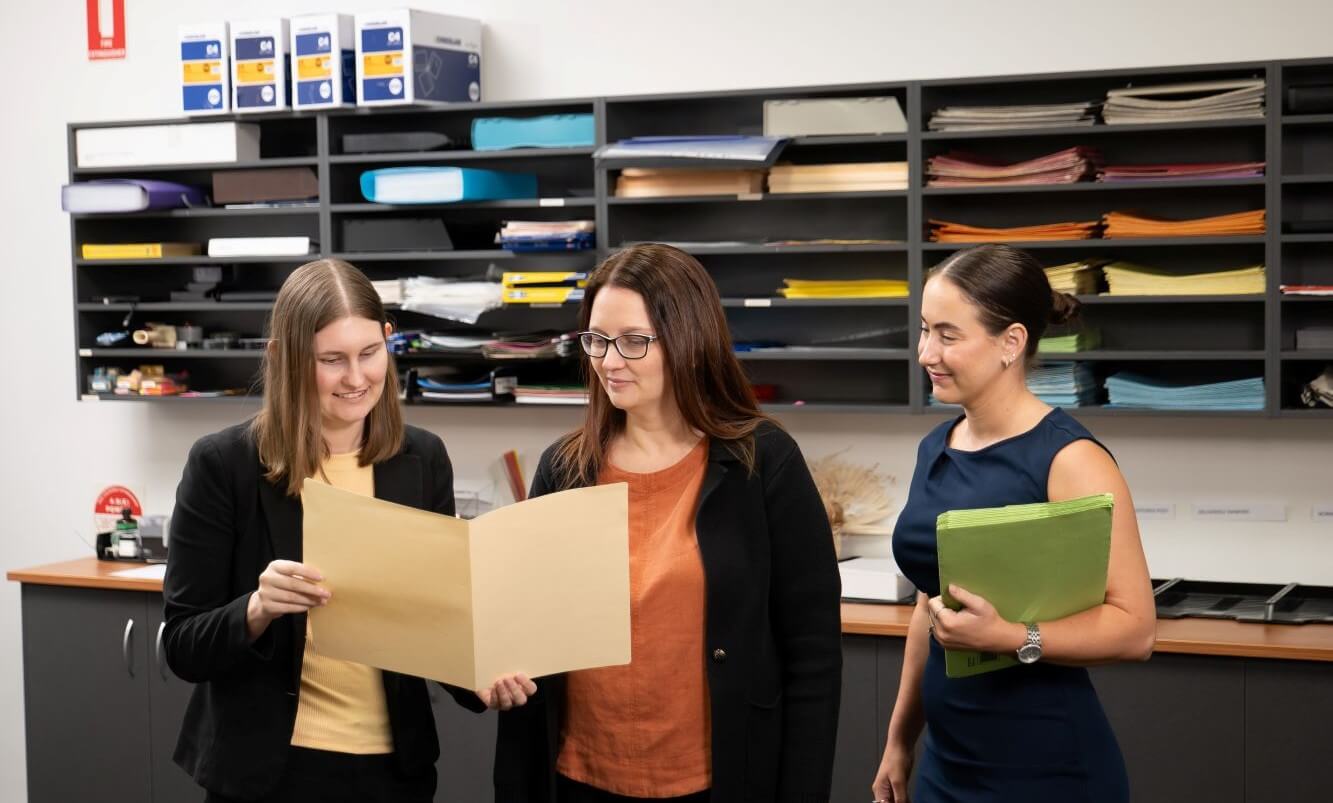
Supporting staff to work flexibly has been a feature of the firm’s “organic” growth, along with embracing technology and moving away from a paper-based practice.
“I think it’s a lot easier to find people when you work flexibly. There are so many people I have on my team that if I worked traditionally, they just wouldn’t be able to work for me or potentially for any practice,” she said.
“They’d be lost to the profession if we couldn’t facilitate them flexibly.”
While the approach has allowed Byrne Lawyers to secure great talent, Kylie said it could be hard to manage so many flexible arrangements.
Good systems are required to make it possible.
“Not just good systems, not just good IT and processes, but everything needs to happen across the practice really consistently,” she said.
“We all need to work the same way to be able to file, share and shuffle and work the way that we do.
“We need really good communication.”
Developing talent internally
Asked how the firm’s investment in training and staff development has contributed to its growth and success, Kylie said it was a “game changer” that had driven the firm forward.
Originally borne from the challenges of recruiting and training staff in a regional environment, the firm has since built a comprehensive learning platform for every role across the practice.
“It means they’re not always sitting around waiting for someone to be available. They can really self-pace through those resources, and most importantly, they can return to those resources,” she said.
The regional advantage
As for students studying in the city, Kylie is almost reluctant to recommend the regions, joking that she doesn’t want the secret of regional practice getting out.
“I’m torn because obviously it’s the best choice, but I don’t want everyone to know that, right? We want to keep the secret a little bit,” she said.
“But absolutely, the work-life balance is better. You get hands-on experience straight away. What I was doing compared to my Brisbane counterparts really was quite wild, but it meant that I learned in a really, fast way.”
Challenges remain
Despite the positives, she said access to professional staff and helping regional people with access to justice remained a concern.
She pointed to the time and cost involved in travelling long distances for minor court appearances, like the four-hour round trip for a procedural mention in Rockhampton, particularly when matters could potentially be dealt with remotely through digital means.
“If I’m really appearing on a procedural mention that’s essentially an adjournment or something like that, the cost of doing that is obviously a huge detriment to our clients trying to access really quite already expensive court systems,” she said.
“As an employer, I worry about putting my staff on these highways day in, day out to be able to do those sorts of appearances as well.”
She said city-based lawyers could help by advocating for greater digital access for the regions in courts.
Kylie features in the 2026 Proctor Annual magazine which will be available to members soon.






Share this article