



Sole practitioners and small firms were advised to take the time to consider, experiment and play with artificial intelligence tools before deciding on which ones to adopt for their firms, at the Queensland Law Society coffee catch-up yesterday.
QLS Director Ethics Grace van Baarle hosted a knowledgeable panel comprising Andrew Shute, co-chair of the QLS AI in Legal Practice Committee and chair of the QLS Litigation Rules Committee; Nicola Blade, chair of the QLS GenAI and Legal Education Advisory Group; and David Bowles, QLS Ethics, Special Counsel.
Senior Legal Consultant in MinterEllison’s Dispute Resolution team, Mr Shute advised the 50-strong audience at Law Society House that despite the rapid development in technology, AI was not a one-stop shop.
“My view is that if you’re going to dip your toes in the water, don’t try to solve everything with AI,” he said.
“Don’t go for really complex tasks of trying to automate everything.
“Focus on the more basic tasks and understand where you may even be able to need it, or what part of your business may benefit from efficiencies and focus on some of those more basic tasks.”
Mr Bowles agreed, saying there was no one-size-fits-all approach with AI.
“From the perspective of things that are reported to us from small firms, you can’t really expect to buy any product, simply turn it on and then have a robo lawyer working for you straight out of the box,” he said.
“MIT did a study and published a paper last year that said in the headline reported everywhere was 91 per cent of AI projects failed.
“When you go in below the headline and you really drill down to what that meant, 91 per cent of it wasn’t that the tools failed, it’s because of the overall project. The tool has to be woven into our workflow.
“There are personal skills you need to develop, such as instead of just asking for the output, you improve your prompting.”
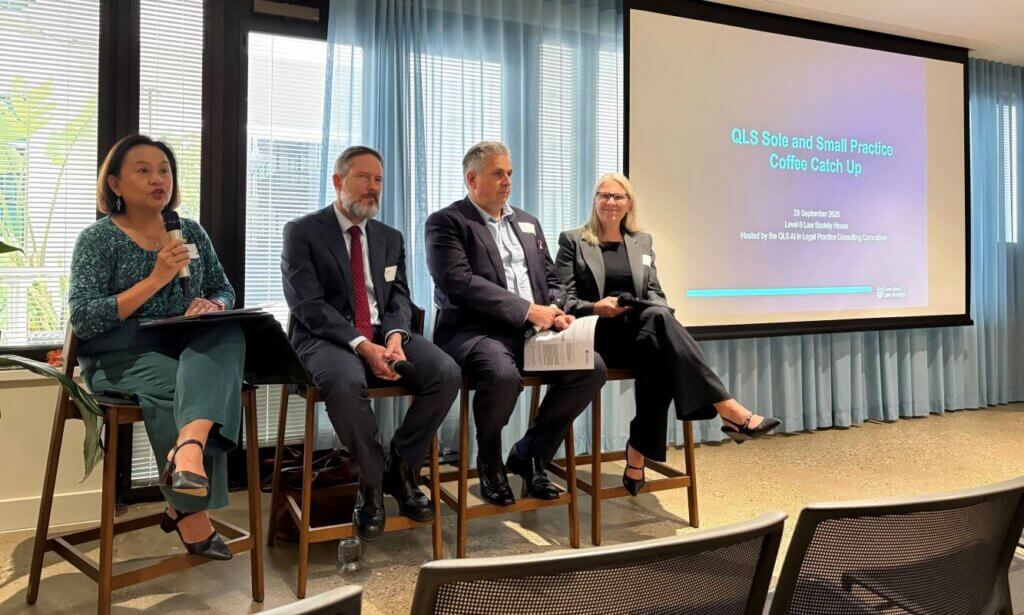
Ms van Baarle urged practitioners to not be afraid to play with a couple of different assistants to see their outputs and concentrate on prompts.
“Put in rubbish, get out rubbish,” she warned.
“Have a play and be comfortable without using client information and work on honing your skills.
“Practitioners also need to consider what and how they want to use AI whether it be Gen AI such as Chat GPT, Co-pilot or Claude; dedicated legal AI such as Harvey or Jude; legal research AI found in Lexis, Westlaw, CoCounsel or the AI layer added to practice management systems such as Leap AI, Smokeball Archie or Actionstep AI.
“They all do different things.”
Ms Blade, who is the Director of Knowledge and Legal Excellence at McCullough Robertson, said it was important to understand what you wanted the product to actually do before buying an AI assistant.
“So rather than buying tech for tech’s sake, actually take a moment to understand what it is you’re trying to achieve, what’s the pain point, what’s the problem that needs to be solved,” she said.
“And again, it’s already been mentioned that AI is not the answer to everything.
“There’s a range of other technologies out there that are very capable and good at what they do; understand what AI actually is capable of, where its strengths are.
“We know it’s a predictive technology. So again, the accuracy is critical. It may not be the best tool for what we’re trying to achieve.”
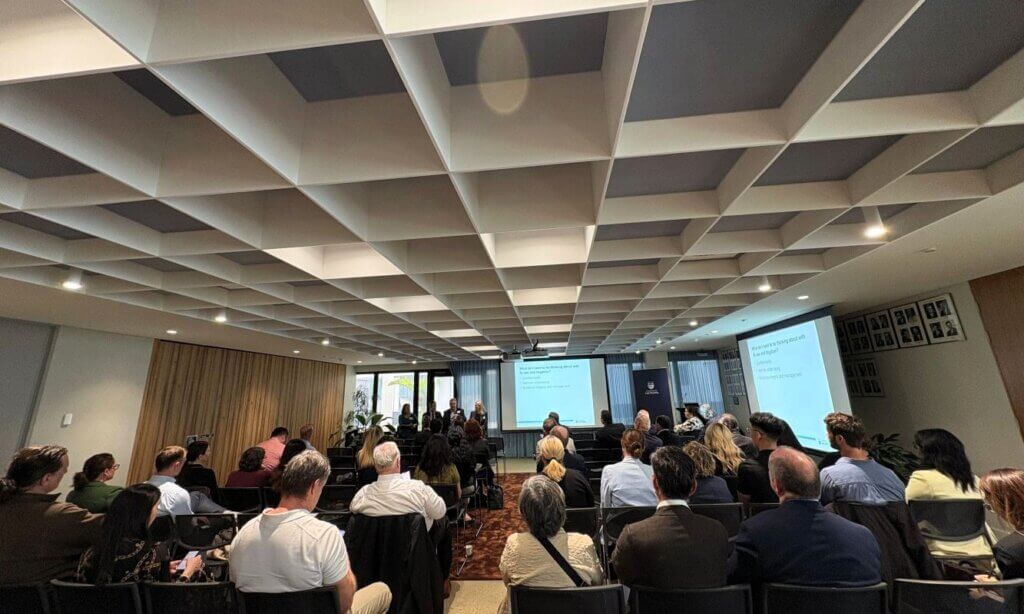
Ms Blade said most vendors were happy to allow practitioners to pilot.
“I’d say try some different products or once you’ve established what it is you’re trying to achieve, work out the two or three tools that are offering a solution in that space,” she said.
“Reach out to the vendors, see if they’re open to allowing you to pilot that particular tool because I think what’s really important is it has to work for you and your business and your clients.
“Where we have often failed with technology is bringing something in that just doesn’t fit the way our lawyers work.”
She said post-implementation vendor support was another consideration, and recommended practitioners look at the QLS checklist.
The panel also discussed clients and self-represented litigants using AI, acknowledging that practitioners cannot prevent clients from doing so but they can guide and explain why there are limitations on AI usage.
Panel members acknowledged staff would be using AI and there should be discussions and a policy on how AI could be appropriately used within the practice.
QLS has a range of resources available for practitioners:
- QLS-artificial-intelligence-policy-template
- QLS-warning-to-clients-use-of-AI-tools-template
- List of Court protocols on AI
- Practice Advisory Service – Queensland Law Society (where practitioners can have a confidential discussion / visit on the use of AI).







Share this article