




The law does not become effective simply because it is tougher, and the success of the criminal justice system is not, and should not, be measured by how many people we imprison.
That was the key message from the Queensland Law Society on Friday when it addressed the Justice, Integrity and Community Safety Committee at the public hearing into the Breach Bail, Go to Jail and Other Legislation Amendment Bill 2026.
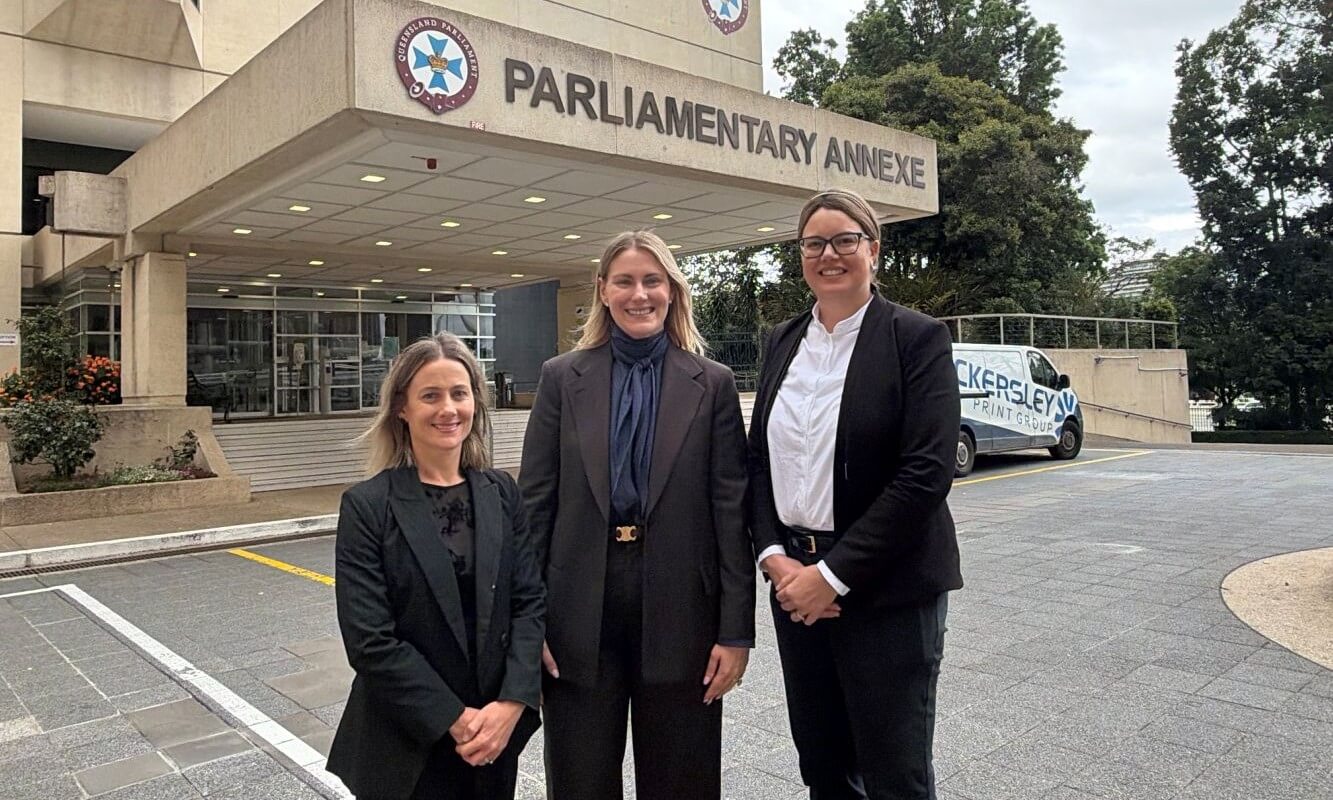
The Society was represented at Parliament House in Brisbane by Criminal Law Committee member Adam Moschella, chair Damian Bartholomew, and First Nations Legal Policy Committee co-chair Kristen Hodge. It shared a time slot with the Queensland Bar Association.
“The Society supports the objective around reduce serious repeat offending,” Mr Moschella, an Accredited Specialist in Criminal Law, said.
“However, the question is whether the extraordinary measures in this Bill are principled, proportionate and supported by evidence; that they will improve community safety.”
He said for children, the proposed changes would entrench their involvement in the criminal justice system at precisely the stage when early intervention was required to prevent that trajectory.

He outlined four key points from the Society’s submission.
The first was that the “high degree of confidence” bail test was a significant departure from existing law.
“The current bail framework already allows bail to be refused when there is an unacceptable risk of further offending, failing to appear, interfering with witnesses or endangering the community,” Mr Moschella said.
“The Bill goes further. It asks the courts and police to be satisfied to a high degree of confidence that a person will not commit another proscribed significant offence when released.
“The difficulty is that the Bill doesn’t explain what that standard means. It is not a settled evidentiary standard.
“In practice it requires the prediction about future conduct, often on limited material, while the liberty of a person, who is still presumed innocent, is at stake.”
The second point was that the proposed section 29AA offence was broader than the explanatory memorandum suggested, because it removed the sentencing responsibility to impose a sentence that reflected the circumstances of the offence and the offender.
“This is concern for the adult space, but it is particularly acute for children when age, development, trauma, disability, family circumstances, rehabilitation prospects and available supports are central to a just outcome,” Mr Moschella said.
The third point was that mandatory minimum sentencing displaced the fundamental protections against double punishment in sections 16 and 17 of the Criminal Code.
The fourth point was the proposed changes needed to be considered in the context of a youth justice system and corrections facilities which were already under significant pressure.
“The issue is not simply whether another prison bed can be found. The issue is whether there is a real capacity to safely accommodate, manage and rehabilitate people in custody,” Mr Moschella said.
“If overcrowding limits access to rehabilitation, education, employment and structured programs, the reform may make long-term community safety harder to achieve.”
He said there was a real risk of unintended consequences for children, such as more time held in watchhouses and reduced opportunities for early intervention and diversion.
Mr Moschella said for the courts, mandatory minimum sentencing may reduce incentives for early guilty pleas and increase contested matters, adjournments and trials, which would lead to further pressure, and increase delays across the system.
“Put simply, QLS wants measures that are genuinely directed at reducing serious repeat offending, but the criminal law works best when it is clear, proportionate and evidence based,” he said.
The committee’s report is due by 16 October 2026.





Share this article