



As Australia’s aged care system undergoes significant reform, lawyers are increasingly being asked to navigate difficult scenarios of how to protect older people while preserving their right to make their own decisions.
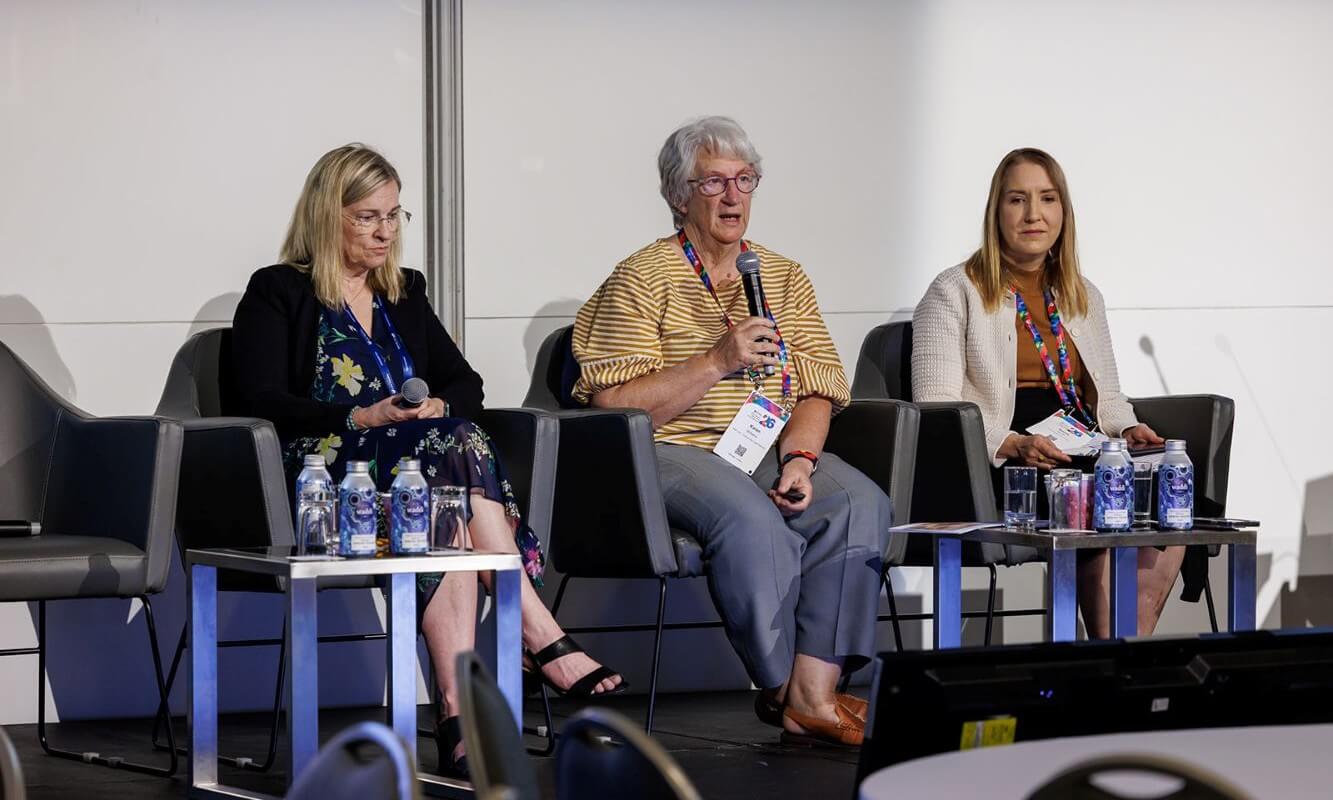
That challenge was the focus of a session presented by QLS Elder Law Committee chair and ADA solicitor, Rebecca Anderson, and ADA Law Community Legal Service Principal Solicitor Karen Williams, at the QLS Specialist Practice Conference last week.
The pair examined the practical realities of supported decision-making, enduring powers of attorney and restrictive practices in the context of an increasingly rights-based approach to ageing and care.
A recurring theme of the discussion was the delicate balance between protection and autonomy. While family members are often motivated by concerns for an older person’s safety, the older person may be focused on maintaining independence and control over their own decisions.
Ms Williams said the starting point must always be the presumption of capacity.
“That’s not just a phrase. That’s the actual starting point,” she told delegates.

She warned against assumptions that age, diagnosis or dependency automatically diminish a person’s decision-making abilities. A diagnosis of dementia, for example, should prompt further enquiry rather than an immediate conclusion that a person lacks capacity.
Too often, she said, practitioners focused on a medical label rather than the functional question of whether someone could make the specific decision before them.
“We need to be more curious, not shocked,” she said.
The discussion reflected a broader shift in both law and policy towards supported decision-making, where the emphasis is on helping people participate in decisions rather than replacing them as decision-makers.
Ms Williams noted that Queensland’s guardianship and powers of attorney framework had long been built around principles of participation, autonomy and the least restrictive option. Those principles were now increasingly reflected in Commonwealth aged care reforms.
A key development was the introduction of the Registered Supporter role under the new aged care framework.
Unlike an attorney or guardian, a Registered Supporter does not make decisions on behalf of an older person. Instead, the role allows a trusted person to help an individual communicate their wishes, access information and participate in decisions about their care.
“The support role is there to extend a person’s autonomy, not cut it short,” Ms Williams said.
For lawyers, that means carefully considering whether formal substitute decision-making is actually required, or whether less intrusive forms of support may be sufficient.
The presenters encouraged delegates to view decision-making as a spectrum rather than a binary question of capacity or incapacity.
In practice, a person may be able to make some decisions independently, require support for others, or need a formal decision-maker only in limited circumstances.
The session also highlighted growing concerns around enduring powers of attorney (EPOAs), particularly those that commenced immediately.
While immediate appointments could provide practical assistance, Ms Williams said they could sometimes have unintended consequences.
Aged care providers and other service organisations may assume that because an attorney existed, the older person no longer needed to be consulted about decisions affecting their care.
“We’re seeing aged care providers becoming capacity assessors by default,” Ms Williams said.
That could result in older people being excluded from discussions about where they lived, what services they received and how they managed their affairs, despite retaining decision-making capacity.
Rather than treating enduring powers of attorney as standard documents, both presenters encouraged lawyers to have deeper conversations with clients about how and when an attorney’s authority should begin.
Ms Anderson said selecting an attorney should involve more than choosing a trusted family member.
Instead, lawyers should help clients consider the personal qualities required for the role and who within their network was best equipped to fulfil it.
Ms Anderson also stressed the importance of educating attorneys about their responsibilities.
Many clients appointed as attorneys had little understanding of the legal obligations attached to the role and may only become aware of their appointment during a health crisis.
“Most attorneys don’t even know they’ll ever be scrutinised,” Ms Anderson said.
An attorney’s role was not to take over another person’s life, she noted, but to act in accordance with the principal’s interests, wishes and preferences wherever possible.
Lawyers were encouraged to make fuller use of the safeguards available within EPOA documents, including conditions, reporting requirements and accountability measures.
The discussion also explored the implications of recent developments relating to restrictive practices in aged care.
Following QCAT’s decision in EJ [2026] QCAT 175, attorneys appointed under an enduring power of attorney for personal matters may provide informed consent to restrictive practices for aged care residents who lack decision-making capacity.
Restrictive practices can include measures such as secure care arrangements, restrictions on movement and, in some circumstances, the use of medication to manage behaviours of concern. The ruling removed the need in some circumstances for a separate guardianship appointment. However, Ms Anderson warned that the authority carried significant responsibility.
“It shouldn’t be a tick-and-flick exercise,” she said.
Rather than simply approving requests from care providers, attorneys should actively engage with clinicians, understand the reasons for the proposed restriction and explore whether less restrictive alternatives are available, she said.
Examples may include restrictions on movement, secure care arrangements or the use of medication to manage behaviours of concern.
The presenters emphasised that any restrictive practice should be regularly reviewed and should exist only for as long as necessary.
Drawing comparisons with the disability sector, Ms Anderson noted there was increasing recognition of the need to build pathways away from restrictive interventions and towards positive behaviour support and person-centred care.
Throughout the session, a recurring theme was the importance of keeping the older person’s voice at the centre of decision-making.
Using a case study involving an older woman seeking to leave residential care and return home, the presenters demonstrated how quickly discussions could become focused on risk rather than individual wishes and preferences.
The challenge for lawyers, they argued, is to help clients and families move beyond a simple desire to eliminate risk and instead consider how risk can be managed while maintaining dignity, autonomy and quality of life.
Protection remained an important objective, but, as the presenters noted, the law increasingly recognised that safety should not come at the expense of an individual’s right to direct their own life.
In concluding, Ms Anderson offered a principle that resonated throughout the session.
“Protection should support agency, not automatically replace it,” she said.






Share this article