


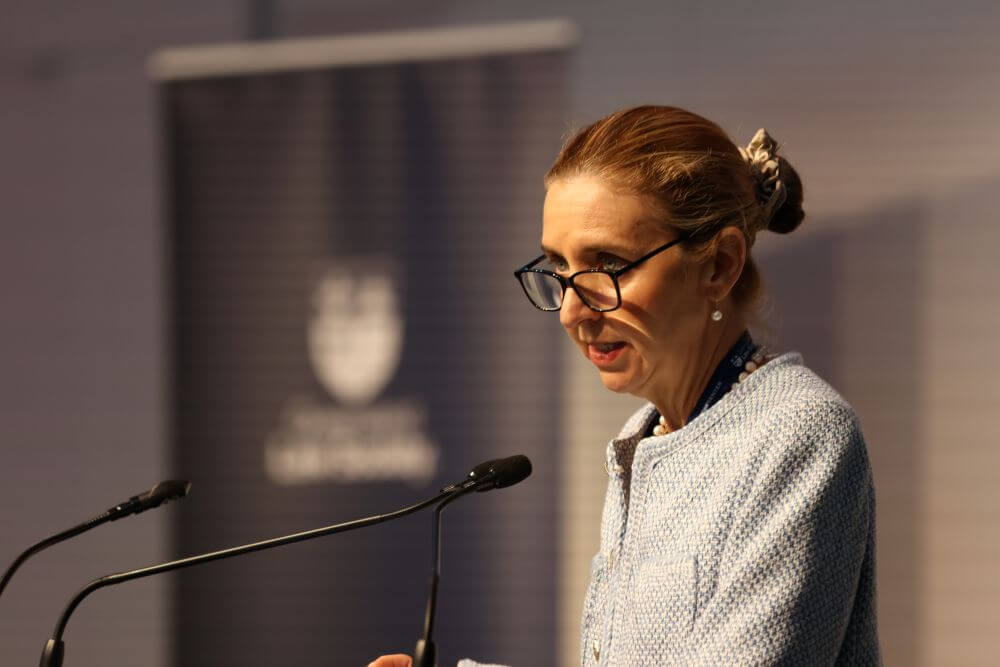
Queensland Law Society President Peter Jolly has officially opened the inaugural Specialist Practice Conference, bringing together 550 legal practitioners from across Queensland for three days of specialist education, professional learning and networking.
The conference marks the first time Queensland Law Society has brought together twelve practice areas under a single event, creating a unique opportunity for practitioners to deepen their technical expertise, share insights and build professional connections across the profession.
Welcoming attendees, Mr Jolly said the conference reflects the Society’s ongoing commitment to delivering high-quality education and supporting practitioners as they navigate increasingly complex and evolving areas of legal practice.
He said the conference provides an important forum for lawyers to stay across legal developments, hear directly from leading experts and decision-makers, and engage in meaningful discussions about the challenges and opportunities facing the profession.
“Conferences like this provide an opportunity not only to stay current with legal developments, but to learn from experienced practitioners and decision-makers who are helping shape these areas of law,” he said.
The opening day featured a keynote address from Queensland Civil and Administrative Tribunal Senior Member Joanne Browne, who explored the growing significance of guardianship, administration and substitute decision-making in Queensland.

Addressing delegates from succession, elder law and related practice areas, Ms Browne examined the legal frameworks that support future health, personal and financial decision-making, including enduring powers of attorney, advance health directives and appointments made through QCAT’s guardianship jurisdiction.
Her presentation highlighted the profound demographic changes shaping the work of legal practitioners and tribunals alike.
According to data from the Queensland Government Statistician’s Office, people aged 65 and over are now the fastest-growing demographic in Queensland, with the number of seniors more than doubling since 2005 to reach 987,239 people in 2025.
Ms Browne also pointed to Australian Bureau of Statistics data showing dementia, including Alzheimer’s disease, is now Australia’s leading cause of death, underlining the growing importance of planning for future decision-making needs.
Against that backdrop, she said legal practitioners are increasingly being called upon to assist clients in preparing arrangements that protect their wishes and interests should they lose decision-making capacity.
“Our community is changing,” Ms Browne said, noting that ageing populations, increasing rates of dementia and growing demand for aged care and supported accommodation services are creating new challenges for individuals, families and service systems.
She explained that Queensland’s guardianship regime is designed to strike a careful balance between protecting vulnerable people and preserving their autonomy.
At the centre of the legislation is the principle that every person is presumed to have capacity unless proven otherwise and should be supported to make their own decisions wherever possible.
Ms Browne said the Guardianship and Administration Act places the adult at the centre of proceedings, recognising their rights, dignity, freedoms and ability to participate in decisions affecting their lives.
A significant focus of the presentation was the growing recognition of supported decision-making, which seeks to ensure people with cognitive impairment, disability or age-related conditions are assisted to make their own decisions, rather than having decisions made for them unnecessarily.
She described supported decision-making as a framework that reflects the right of people to remain “the authors of their own lives” while receiving the assistance they need to understand, communicate and implement decisions.
Ms Browne also explored the practical operation of QCAT’s guardianship jurisdiction, which has exclusive authority to appoint guardians and administrators for adults with impaired decision-making capacity.
She explained that guardianship hearings are inquisitorial rather than adversarial, with the tribunal taking an active role in gathering information, questioning witnesses and ensuring the views and preferences of the adult are considered.
The tribunal may also appoint a representative to represent an adult’s wishes and interests, while hearings are conducted with a focus on accessibility and participation.
The growing importance of the jurisdiction is reflected in QCAT’s workload.
Ms Browne told delegates lodgements in the guardianship jurisdiction increased from 9,534 matters to 12,990 matters in the financial year to 30 April 2026.
She also noted QCAT’s 2024-25 Annual Report recorded application increases across the board, including a four per cent increase in overall applications and an eight per cent increase in guardianship matters.
The keynote addressed a range of emerging issues confronting practitioners, including elder abuse, family conflict, financial exploitation and disputes involving enduring powers of attorney.
Ms Browne encouraged lawyers to carefully consider the suitability of proposed attorneys when assisting clients with future planning, noting that allegations of financial and psychological abuse frequently arise in guardianship matters.
She urged practitioners to consider not only whether a proposed attorney is willing to act, but whether they understand their legal obligations and are capable of applying the principles underpinning Queensland’s guardianship and powers of attorney legislation.
Delegates also received an update on recent developments at QCAT, including new practice directions, ongoing digital transformation initiatives and a broader review of the QCAT Act and guardianship jurisdiction.
Over three days, conference attendees will hear from judges, tribunal members, barristers, academics and leading practitioners across workplace relations and employment, personal injury, succession and elder law, property, commercial litigation, government, criminal, family law, domestic and family violence, and migration law.
Alongside the specialist program, delegates will participate in networking events, workshops and professional forums designed to foster collaboration across Queensland’s legal profession.
The conference concludes tomorrow.




Share this article