




Former Ashurst Partner Joanna Jenkins’ inspiration to become a writer literally happened by accident one day on a country road.
An unfortunate crash inspired the now-successful author of two thrillers to make a career change after more than two decades in the legal profession.
“I always wanted to write books. It was something I was going to get to one day, but I got waylaid in a legal career,” Joanna said.
“After I’d been a partner at Ashurst for a decade, I was riding a bicycle along a quiet country road, when I was hit by a bottle-green Landcruiser driven by a person called Freckle.
“My arm was broken for a year until I had a bone graft. I still have the imprint of the screw holding his number plate in my leg.
“Anyway, after trying to work and grow bones at the same time (there’s a reason why babies sleep a lot – growing bones is exhausting), I realised if I was going to get out of the law, then was the time.”
Her matter-of-fact manner may stem from her childhood growing up on a farm at Childers and long hours in the legal profession.
After graduating from university in Brisbane with literature and law degrees, Joanna started practising as a solicitor at Corrs Chambers Westgarth before her long and successful career at Ashurst.

Joanna said she strived for a tertiary education as she wanted to be independent (and listed her reasons using the numbering system from her contracts).
“(a) I wanted to go to university and I wanted to have a profession so that I would be independent. In 1982, that meant engineering, medicine or law,” she said.
“(b) Of those options I chose law because I thought law would involve writing and problem solving. This turned out to be true. I made the right decision when I was 17, more by good luck than good management.”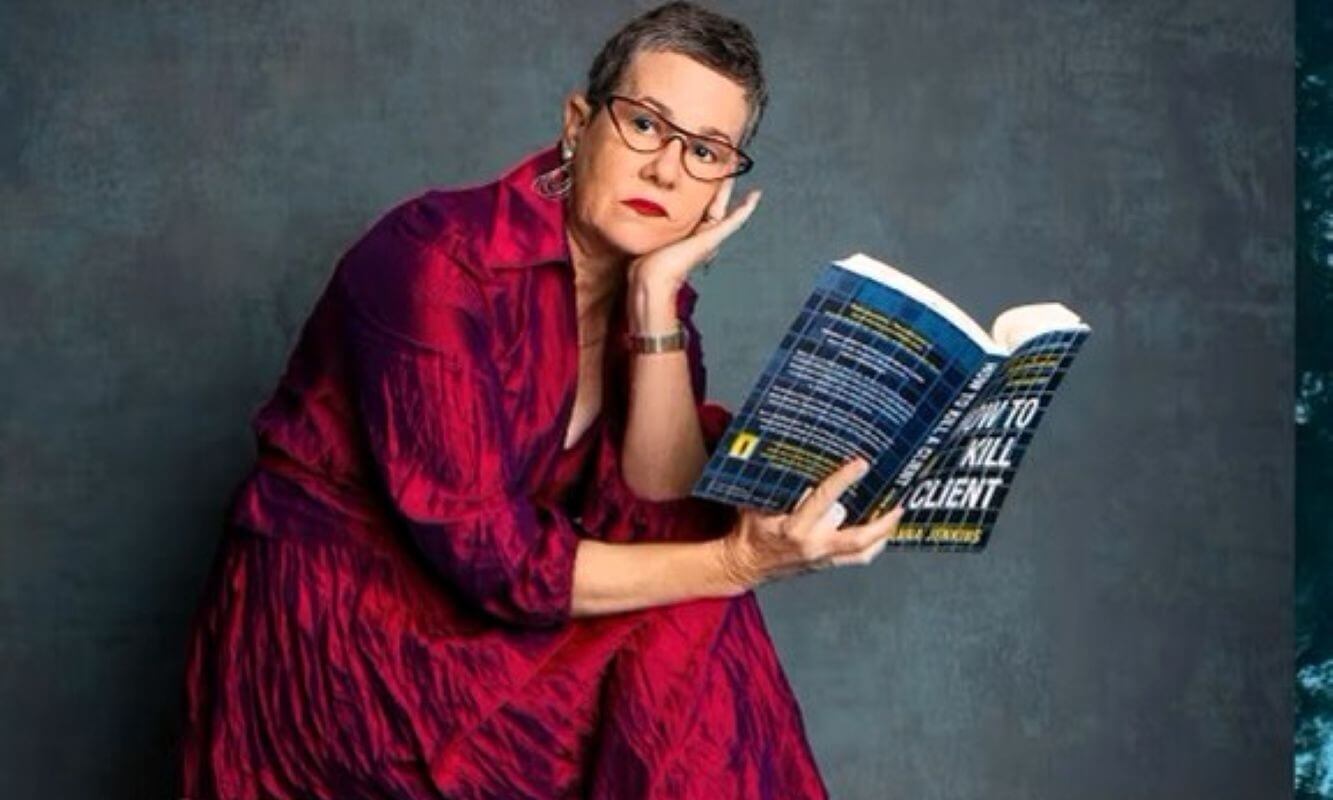
Joanna has always read widely.
Joanna enjoys reading all kinds of books, not just ones from her suspense genre.
“I read widely. I have a degree in English Literature so have read the canon. Now I read a lot of history and politics,” she shared.
“In the mix, I have always enjoyed reading crime and thrillers. I love the way the plot and characters have the reader turning the pages, while big themes can be explored.”
However writing a novel writing did not come easily despite a background of legal briefs and file notes, Joanna revealed.
“No, writing a novel is very difficult, much harder than I thought it would be. I’m writing the third book in a series and it’s still hard,” she said.
“You have to make up the plot and characters, and they have to make sense. Then you have to get it in the right order. Very difficult. (I’m not looking for sympathy. I love doing it, and it’s a lot easier than being a solicitor – wrangling client relationships and staff.)
“A background of drafting contracts and advices helped mostly because it instilled in me the discipline of gluing myself to the chair and making the words come out even when they don’t want to.
“Legal practice also helps you understand the importance of editing and honing and receiving feedback gracefully and gratefully.”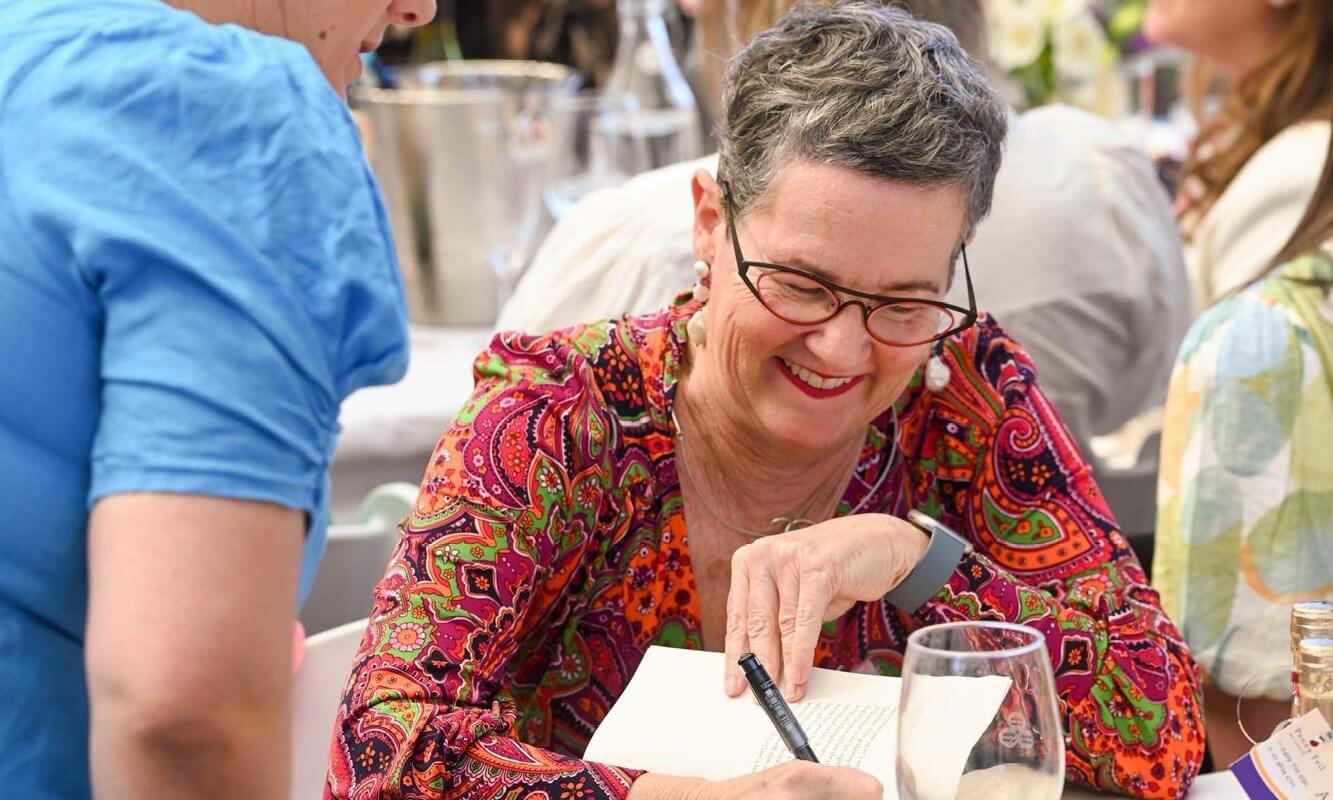
Joanna at a DSWQLA event in late 2023.
With past professional and ethical obligations of a lawyer, how close does Joanna come to the truth when penning when novels?
“In How to Kill a Client I wanted to portray what life is really like in Big Law. So the scenes in the meeting rooms have the same vibe as real life. Obviously murder is not a thing in Big Law so the plot is completely made up.
“To build the characters, I am a bit like a bowerbird, taking bits of people and gluing the parts together to make new people who don’t exist in real life.
“It’s the same with the scenes. I’ll take a basic scene I remember from my days of practice – a client lunch say, in the boardroom, with the view and the waiters and the stilted client conversation and the power play – and insert my made-up characters into it to see how they interact.
“In The Bluff, my second novel, I wanted to portray life in the country: the beauty, the quiet, the love farmers have for their animals, how difficult being a country solicitor must be (so much to know!).
“I also wanted to portray the less pleasant aspects, the way small communities which have lived together for generations and for some of them millennia have a tacit silence about the aspects they’d prefer not to think about or acknowledge.
“The plot is completely made up, as are the cows and horses and dogs and people in it. But sometimes, I have placed them sometimes into scenes and circumstances which happened for me over my life. 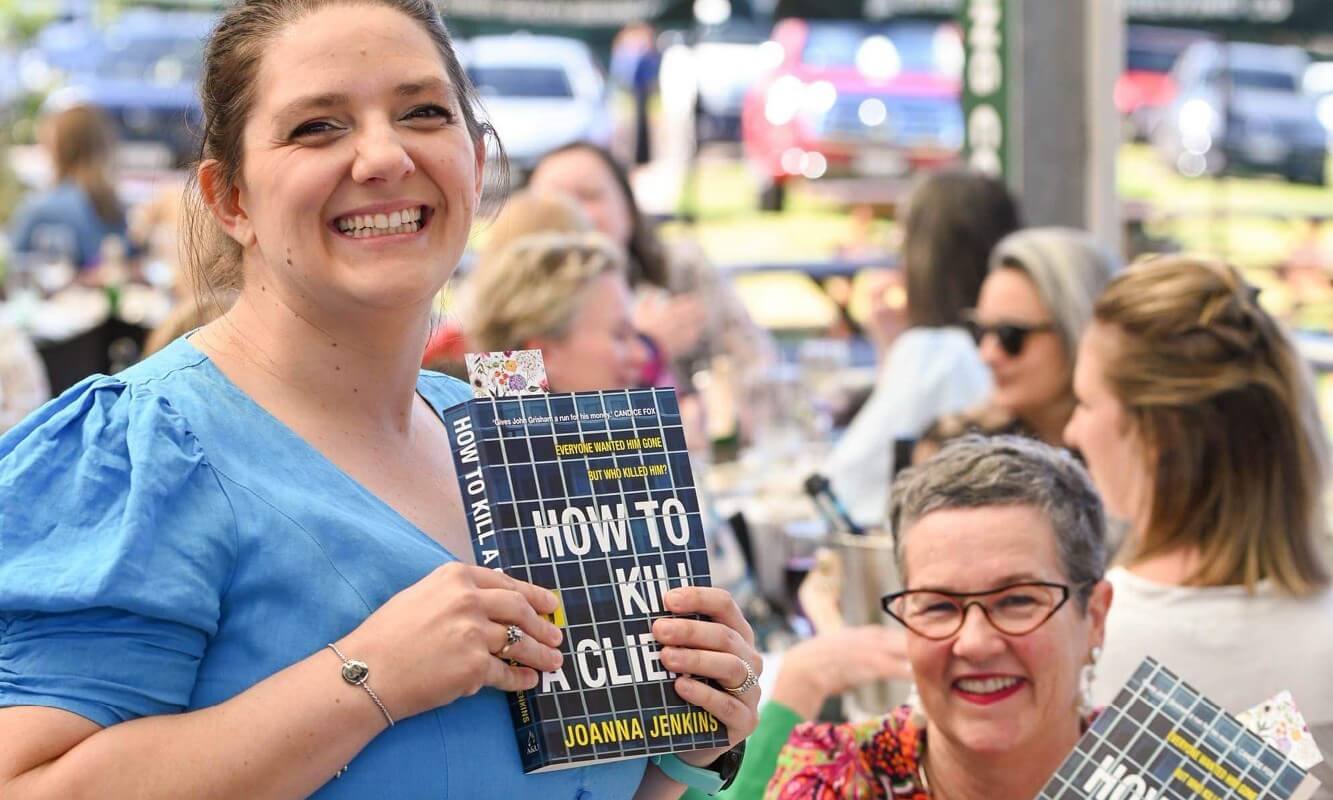
Joanna is writing a series and is on to her third book.
“For example, I’ll go into an old supermarket, and realise the floor, which is covered in lino, undulates. That goes in the book. Or a big event in my childhood was when some of my mother’s turkeys were spooked by the neighbour’s dog while they were in the feed troughs in the yards, which was where my father had the bulls which were ready for sale. The bulls went berserk and escaped. It was mayhem. There is even more mayhem in the book.”
Joanna now writes full-time with her debut novel, How to Kill A Client, released in 2023 followed by her second book The Bluff.
Her work schedule now includes book readings and signings around the state.
“I love country towns. They seem much more glamorous now than they were when I was a child, but perhaps that is just a consequence of distance,” she said.
“Generally speaking I go to events I’m invited to! I enjoy it. Writing is a very solitary occupation. It’s important and very satisfying to get out and talk to readers. Especially as I wrote my first book How to Kill a Client in the hope that I could help people see their workplaces a little differently.
“I am often asked how I wrote two books. My guess is I’m not the only lawyer who hankers after the glamour of being a writer. If it’s any comfort, it’s not at all glamorous. And it is jolly difficult to get published (I’ve actually written four books. Rejection is a big part of a writer’s life.)”
Joanna said there were overlaps with her two careers.
“Deriving joy from work is important. There is joy to be had in the law,” she said.
“Sometimes it’s just buried under a big pile of stress, and it might be easier to find a way to get rid of that than changing careers. And a big part of being a lawyer is writing. It’s just different writing. For example, you’re not making it up (or at least I hope you’re not).”
She encouraged aspiring writers to give it a go.
“If you want to be a writer, give it a crack. But don’t measure how happy you’ll be purely on whether or not you’ll get published, because that is a long and bumpy road to despair,” she advised.
“Do it because you love to get lost in stories, and want to make up your own.
“Telling stories is the human superpower, the social glue. It is a great thing to spend my days writing them, and I feel very lucky to have the opportunity to do so and that people actually read them.”




Share this article