




Young people could be stigmatised and First Nations children’s ties with country severed under the Youth Justice (Electronic Monitoring) Amendment Bill 2025, a public hearing has heard.
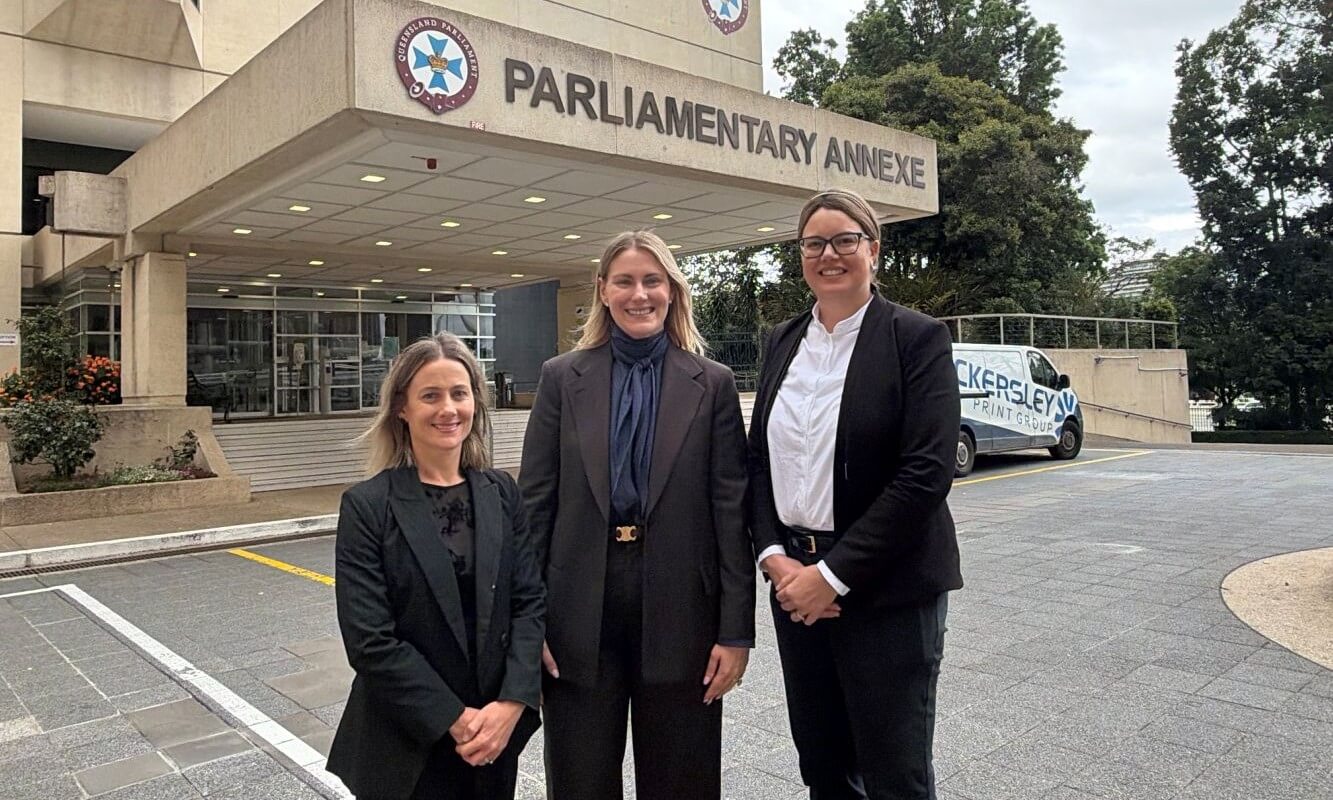
Appearing at the hearing before the Education, Arts and Communities Committee, Queensland Law Society President Peter Jolly said the QLS submission was compiled following input from three QLS policy committees and that the Society did not support the bill in its current form.
“QLS acknowledges that youth justice has a significant impact on our community. We recognise the suffering and trauma of victims and their families,” Peter said.
“While the Society affirms its support for initiatives aimed at safeguarding and strengthening community safety, we consider the protection of the rights of children and young people involved in youth justice interventions to be essential for achieving sustainable community safety.
“We also note the over-representation of Aboriginal and Torres Strait Islander children and young people in child protection and youth justice systems. So the QLS does not support the Bill.”
Mr Jolly said there were several key issues to consider.

“As identified in our submissions, the key issues to bring to the committee’s attention are the Bill impacts the human rights of children and families, including the right to privacy, liberty, education and freedom of movement,” he said.
“The use of visible ankle monitors causes significant trauma, which often leads to social isolation and disengagement from pro-active factors like education and employment.
“EMDs (electronic monitoring devices) have a net widening effect, trapping children within the justice system by exposing them to additional penalties for technical breaches such as battery depletion, which wouldn’t otherwise be criminalised.
“The proposed amendments are punitive and likely to result in an increase in the number of young people held in detention, and such an approach fails to address the root cause of youth crime and is unlikely to deliver a meaningful or lasting solution.”
The Bill proposes to remove the eligibility criteria that previously limited EMDs to children at least 15 years of age who were charged with a prescribed offence.
“By permitting children as young as 10 years old to be monitored, the system will manage a much more vulnerable cohort,” he said.
Mr Jolly pointed out that children in regional and remote communities could be further disadvantaged due to unreliable telecommunications infrastructure and connectivity issues leading to an increase in risk of breaches leading to harsher consequences and further justice involvement.
“Over 43 per cent of Aboriginal and Torres Strait Islander communities lack mobile service. About 46 per cent of residents are highly digitally excluded, compared to about 95 per cent for broader Australian populations.”
Member for Bulimba Di Farmer asked QLS First Nations Legal Policy Committee Co-Chair Kristen Hodge for her thoughts on what action the government should take for supporting First Nations children with EMDs.
“I think the problem here is that electronic monitoring fundamentally contradicts the relational community-based and culturally restorative approaches to both child rearing and justice that are foundational to Aboriginal and Torres Strait Islander communities,” Ms Hodge answered.
“So, when you confine a child to a certain area, that connection with country, that land and waterways, that identity, that is a physical sever, essentially, to that vital connection.
“So loss of identity. In close-knit communities, it starts to mark not only child, but by extension, their family.
“And this public shame directly impacts any sort of cultural values that you might have to be able to resolve those issues from a private cultural perspective because the device externalises punishment and it makes what we could potentially resolve in community in a culturally appropriate way really impossible to do.
“And I think one of the foundational things is that it bypasses the authority of elders and families.”
Ms Hodge said the technology itself created cultural trauma.
“Probably one of the key things for children who have families who have experienced generations of state intervention, removal and surveillance from protection policies to ongoing policing, this device is not a neutral technology for them,” she told the committee.
“It’s like a physical manifestation of intergenerational trauma and constant monitoring engages a climate of fear, control and distrust and authority which I think reinforces the narrative that children are the problem, are a problem to be managed and not a person to be healed.
“Success isn’t measured by how many children don’t re-enter that system. And so the only path to true success is to go through the community, not around them.”
The Member for Bulimba also asked what commitments were needed to address the existing functional concerns and the new ones which had been identified, and what clarification would be needed to make it succeed.
“Before putting the Bill forward indeed many of those functional requirements, difficulties and challenges that are outlined in the evaluation report should in fact be addressed because there is in our view, the view of the Society, would be that where there are issues in relation to the functionality that those matters need to be streamlined,” Children’s Law Committee Chair Damian Bartholomew said.
“And that is the recommendation of the evaluation that technology does to be streamlined and it makes specific reference to the issues with fitting of those devices and their removal, but also during the life of the operation of that mechanism.
“And those issues, of course, need to be resolved prior to the implementation of the legislation.
“But significantly, the implementation and the announcement of the wraparound services is essential to the success of this, and that’s clearly pointed out in the evaluation.
“But regardless of whether those two issues are addressed, the Society’s concern in relation to the expansion of the cohort cannot be addressed.
“It doesn’t matter really how positive those wraparound services might be for the 10 to 14-year-old age group, it’s very difficult to see how that could address the fundamental problems that you would have for that age group being required to comply with electronic monitoring devices and the adverse consequences that can happen for them.
“And indeed the barriers that it may present for them in terms of reintegration into the community and their ability to be able to assimilate, and therefore their long-term prospects of being active and pro-social members of the community, which is obviously what the whole community wants,”Mr Bartholomew said.
The Bill was introduced in December 2025 and the committee’s report is due to be tabled on 6 February.







Share this article