

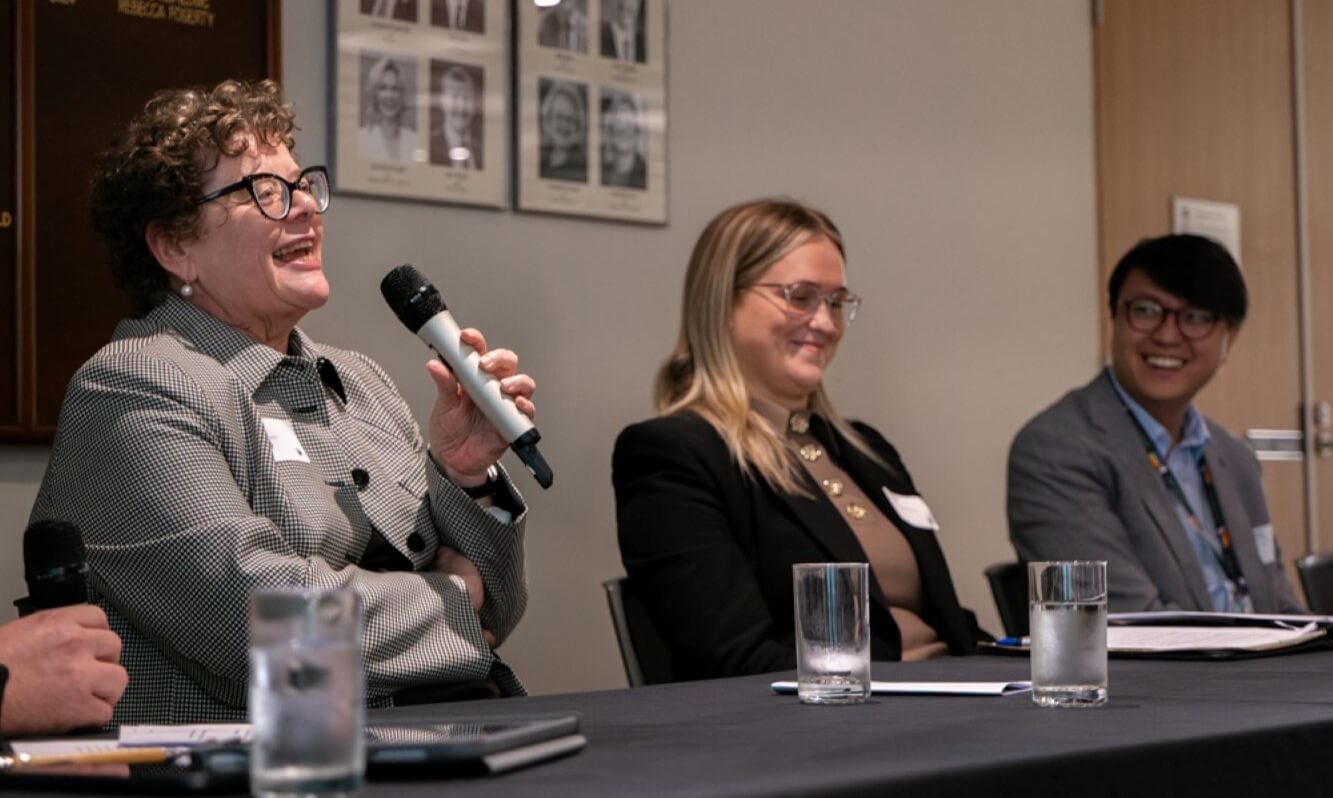
A shared history of volunteering at Caxton Legal Centre was a telling characteristic of the five panel members at yesterday’s Pro Bono in Practice: Motivations, Stories and Pathways event in Brisbane.
The panel at Law Society House comprised Emile McPhee, Hamilton Locke Partner and Deputy Chair of the Queensland Law Society Access to Justice Pro Bono Committee; Shaun Chng, Clayton Utz Senior Associate; Jaimee-Lee Jessop, Robertson O’Gorman Solicitors Senior Associate; Joanne Rennick, Murphy Schmidt Managing Principal and Chair of the UQ Pro Bono Centre Advisory Board; and Australian Pro Bono Centre Senior Policy and Project Officer Sally Embelton.
Each member spoke about the value of their experiences at a community legal centre (CLC) and encouraged audience members to contact a CLC about pro bono opportunities.
Ms Rennick said all lawyers had a professional responsibility to make pro bono contributions.
“I was extremely lucky throughout my early career, and remain so, that my legal mentors all shared and promoted a really strong feeling of service to the profession and the community,” she said.
“It’s very easy for us to lose sight of the fact of what a privileged position we do hold. And the little things that we can do – sometimes little, sometimes big – can make an enormous difference.

“Some of the clinics that various CLCs run, for example … you spend a lot of time helping people fill out forms.
“For us that seems like it’s not really a legal skill but for lots of our clients in the pro bono sector, that is a massive hurdle to them accessing Centrelink or other social services.”
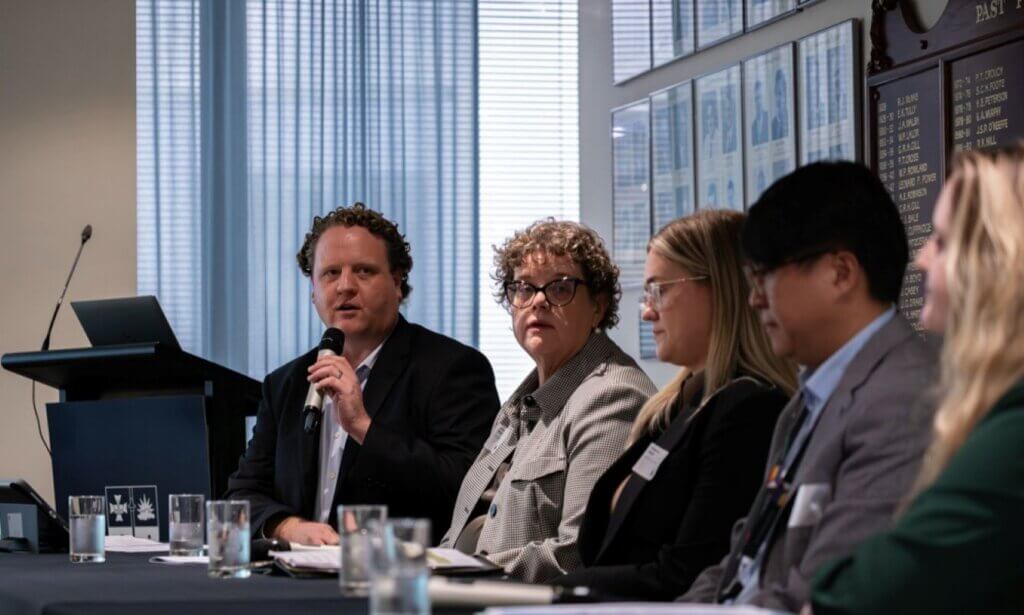
Ms Jessop said many criminal lawyers like herself were well aware of the need for pro bono services.
“It’s quite obvious to a lot of us as criminal lawyers that there is quite a big gap, and I think that’s what motivates us to continue with that pro bono work, particularly when it comes to domestic and family violence, young offenders, or those that are incarcerated,” she said.
“I’m lucky to be part of a specialisation in criminal law where a lot of practitioners remain motivated because of the very obvious disadvantages in a very complex area of law.”
Ms Jessop said all clients, pro bono or paying, deserved the best possible representation, and firms could adjust their pro bono offerings to suit.
“Something else that sometimes maybe we neglect to remember is that that pro bono doesn’t always have to be 100 per cent pro bono – ‘I’m doing free work for the next two years for this particular client’ – it can be far smaller than that,” she said.
“I’ve had experience where I’ve acted in a coronial inquest for a community organisation that may have capacity to pay a little bit of money but not all of it, and you’re reducing your rate completely, whether its 50 per cent or 75 per cent, to still offer a chunk of pro bono time and assistance, and they’re providing what they can where they can.
“It’s not always the case that you can’t take on a client because you don’t have time or they’ve got zero money – pro bono can look different depending on the client and what the principals of the particular law firm think is or isn’t appropriate.”
Ms Embleton pointed out that pro bono did not have to relate to lawyer’s specialty, with opportunities to help write law reform submissions, or even offer advice to CLCs in areas such as governance and employment.
Mr Chng said his firm had conducted exciting public interest litigation – including three wins in the High Court – but his more memorable pro bono experiences related to acting on day-to-day matters.
Audience member Elizabeth Shearer, chair of QLS Access to Justice Committee and member of the Law Council of Australia’s Access to Justice Committee, commented on the role of pro bono in the broader access to justice landscape.
“One of the things we’re very careful to say as a profession is that pro bono is not an excuse for government not to properly fund legal assistance services,” Ms Shearer said.
“The pro bono commitment in the profession comes from our sense of professionalism and commitment to the rule of law and access to justice and we’re keen to see that it remains in that framework and not become a cheap way for the government to meet unmet legal need.”
The two-hour session was hosted by QLS and the Australian Pro Bono Centre for Law Week, and was worth 1.5 CPD points.







Share this article