


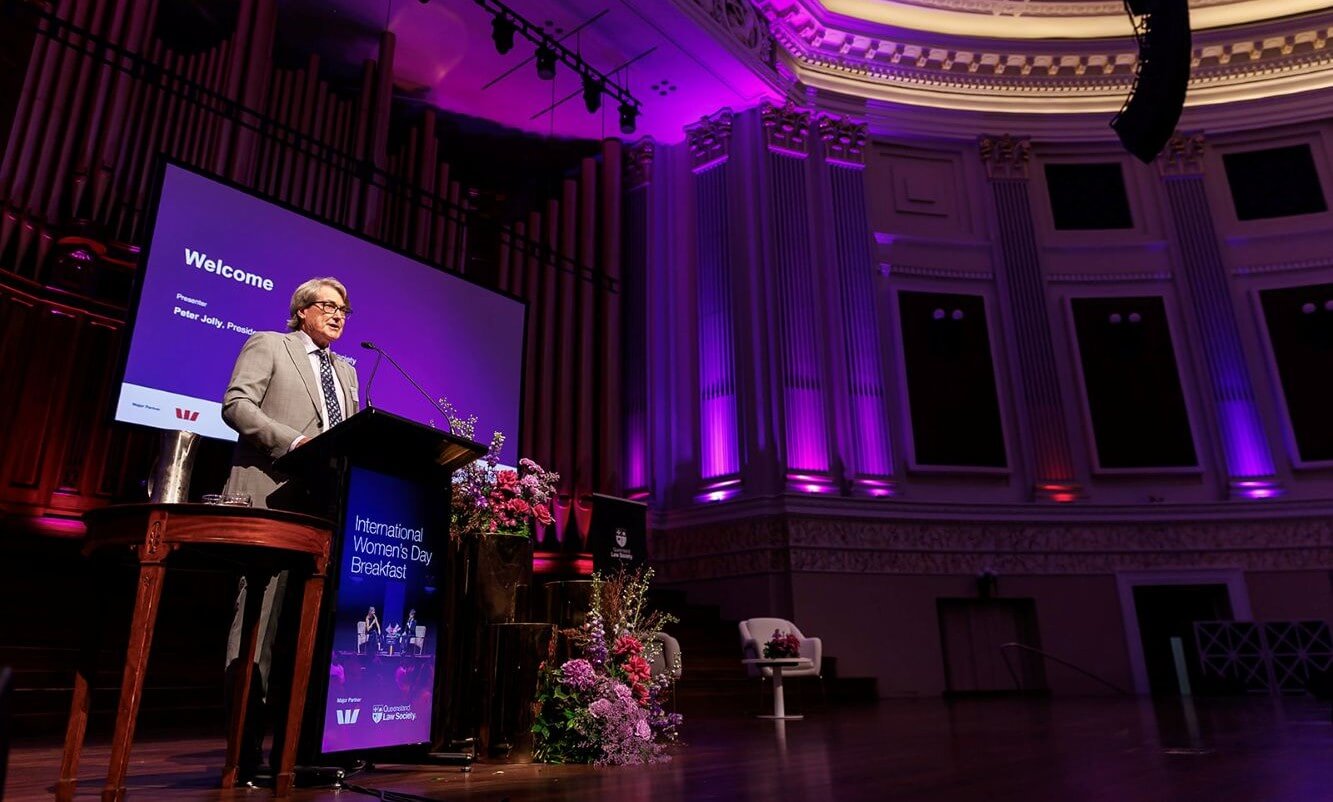
The state’s first female solicitor would be proud of the progress the legal profession has made since her admission, Queensland Law Society President Peter Jolly told the Society’s International Women’s Day Breakfast recently.
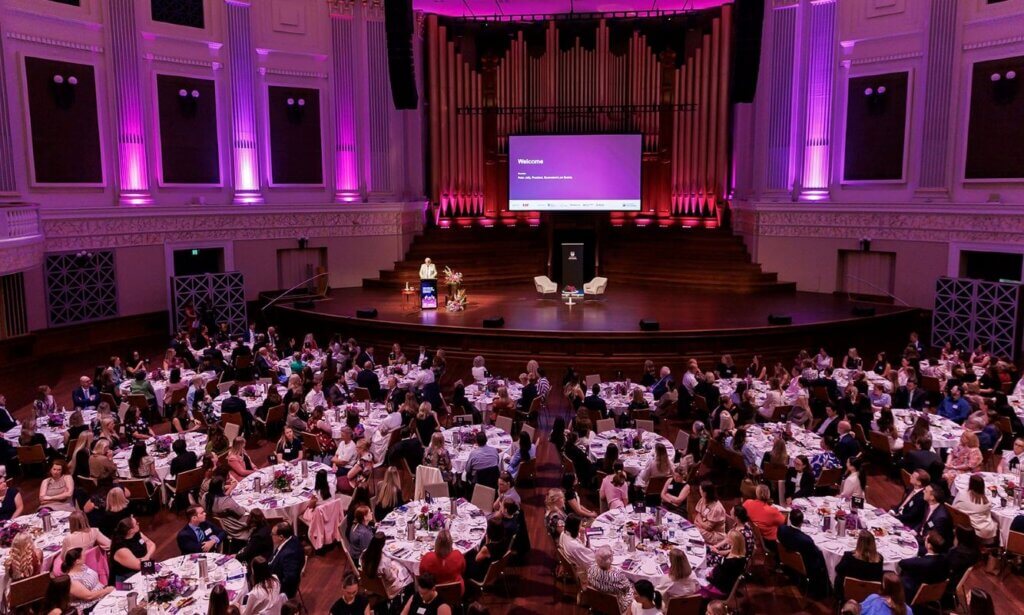
Held on 5 March at Brisbane’s City Hall, the sell-out event focused on this year’s UN Women Australia theme of Balance the Scales while raising more than $10,000 for the Women’s Legal Service Queensland.
Mr Jolly said International Women’s Day was always a time to pause and “to reflect on the progress made, to call for the change still needed and to celebrate the courage and determination of the women who shaped history, and those who will carry gender equality forward”.
“But it’s also a chance to consider how far women have come in their pursuit of equality and of opportunity and what still needs to be done,” he said.
“Looking at our own profession here in Queensland, the progress is undeniable.
“It is extraordinary to think that just over a century ago, in 1915, Agnes McWhinney became the first woman admitted as a solicitor in this state. Her achievement opened a door that so many have since walked through.”

And Queensland women continue to walk through that door with more than 57 per cent of the 16,100 practising solicitors in the state now female as well as almost 70 per cent in private practice.
Women now constitute about 60 per cent of law school students. Within QLS, 77 per cent of senior leadership roles and more than 80 per cent of all leadership positions are held by women.
“This means women now graduate from law schools in greater numbers than men. They lead practice groups, manage firms, hold judicial office, lead chambers and, importantly, influence the strategic direction of the profession at every level,” the President said.
“When I began practising law, the profession looked very different. Female law firm partners were uncommon, female judges rarer still and a government Cabinet meeting generally only needed one bathroom. A flexible workplace meant leaving for golf at lunch time.
“There was an unspoken assumption that women might ‘give it a go’ for a few years before moving on to other things. What is remarkable is not that that assumption ever existed, but how it’s been overturned.
“And the intellectual strength, strategic clarity and sheer work ethic represented in this room alone would have startled many of those older practitioners from my early days in the profession – and, I suspect, delighted Agnes McWhinney.”
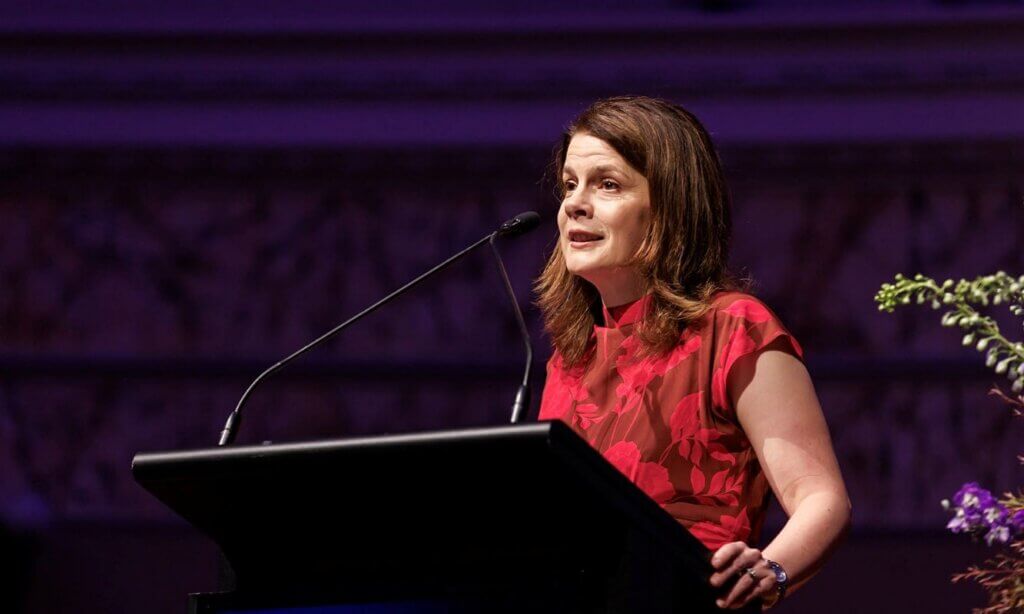
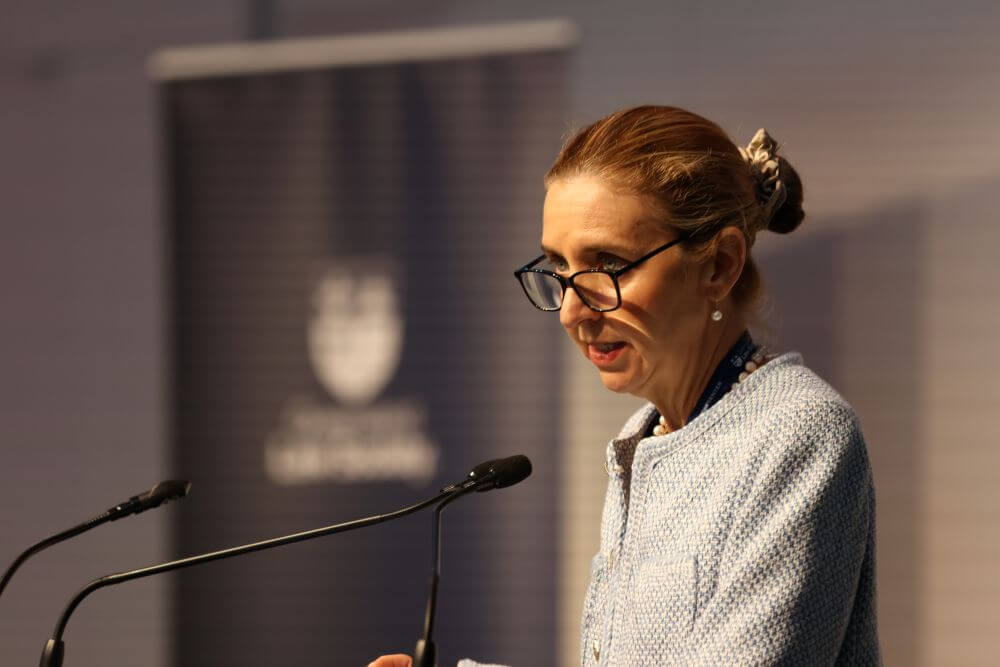
Belinda Hegarty, Westpac’s National General Manager of Healthcare and Professional Services, also shared some startling statistics with the audience, as the breakfast’s major partner, saying “the work is not done yet”.
“When women are supported to participate fully and lead confidently, organisations become stronger, client outcomes become better, and communities are more resilient,” she said.
“If I reflect on Westpac and some of the proud significant milestones we have that stand out to me, some of them involve how we support women.
“The first one includes the appointment of Australia’s first female bank teller in 1961; Becoming the first bank to grant women the right to get a loan without a male guarantor in 1971; Becoming the first bank to have a female CEO being Gail Kelly in 2002; and even more recently being the first bank to introduce paid fertility leave in 2022.
“Now, if you’re like me, you’re probably shocked. These things, what we now consider as the status quo, weren’t open to our counterparts before us.
“But it shows us that progress has been made and that what we can do if we don’t accept the status quo.”
Ms Hegarty said the legal profession played a critical role in shaping trust, fairness and opportunity within our community.
“This year’s International Women’s Day theme, Balancing the Scales, is particularly relevant,” she said.
“The law has evolved, but we must continue to focus our efforts around gender representation at all levels, workplace flexibility, recruitment, and value propositions that reflect true diverse careers.
“Real progress only happens when genuine, when commitment is matched by meaningful action across an organisation.
“But lasting change doesn’t sit with the organisation alone. It’s driven by the everyday acts that we do, be it who we support, who we sponsor, who we open the door for.
“When business, law and the community progress together, we create change that is lasting and sustainable.”
And there is work to be done in the law. Mr Jolly said while entry into the legal profession had been transformed, the upper tiers of firms still told a more complicated story.
“Equity partnerships, board chairs and Senior Counsel remain narrower pipelines, and they remind us that while progress is real, it is not yet complete,” he said.
“Some of the barriers that remain are structural. Some are societal. And some are simply the product of long-standing practices – patterns so familiar that most of us didn’t truly see them until someone finally held up a mirror.
“Which brings us to what today is really about – not only celebrating how far we’ve come but looking honestly and thoughtfully about what still holds us back.
“One of the most important lessons many of us have learned – and one I admit I learned later than I should have – is the critical difference between mentoring and advocating.
“Mentoring offers guidance, perspective and encouragement. Advocating, on the other hand, is intentional. It’s active. And it’s one of the most powerful tools we have to accelerate real equality at the top of the profession.
“Progress in the law is often incremental – we are a profession that values precedent – but over the course of my working life I have witnessed genuine transformation.
“And that progress has been driven by excellence, by resilience and by the daily choices made in rooms just like this one.”



Share this article