



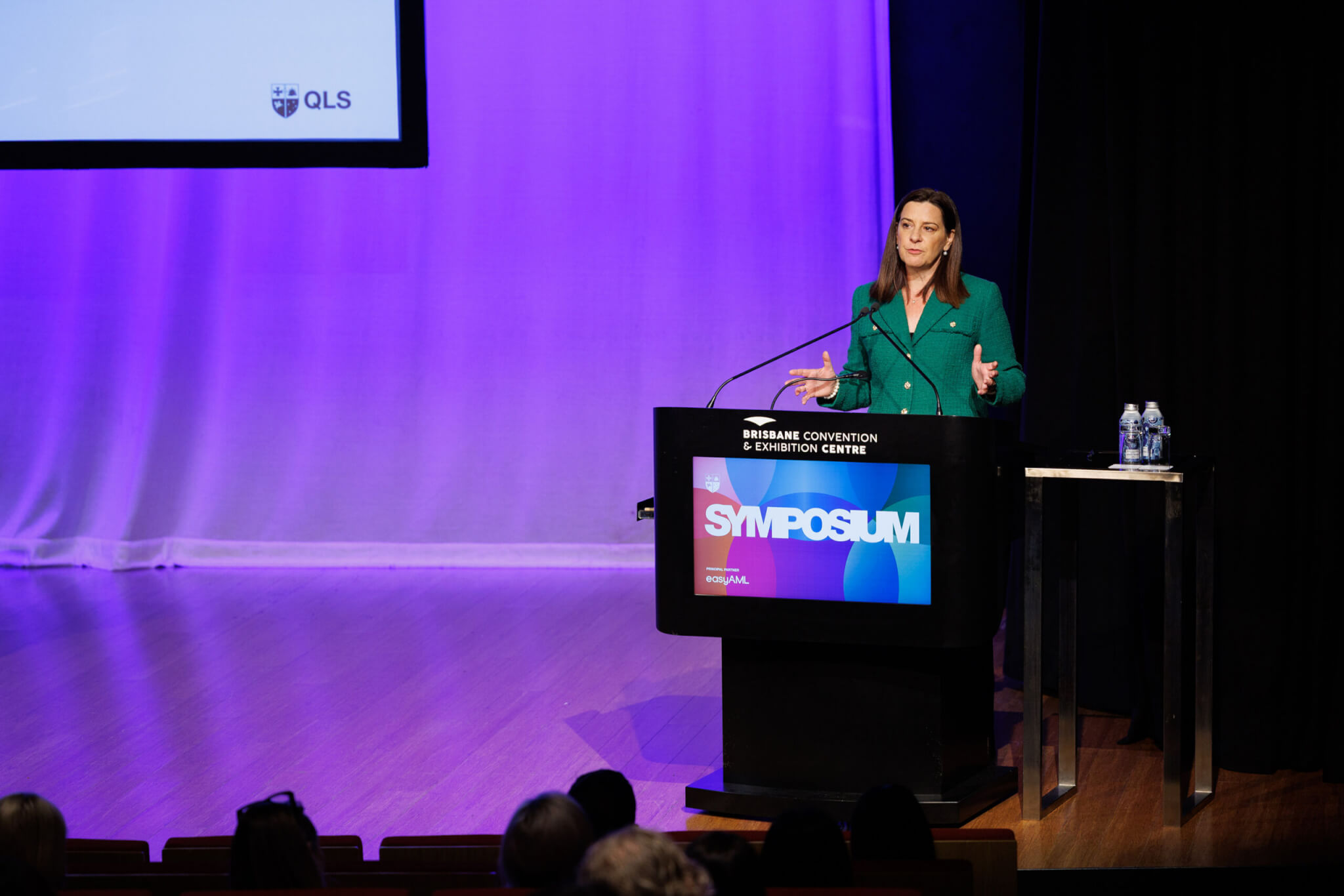
Attorney‑General Deb Frecklington has used her opening address at the 2026 Queensland Law Society Symposium to highlight the rapid rise of artificial intelligence, fresh opportunities for regional practitioners, and the state’s most extensive legislative reform agenda in more than a decade.
Speaking to more than 700 practitioners in Brisbane, Ms Frecklington said the pace of technological change was accelerating across the legal sector, with emerging tools and AI shifting the way clients interacted with their lawyers.
While digital systems were enabling firms to deliver faster, more transparent and cost‑effective services, she said the core of good legal practice still rested on genuine human connection.
“Despite all the digital efficiencies, something fundamental remains to the practise of good law, which is the value of sitting across from someone, having a real conversation and understanding them,” she told attendees this morning.
Ms Frecklington announced the government is moving to establish a new Government Legal Services Panel that will, for the first time, open the door to smaller and regionally based firms.
She said the government did not want opportunities confined to metropolitan practices, arguing firms from Cairns to Coolangatta and Gladstone to Goondiwindi were well placed to support the state’s legal needs.
“I know from being a regional practitioner, when we are engaged with our local communities and with the government, the state can benefit from that legal advice from that source and local understanding.”
The Attorney‑General also highlighted the introduction of the Miscellaneous Justice Bill, a sweeping package containing 149 amendments across 22 Acts. She said the reforms were designed to modernise legislation, enhance community safety and improve the efficiency of the justice system.
Planned changes include streamlining coronial processes to ease pressure on the coroner’s workload and expanding Queensland’s death‑reporting framework.
She also pointed to new provisions allowing District and Magistrates Courts to issue enforcement warrants, containing charging and stop orders in civil matters.
One of the most significant changes will be an increase to the District Court’s civil jurisdictional limit, lifting it to $1.5 million for the first time in 15 years.
Ms Frecklington said the change better reflected economic reality and would provide relief for regional litigants, given the District Court’s broader statewide footprint compared with the Supreme Court.
Reflecting on longer‑term reform, she noted last year’s passage of the new Trusts Act, which replaced legislation more than 50 years old. The Act, starting next month, gives trustees broader powers to manage trust property and makes it easier for small charitable trusts to update their purpose when original terms can no longer be met.
“It’s a long overdue change, a decade in the making, but I’m glad it’s come to fruition,” she said. “I’d like to thank the Queensland Law Society for working with us in the development of the new legislation and providing much‑needed support and training to the profession.”
Work is also progressing on a new Criminal Procedure Bill for the Magistrates Court, which will replace the Justices Act 1886. A draft is expected to be shared with the QLS later this year.

Turning to issues affecting the profession’s integrity, Ms Frecklington raised concerns about unqualified individuals offering legal services on platforms such as Airtasker.
She described them as “rogue traders” who posed risks to the public and undermined trust in legitimate practitioners.
“I am committed to being a strong advocate for preserving the high standard of Queensland’s legal profession and safeguarding the public trust in what it is we do.”
She has directed the Department of Justice to investigate options to better hold such individuals to account and invited practitioners to contribute ideas through the QLS.
The Attorney‑General also acknowledged continuing concerns around the Personal Injuries Proceedings Act and the Civil Liability Act. She said many practitioners had raised issues about outdated processes, and a formal review was now underway to identify how both Acts could be modernised.
In closing, Ms Frecklington thanked the profession for its volunteer contributions and policy expertise, saying their work continued to elevate legal practice across Queensland and inform meaningful reform.




Share this article