




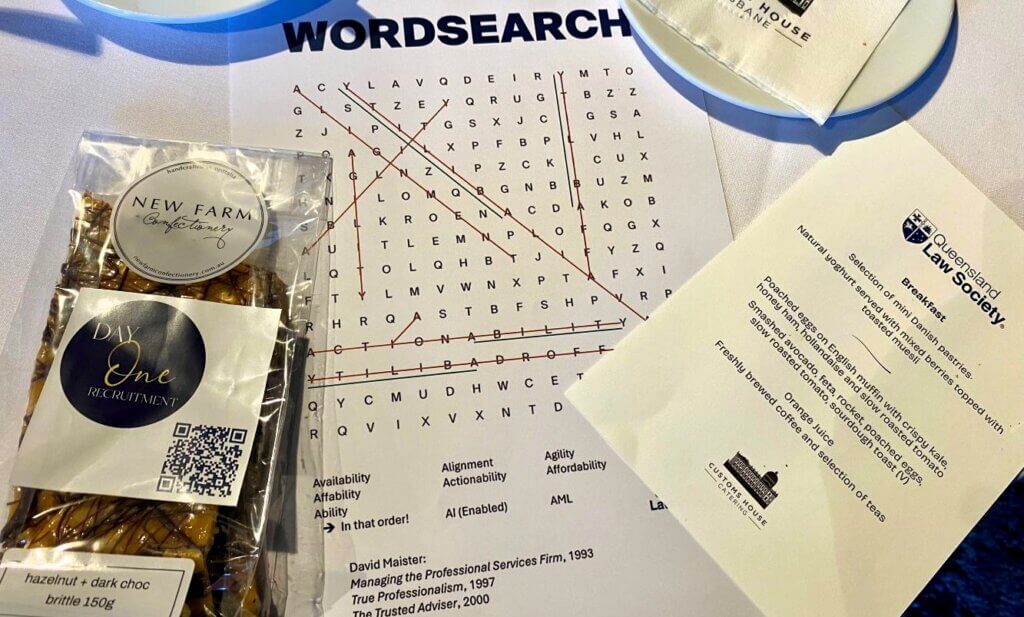
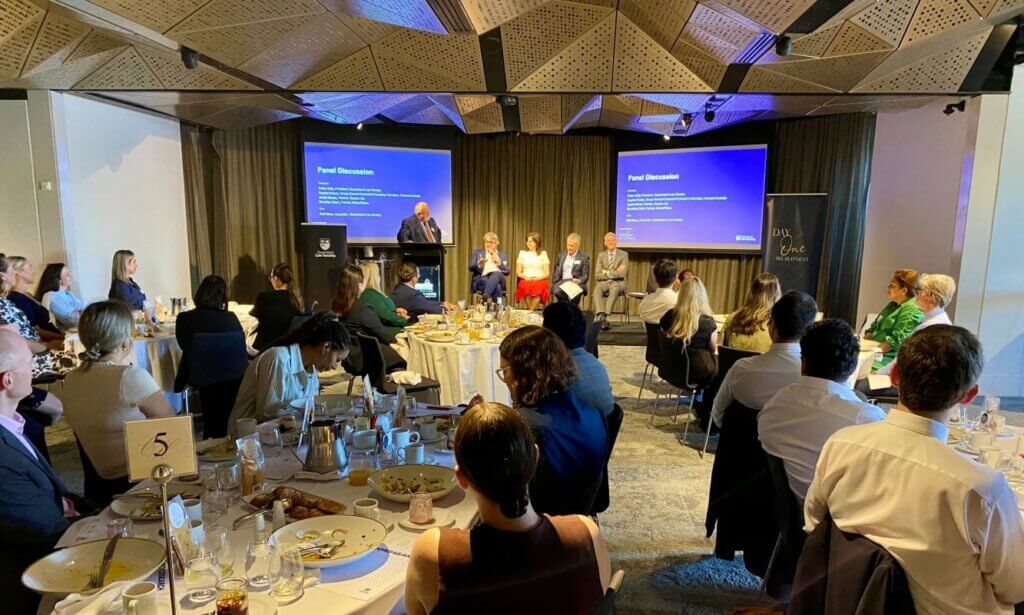
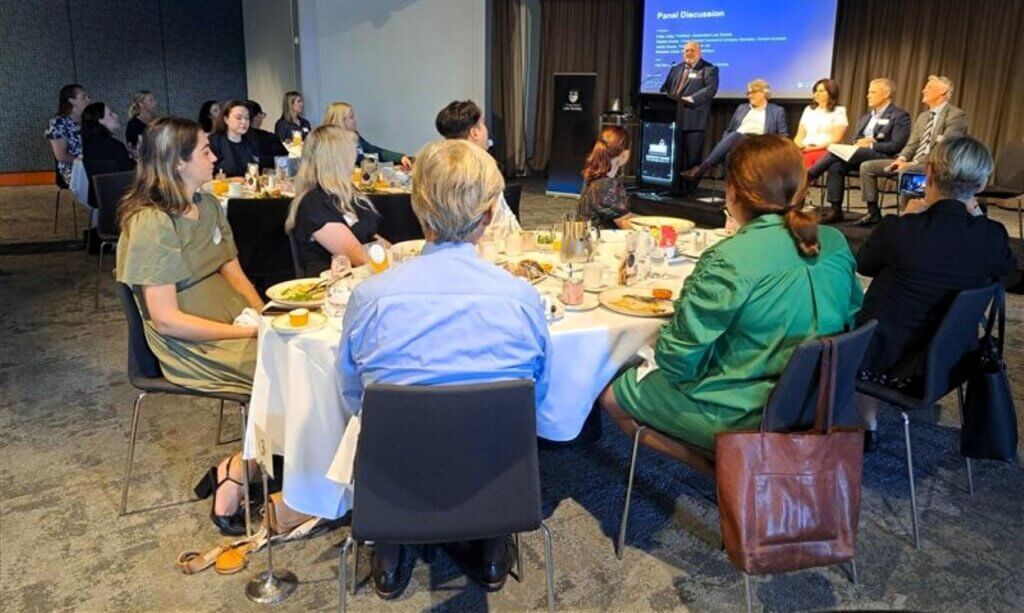
A wordsearch puzzle was the prompt for a panel discussion on successful working relationships at Wednesday’s Queensland Law Society In-house Lawyers Breakfast event at Brisbane’s Customs House.
QLS In-house Counsel Committee Chair Phil Ware told the Brisbane and Townsville livestreamed audience members it was a working breakfast with an interactive session based on A words, used by author and business management practice expert David Maister, hidden in the puzzle.
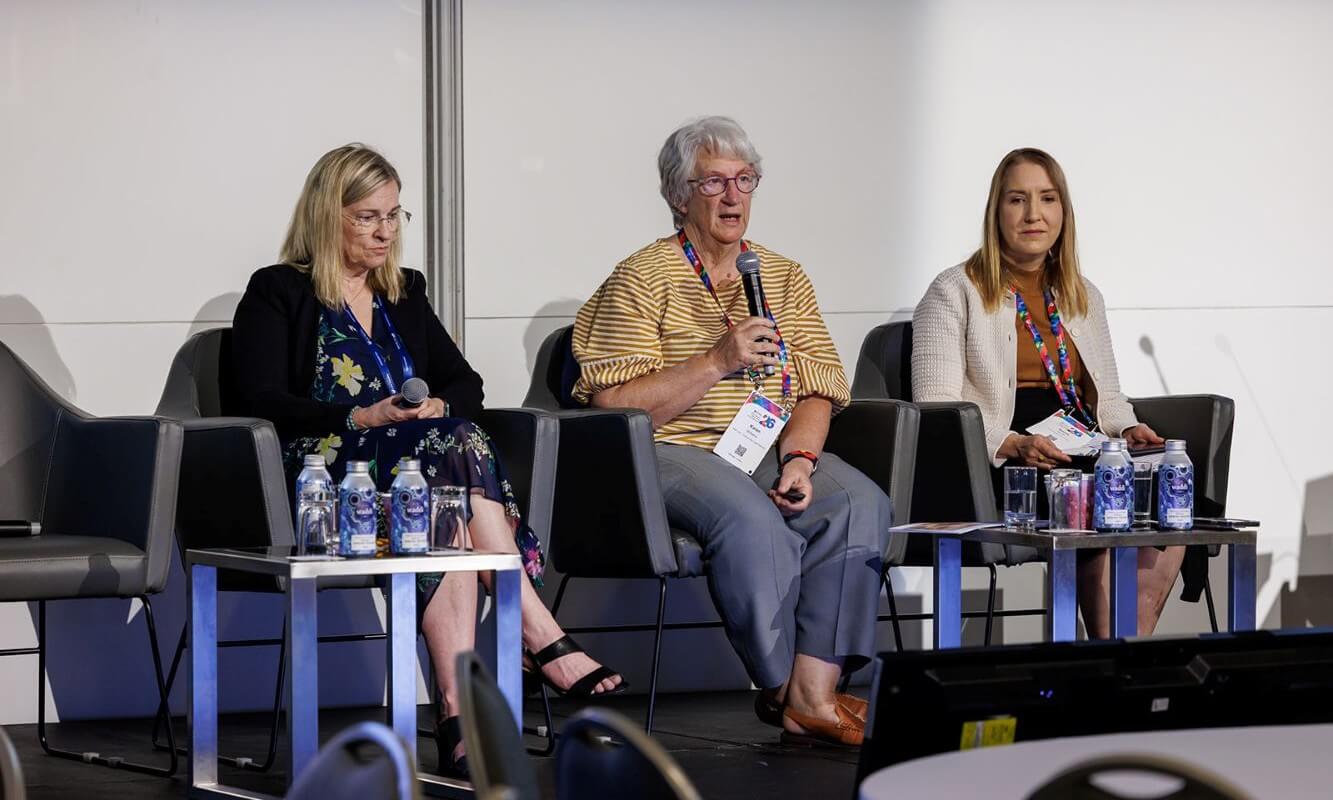
Those A words were then examined by the highly experienced panel of Sophie Evans, Group General Counsel and Company Secretary at Cement Australia, Jamie Doran, Partner at Clayton Utz, Brendan Clark, Partner at MinterEllison, and QLS President Peter Jolly.
Panellists shared their interpretations and experience of those words in legal practice with internal and external clients and stakeholders such as affability, actionability, ability, alignment, agility and availability.
Ms Evans said alignment with the business was absolutely critical for external counsel.
“Your job as external lawyers is to make my job easier,” she said. “So we’ve come to external lawyers, I’m an experienced in-house practitioner and I’ve got a problem that I can’t solve.

“I need someone who’s aligned with me and my business, understands the industry, understands what we want, understands that we don’t need a 10-page advice on something.
“We just need some recommendations that I can quickly summarise and pass on to their business so that we’re all aligned to get the one outcome.”
In terms of alignment with internal clients, Ms Evans said they wanted a commercially focused solution.
“They don’t want me suggesting something that’s just not possible in our industry. They want something short and sharp that they can act on and they’d want it quickly, to be frank.”
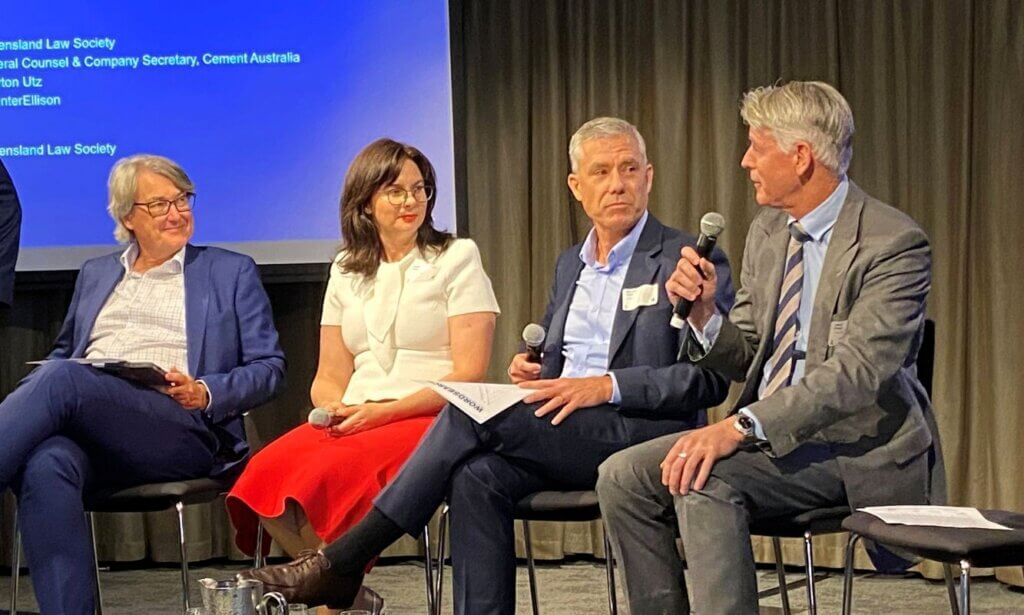
Moving onto actionability, Mr Clark said it was how that advice translated into something functional and readily used by the business.
“It comes with knowing the business,” he said. “I need to know who’s ultimately going to consume the advice within the business.
“And part of that alignment is understanding what the actual objective of the person who’s actually going to benefit from the value of the advice and their own level of understanding of the problem and understanding the ramifications of it within the business.”
Mr Doran, who advises across all levels of government, said actionability in the government context was “really no different”.
“A lot of the time we focus about the delineations between the private and the public sector. Many of the drives are exactly the same,” he said.
“My experience with in-house government lawyers is that they have all of the same sort of, I’ll call it commercial pressure that comes to bear in a private sector environment.
“The other elements, I suppose, which are apparent and relevant from an in-house lawyer’s perspective in government is that you’ve got the overlay of policy.
“So strictly from a legal perspective there might be a little easy legal answer, but because of the policy of the government of the day – it might be difficult to implement, it might be a difficult issue that is needing to be solved, and so turning in mind how that legal advice in the context of the policy of the government of the day might be interpreted or implemented is really important as a service provider.
“The other thing is the obvious political overlay. You can’t ignore at times that there are issues, or there are drivers, or there are things that are wholly political.
“It’s what makes working for government fascinating.”
Mr Ware said affordability was an area of inherent tension as lawyers were normally paid by the hour, so he asked Mr Jolly what affordability meant in terms of client service.
“It always comes up, of course, in some context, and always should be discussed at the outset,” Mr Jolly said.
“Generally a relationship doesn’t break down over money. There are other things that have caused the relationship to break down.
“If you’re setting the client’s expectations about the cost upfront, there should be no reason for that to become an issue.
“If you explain the value proposition, clients are generally happy to pay that or they will accept that.
“So rarely I think are you selected on price. I think sometimes for those jobs where you are, there’s a little red warning flag going off right at the beginning.
“Sophie said before that the job of the external provider is to make your job easier. It’s really to make you look good as well and part of that is not giving unpleasant surprises about bills.
“So if there’s a message that if along the way the matter is taking a different turn, there’s always an opportunity for a conversation about affordability.”
Mr Doran spoke to agility, saying the concept of being easy to work with was an important feature of a service provider.
“No business so far as I have seen, nor anyone in government who I have worked for, have businesses that do not change, and do not change regularly and quickly, whether that’s because of the problem they’re trying to solve has changed, or the drivers they’re trying to respond to have changed or the environment in which they’re operating has changed,” he said.
“And in today’s world, it’s almost like a six-minute mindset.
“Everything seems to run so much more quickly. Everything changes so much more quickly.
“What we’re talking about today, we’ll be referring to as ancient history in a week and a half’s time.
“So I think in an environment where you are servicing the needs of clients who are faced with this level of change, and the industry is the same. We’ve got so many changes coming to the industry at the moment. AI is the one that everyone’s talking about.
“Agility and the ability to respond to those changes, to be aware of them, to support your client in dealing with them, it’s an essential feature, I think, of what we deliver or what we offer as service providers.”
Mr Clark agreed saying that was what availability really meant now too.
“I think, you know, putting down your phone, being where your feet are, answering the phone when they call, that’s the given,” he said.
“But being available now to any business that has an in-house team is about not trying to be the partner who can do everything.
“It’s about being the partner who can rally the resources of all the experts in your firm, and to be there when they’re needed, and delivering the very best of the firm to the client.”
The breakfast was the first for 2026 which allows the state’s in-house community to exchange ideas and strengthen professional connections.
The QLS Sole and Small Practice Breakfast, where the panel will explore how innovation is reshaping business in the legal profession, will be held on 22 April.
This year’s panel will be chaired by Anna Morgan, Principal Solicitor at Take Control Legal and the 2024 Sole Practitioner of the Year, who will guide a conversation with industry innovators Rizwana McDonald, founder and Director of Foundd Legal, and Claire Styles, founder and Principal Lawyer at C‑Legal.





Share this article