



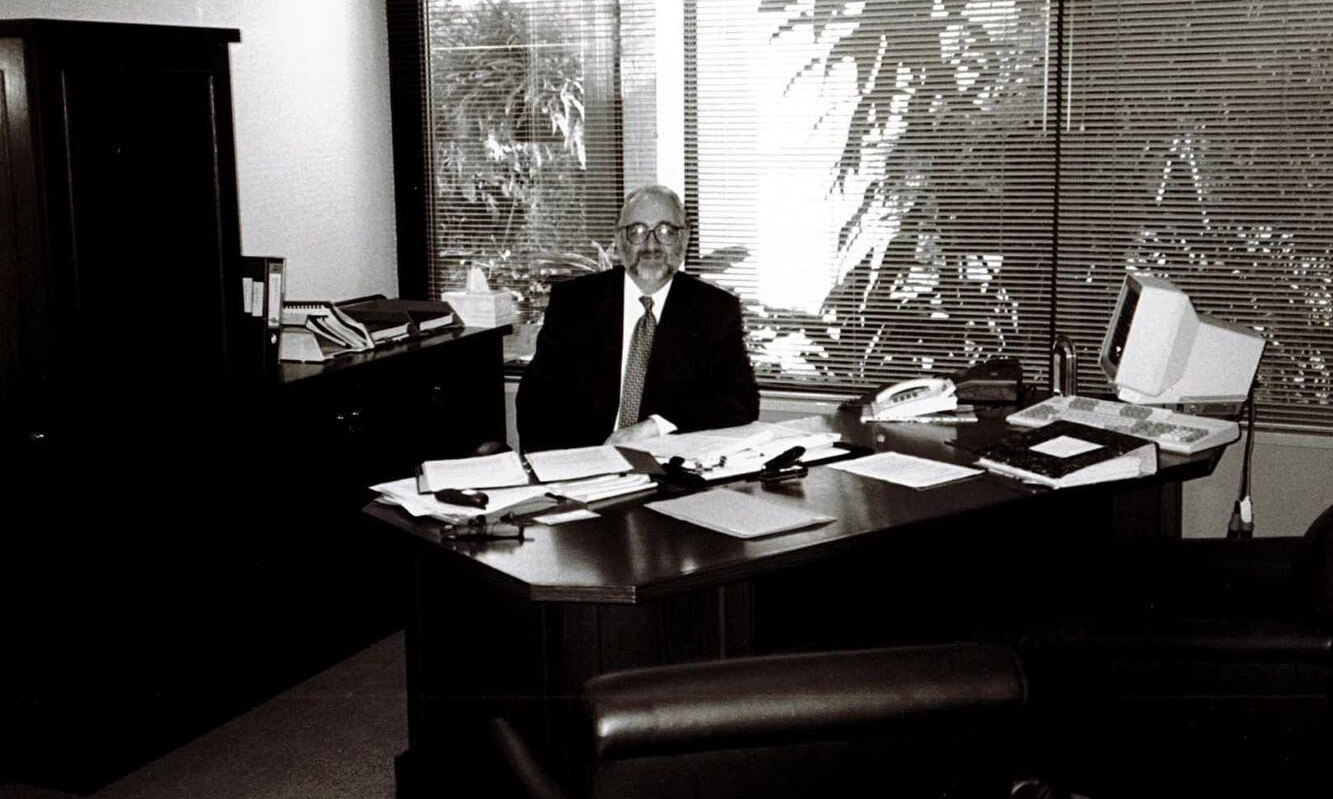
As Queensland Law Society Past President Jeff Mann prepares to step away from the profession which has fascinated him since he was a teenager, he is urging the next generation of lawyers to uphold the foundations of the legal system.
As the sole practitioner and QLS Senior Counsellor lets his treasured practising certificate lapse this week and steps down from his duties, he had four pieces of advice for new lawyers – beginning with a nod to 17th-century English lawyer, statesman, and philosopher Sir Francis Bacon.
“Follow Francis Bacon’s lead,” he lists as the first piece of advice, further elaborating with the second: “Get involved with your community, your profession and never stop studying.
“He (Bacon) viewed a profession not merely as a way to make a living, but as a calling that demands intellectual and ethical stewardship.
“These qualities were instilled in us young practitioners by doyens of the profession such as Gerry Murphy, Peter Crouch, Stuart Foote, Charles Wilson, John O’Keeffe, Toni Petersen and others.
He also encouraged new practitioners to “push themselves” – to lecture and write, therefore contributing to the profession’s collective knowledge and strength.

But his most important piece of advice to early career lawyers is “consciously and conscientiously protect the rule of law”.
“Get to know what it requires in a democracy. Never be afraid to call out bad Acts passed by Parliament and in particular government agencies which flout it.”
For years, he has modelled this commitment through his own work, including his long‑running commentary at thetaxreformer.com.au, where sharp analysis meets sharp humour.
“You may get some laughs from the cartoons,” he said. “I don’t think the revenue offices have laughed much at them, if at all.”
And while the writings of Sir Francis Bacon may have inspired Jeff in his later years, his early inspiration was found at the school library.
“When I was in year 10, I picked up a book in the school library which talked about law. I was fascinated. I spoke to some of my colleagues whose parents were lawyers,” he recalled.
“They told me some of the things their parents did such as acting for people in trouble, presenting cases in court, helping people with wills, family disputes.
“I felt a career in the law was the career for me. In those days at school, you could go into particular classes depending on what you may want to do when you left school, such as law, medicine, engineering, teaching.
“I chose the class directed to a career in law. I was fortunate to get a Commonwealth Scholarship which was a great blessing for my parents.”
His arts/law course was rigorous: six years with four years full‑time followed by two years part‑time.
Jeff was admitted to the profession on 18 February 1969. He was a partner at Tully and Wilson from 1970 until the merger with Chambers McNab and Co in 1981.
“In about 1972, I was appointed as a member of the Lawyers Community Service. This was the first interaction I had with QLS. Its function was for members to go to Inala or the Valley to provide a referral service for the community,” he said.
“It acted like a triage to help with sorting out if a person’s problem raised a legal issue or something to do with government agencies. It was great that so many members signed up to this scheme.
“This was my introduction to the fellowship which being an active member of the profession held so many rewards.
“I remember well going out to Inala in the middle of winter at the end of a long day at the office! There was no air-conditioning at the Inala Community Centre! Sometimes we had a lot of attendees. Sometimes none at all.”
That same year he wrote to QLS complaining that the Society should have an income protection scheme for the profession.
“My complaint was answered by putting me on a committee with Gerry Murphy and others to set one up! We organised the scheme – the Disability Insurance Scheme – with the then State Government Insurance Office,” he recalled.
“Being a member of several committees of QLS over the years was a great joy for me. I got to know many members of the profession and the friendships formed have lasted all these years.
“I also got to know the problems and issues facing the profession and discussing how they could be solved. I look on my time on committees which lasted in some cases several years as my apprenticeship to becoming a member of Council of QLS with the aim that one day I could hopefully perhaps become President.”
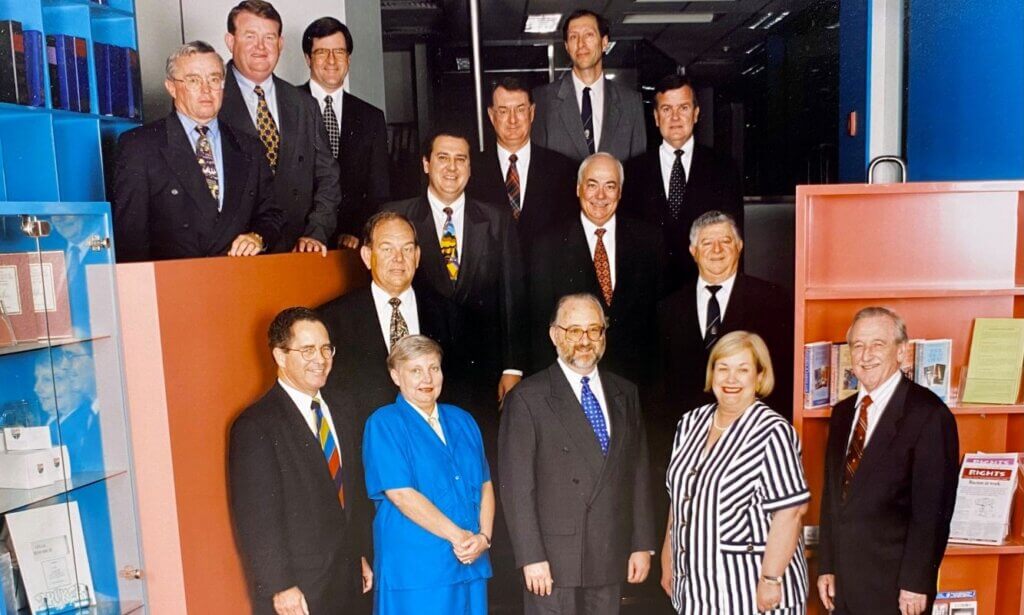
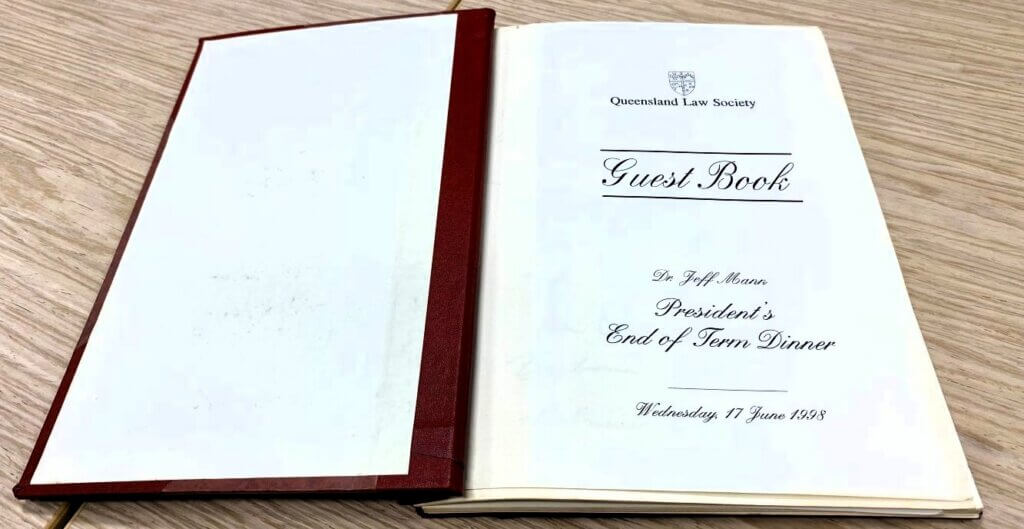
That hope became a reality and Jeff was elected to the Society’s presidency on 16 July 1997 after some intensive campaigning around the state, including writing hundreds of letters to fellow members.
One of his happiest memories as a practitioner is the fellowship he enjoyed as a member of many committees and as part of the QLS Council.
“I wanted QLS and the Council to focus on the big issues which I thought were facing the profession,” he said.
“It was a role I thought I could do and to bring together years of committee work. As President, I set a task for Council Members on what I described as ‘big picture issues’.
“Although some of my relationships with QLS committee and Council members was not always harmonious – we were passionate about our positions – most were. At conferences, in the street, at functions, we knew each other and our respective views. We were at ease with each other.”
Jeff also contributed to the Society and the profession as a QLS Senior Counsellor.
“This was a natural step after being involved in Lawyers Community Service,” he said. “It was a great thrill to help practitioners who thought that they had done something very wrong but when we worked on the issues, we found that that the practitioner had nothing to worry about.
“My help was sometimes ethical and sometimes technical, such as stamp duty! The Senior Counsellor role is a wonderful role and a great expression of regard that QLS has in its nominees.”
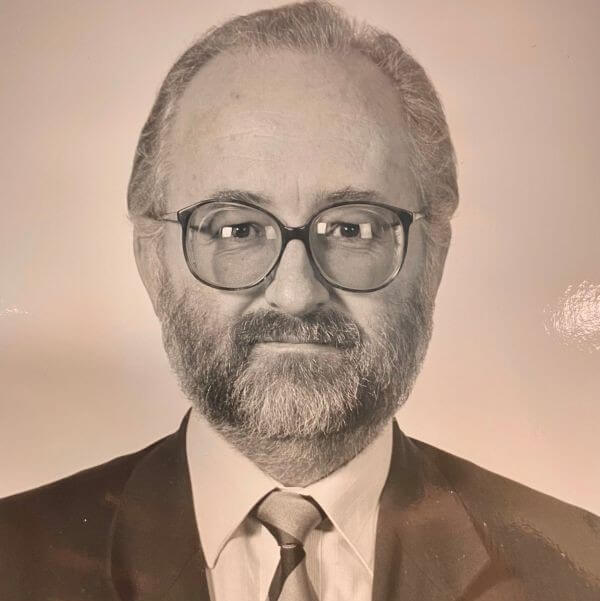
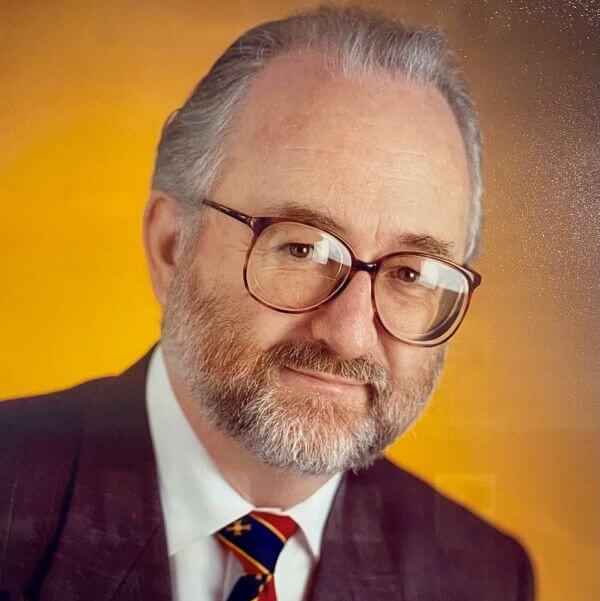

And during a career spanning five decades, Jeff has witnessed the profession transform in many ways from a new gender balance (“This has changed and for the better, if I may say so.”) to the opening up of the profession.
“It is now a national one. That was a hard-fought win. Some practitioners wanted closed borders, something like the fear that Queensland practitioners would be swamped by those ‘down south’, that all law would be practised out of Sydney or Melbourne,” he said.
“That fear has not materialised. But my continuing gripe is that the move to uniform legislation across Australia and then to standardisation is not happening, especially standardised revenue laws which is almost non-existent.”
Technology has also reshaped the profession and Jeff says gone are the days of “secretaries typing everything up”, carbon paper, reference books and paying bills by cheque. And now the spectre of artificial intelligence looms large over firms and young lawyers.
While some fear artificial intelligence will replace lawyers, Jeff remains unconvinced. “AI can never replace the human spirit, the creativity of the human mind,” he said.
“AI has a long way to go. It may one day take over some of the functions of practitioners but I can’t see that happening for a long time.
“I doubt AI will ever replace the art of judgement practitioners bring to their discipline.”







One Response
A fitting tribute to a luminous career and unwavering commitment to excellence and the profession.