


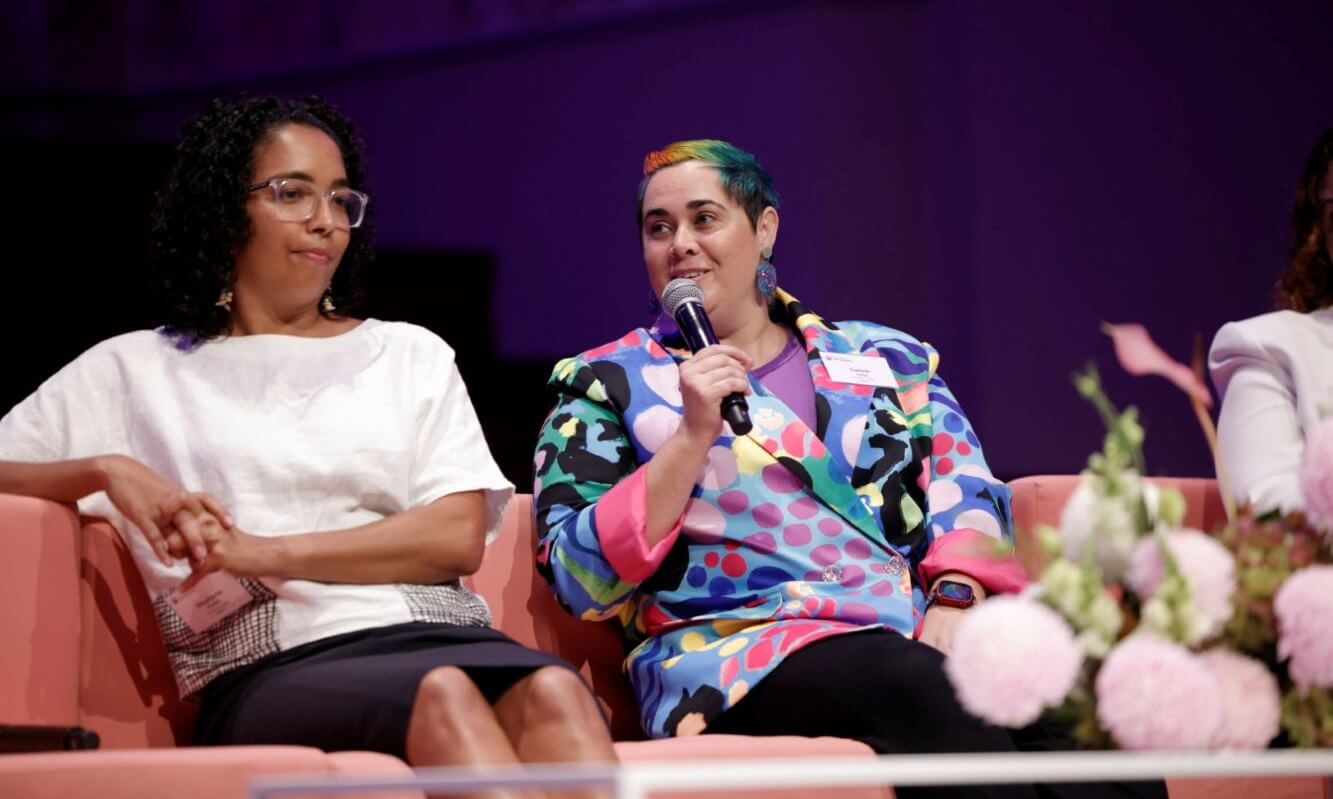
The First Nations Evidence Roundtable – Voices, Evidence and Justice exploring First Nations perspectives and experiences in providing evidence in climate, human rights and native title litigation will be held during NAIDOC Week 2026.
The event, hosted by the QUT Centre for Justice and QUT Faculty of Business and Law, in partnership with the Queensland Law Reform Commission, will be held on 6 July from 5pm to 7pm at QUT Gardens Point campus.
The roundtable will bring together First Nations leaders, legal practitioners, academics and policy makers to consider the importance of First Nations knowledge, lived experience and practical outcomes associated with providing evidence in litigation.
The discussion will be facilitated by Francis Nona of QUT with closing remarks by Avelina Tarrago, QLRC Commissioner.
Ms Tarrago is a Wangkamahdla woman from central-west Queensland. She is a barrister with a practice focused on inquests and inquiries, health, regulatory and administrative law jurisdictions. Ms Tarrago previously had a 17-year career as a Government Legal Officer. In 2014, she completed an Indigenous Fellowship with the Office of the High Commissioner of Human Rights, and in 2023, was appointed to the Board of Legal Aid Queensland.
Mr Nona is a proud descendant of the Dhoebaw clan of Saibai Island. He is a registered nurse with extensive experience across clinical practice, community health, and academia.

He has previously served as the director of an Indigenous community-controlled health service and worked as a lecturer and researcher with the QUT Carumba Institute before joining QUT’s School of Medicine.
Dr Ivan Ingram is a Wiradjuri and Filipino legal practitioner and academic from Parkes, now based in Brisbane. He holds a Bachelor of Laws and Bachelor of Applied Science from QUT, and a Doctor of Juridical Science from the University of Arizona.
Dr Ingram specialises in native title, Indigenous governance, human rights, and truth-telling. He is Managing Director of Regional Economic Solutions and an academic at QUT, teaching First Nations legal histories and legal realities. Previously, he served on Queensland’s Truth-telling and Healing Inquiry and was the first Indigenous person appointed as a Judicial Registrar with the Federal Court of Australia.
Cassie Lang is a leading legal practitioner specialising in Indigenous governance, native title, and cultural heritage. She is consistently recognised in Chambers and Partners and Doyle’s Guide for her expertise in native title and First Nations legal matters.
As a Principal and Co-Founder of Parallax Legal, a 100 per cent Indigenous-owned law firm, she advises traditional owners, corporations, and government on governance frameworks, economic development, and rights-based legal structures that support self-determination and long-term sustainability.
Alofipo So’oalo Fleur Ramsay is a barrister at the Victorian Bar in Australia. From 2023 to mid-2025, Alofipo worked with Blue Ocean Law and represented Vanuatu and the Melanesian Spearhead Group before the International Court of Justice (ICJ) in the Obligations of States in Respect of Climate Change advisory opinion proceedings. As part of her work with Blue Ocean Law, she travelled to Melanesian communities to take testimony on the adverse effects of climate change on their way of life. She was also co-counsel for Samoa. She has expertise in human rights, indigenous rights, climate change law and environmental law and works with Pacific communities’ own law and custom as their expression of environmental law.
Herbert Warusam is an Indigenous traditional owner from the Dhoeybaw Clan of Saibai Island in the Torres Strait. With over a decade of experience in land and sea management, he has dedicated his career to caring for Country through environmental conservation, cultural heritage protection, and the preservation of Traditional Ecological Knowledge. As a ranger with the Torres Strait Regional Authority, Mr Warusam combines cultural knowledge with contemporary conservation practices to support the sustainable management of Saibai Island’s land and sea resources for future generations. He has lived experience of the Pabai Pabai case in Torres Strait.




Share this article