


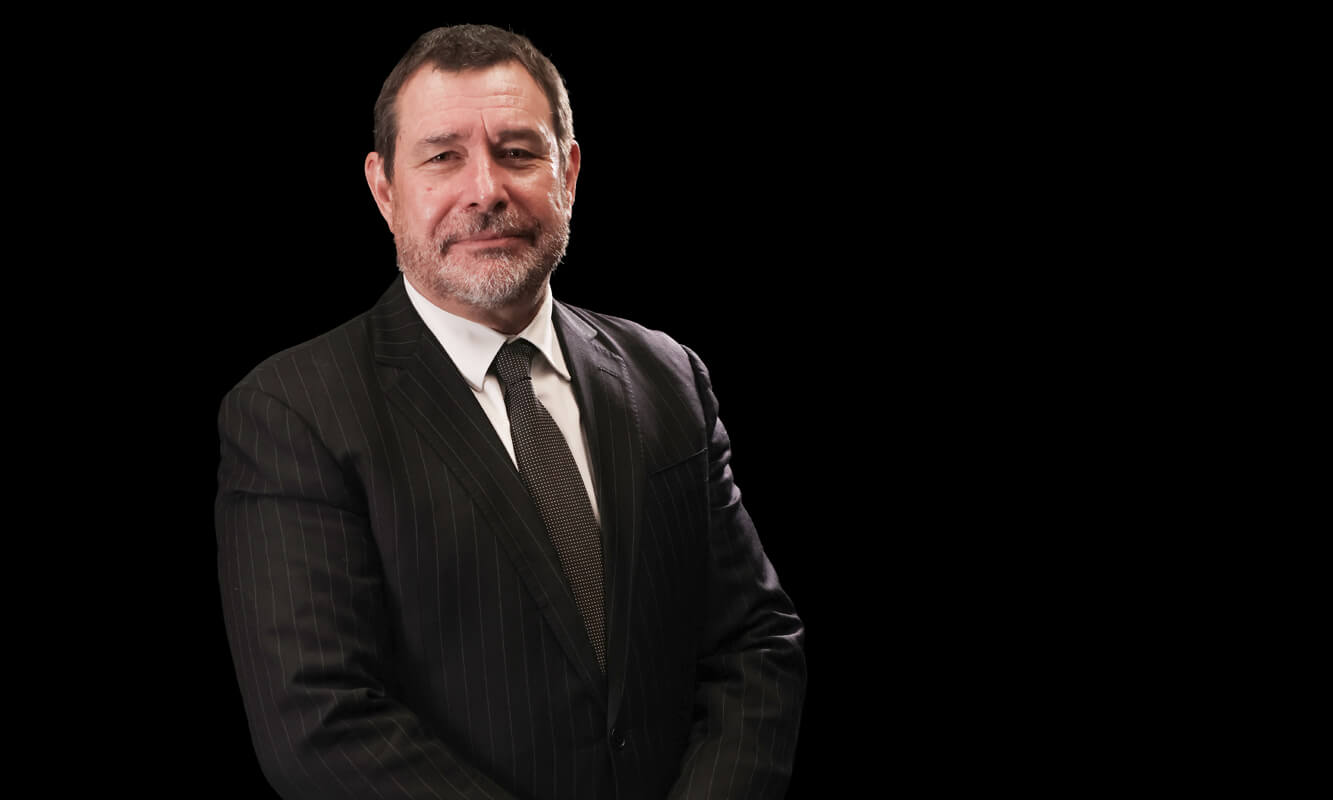
A Federal Court judge has refused to recuse himself in a taxation case over concerns about apprehended bias because his wife, a fellow Federal Court judge, had decided a related matter.
In his Brisbane Federal Court decision published on 9 October, Justice Roger Derrington dismissed an application by Macrolend and Paladin Hydrogen, who are disputing statutory demands by the Australian Taxation Office that they pay a combined $8.4 million in penalties.
The businessman in control of those companies was principal witness for Macrolend in an overlapping matter which was decided by Justice Sarah Derrington in September last year.
The companies sought an order to refer proceedings for reallocation to another judge of the Court, on the ground of apprehended bias.
Justice Derrington ruled the plaintiffs had “failed to establish any basis upon which a fair-minded lay observer might reasonably apprehend that the issues in the proceedings might be determined otherwise than on their legal and factual merits”.
He said the test for apprehended bias established by the High Court’s ruling in Ebner v Official Trustee in Bankruptcy in 2000 had not been satisfied.

He said much of Her Honour’s decision was based on agreed facts, but that the businessman in control of the companies was a key witness on contentious issues.
“Relevantly, the plaintiffs contend that her Honour made a number of findings in relation to his credit, as well as the conduct of the affairs of Macrolend and (related company) GSL in and from Australia,” he said.
“They submit that the existence of those prior findings, which are said to be relevant to the present proceedings, creates a reasonable apprehension of bias in circumstances where Sarah C Derrington J is my wife.”
The plaintiffs submitted that in relation to the findings of fact, there was “a risk that a judge confronted with a possibility of bias might overcorrect by reaching a conclusion contrary to that which the alleged bias might favour”.
“In this case, it is said that I might disregard, or make findings contrary to, those made by Sarah C Derrington J,” Justice Derrington said.
“Whilst one can accept the premise that a judge might make an erroneous decision whilst attempting to appear unbiased and fair, that is not a risk which could conceivably materialise in this case.
“Importantly, there is no reason why the findings of any other judge of this Court (or, indeed, any other court), including those of Sarah C Derrington J, might bear upon any issues arising in these proceedings.”
He said the decision of his spouse could not be tendered as evidence because reasons for judgments and observations made by judges during a trial were generally inadmissible hearsay or opinion evidence.
“Therefore, no opportunity would arise in these proceedings to have regard to those findings or descend into a consideration of their veracity,” he said.
“Indeed, that applies to any decision of any other judge in this or any other court, absent an issue estoppel or some other legal basis on which to consider the decision.”
Justice Derrington said a fair-minded lay observer “would appreciate that a litigant may be involved in several proceedings in which judges make findings, potentially on the basis of overlapping facts and witnesses”.
“Whilst the observer may not know the rules governing the admissibility of those findings, they may nonetheless be expected to understand that each case must be determined on an individual basis, by reference to the evidence adduced in it,” he said.
“It is also accepted that the observer would understand that judges, by reason of their professional training, experience and fidelity to their judicial office, will have a greater capacity than most to discard irrelevant, immaterial and prejudicial information.
“Against that background, the mere fact that I have read a judgment concerning the plaintiffs and (the businessman), in which findings were made which overlap somewhat with issues arising in the present proceedings, would not, without more, provide a reasonable basis for apprehending that I might not approach those issues impartially.
“Nor would my relationship with Sarah C Derrington J provide such a basis. There is no rational reason to apprehend that, because of that relationship, I might adopt her Honour’s findings, depart from them to demonstrate my independence, or resolve the issues otherwise than on their legal and factual merits.”
The plaintiffs were also ordered to pay the Deputy Commissioner of Taxation’s costs.
Read the decision here.





Share this article