

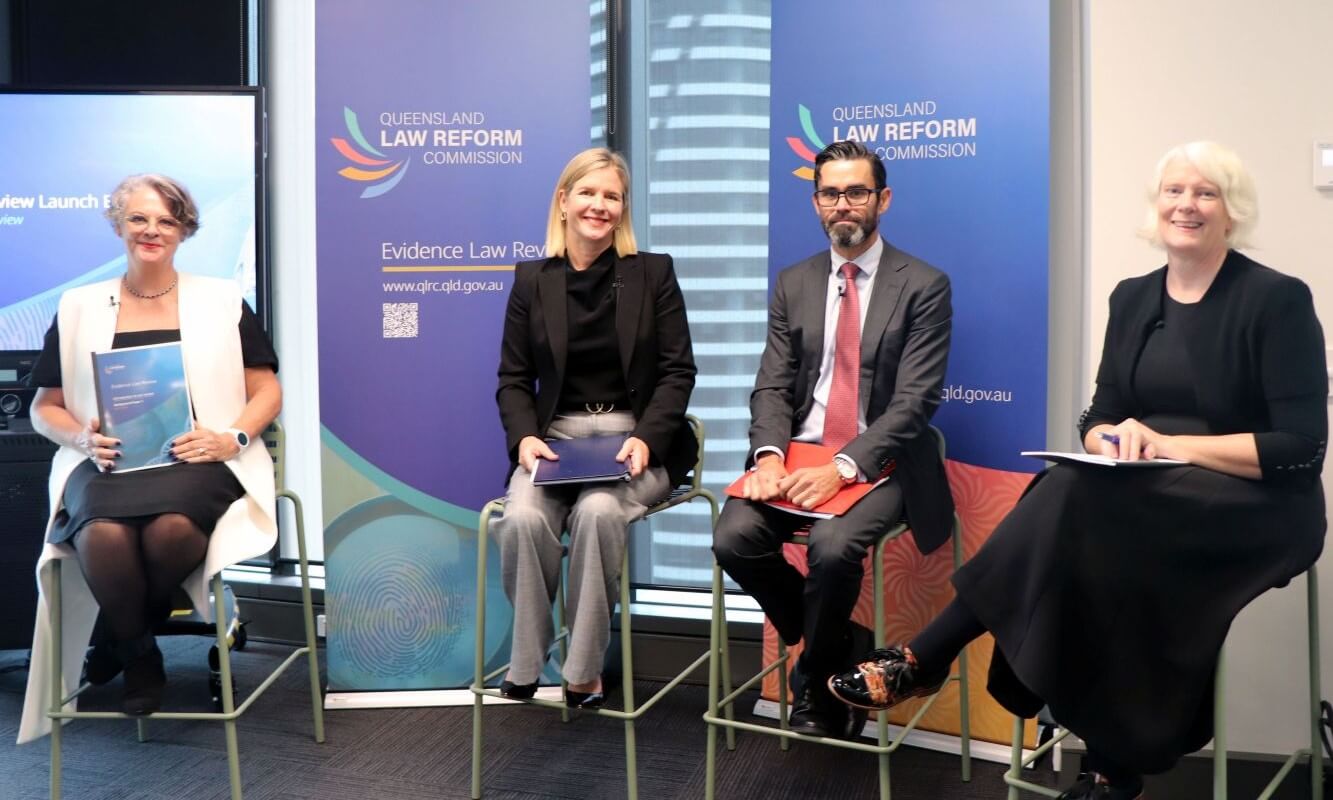
The Queensland Law Reform Commission’s Evidence Law Review team will hold meetings and workshops across the state in coming weeks and is keen to hear from stakeholders.
The QLRC launched its Evidence Law Review on 30 April 2026 with a panel discussion chaired by Fleur Kingham and featuring experts in the field including Justice Crowley KC.
The team will travel to Mt Isa/Townsville from 18-21 May; Roma/Charleville 8-11 June; Rockhampton/ Bundaberg 15-18 June and Cairns/Yarrabah 22-25 June.
They will also visit the Gold and Sunshine Coasts, Beenleigh, Ipswich, Toowoomba, Murgon and Cherbourg mid-year.
Last month’s panel explored the current state of evidence law in Queensland, highlighting its strengths and identifying opportunities for reform. They also discussed valuable lessons from other jurisdictions, including those that have adopted Uniform Evidence Law.
Hundreds of attendees joined the discussion in person and online. A comprehensive Q&A will be published on the website to address the questions raised during the event and provide further insights.
Commission Chair Kingham said: “The conversation started by our panel was rich, reflecting both the challenges and opportunities of this review to improve evidence laws in Queensland – to make them accessible, fit for purpose and future proof.”
Questions, thoughts and ideas can be sent to: QLRCEvidenceReview@justice.qld.gov.au
Also the commission’s final report of its review of criminal defences in the Criminal Code was tabled in Parliament in late April.
The final report Just, clear and modern: Reformed criminal defences for Queensland makes 36 recommendations for reform.
In November 2023, the QLRC was asked to examine self-defence, provocation to assault, killing on provocation, killing for preservation in an abusive domestic relationship and domestic discipline.
It was also asked to consider reforms to practices or procedures relating to those defences or excuses as well as the mandatory penalty of life imprisonment for the offence of murder.
Ms Kingham said: “The Commission’s recommendations would make the law simple and modern, reflect contemporary community attitudes and improve access to justice for victim-survivors of domestic and family violence.”






Share this article