


Queensland Parliament’s Education, Arts and Communities Committee is currently conducting an Inquiry into Elder Abuse in Queensland, with the committee’s broad terms of reference extending to consider ‘opportunities to improve responses to elder abuse in Queensland, within the government, broader community, non-government, and private sectors’.1
Background
The Queensland inquiry is the latest in a series of inquiries on elder abuse that includes the 2015 Queensland parliamentary committee ‘Inquiry into the adequacy of existing financial protections for Queensland’s seniors’,2 and the national inquiry undertaken by the Australian Law Reform Commission (ALRC), which culminated with the 2017 report entitled Elder Abuse – A National Legal Response.3
One recommendation from the national inquiry led to the completion in 2021 of the first ever national elder abuse prevalence study.4 That work, by the Australian Institute of Family Studies, identified that:
‘In the 12 months prior to being surveyed, 14.8 per cent of the sample reported experiencing at least one form of elder abuse … Psychological abuse was most commonly reported (11.7 per cent), followed by neglect (2.9 per cent), financial abuse (2.1 per cent), physical abuse (1.8 per cent) and sexual abuse (1 per cent).’5
Another outcome of the ALRC report was the production of the first ever ‘National Plan to Respond to the Abuse of Older Australians [Elder Abuse] 2019-2023’, which is currently in the process of being updated.6

Despite that activity, many of the ALRC’s 43 reform recommendations remain unimplemented. Key among these are:
- proposed reforms concerning national consistency in enduring powers of attorney laws and the creation of a ‘national online register of enduring documents’;7 and
- the recommendation that ‘Adult safeguarding laws should be enacted in each state and territory … [which] should give adult safeguarding agencies the role of safeguarding and supporting “at-risk adults”’,8 a recommendation that both the Disability Royal Commission and the Independent Review into the NDIS have subsequently supported.9
National reports continue to be delivered – including in the last 12 months by a federal parliamentary committee and the Australian Human Rights Commission – that add further weight to the argument that more needs to be done to address elder abuse.10
Meanwhile there continue to be calls here in Queensland for state-based reform.
Office of the Public Advocate
Five years after the completion of the ALRC report, the Public Advocate’s office produced a two-volume report on ‘Adult Safeguarding in Queensland’. Among that report’s key recommendations were the proposed creation of the position of Queensland Adult Safeguarding Commissioner, and the development of Adult Safeguarding Networks throughout the state.11
In 2023, in order to promote the harmonisation of Australia’s financial enduring powers of attorney laws, the Public Advocate’s office released a ‘Model financial enduring powers of attorney law’, which received the imprimatur of a number of agencies, including the Queensland Law Society and the Law Institute of Victoria.12
All through this time, of course, Queensland’s elder abuse support and response agencies have been working in a field characterised by high numbers and complexity.13
Legal support
The legal profession in Queensland has been pivotal in both preventing and responding to elder abuse, leveraging its expertise to advocate for systemic reforms, provide direct support to affected individuals, and educate the community.
The Queensland Law Society, particularly through its Elder Law Committee, has been instrumental in highlighting and addressing the complexities of elder abuse. In 2022, the Public Advocate partnered with QLS in updating the ‘Elder abuse: Joint Issues Paper’, which had first been released in 2010, examining the legal environment surrounding elder abuse, and discussing topics such as human rights, the guardianship regime, and access to legal assistance for older persons.14
Community Legal Centres (CLCs) across Australia have been at the forefront of preventing and responding to elder abuse through pioneering service models, early advocacy, and systemic reform. Their leadership spans decades and is grounded in values of human rights, access to justice, and client-led support.
Caxton Legal Centre
Caxton Legal Centre has been a national leader in this space since the 1990s. It was one of the first legal services in Australia to recognise elder abuse as a distinct legal and social issue, launching the Older Persons Legal Outreach to provide targeted advice to older people on matters like financial exploitation, family agreements, and powers of attorney.
This early work laid the foundation for Caxton’s development of the Seniors Legal and Support Service, a multidisciplinary model that integrates legal and social work support to address the complex drivers and impacts of elder abuse, now expanded statewide and assisting thousands of older Queenslanders each year.
Caxton has since expanded its impact through health justice partnerships, embedding legal services into public hospitals, and delivering community legal education to empower older people across diverse settings.
It has played a key advocacy role in shaping national conversations on elder abuse, contributed to law reform efforts, and helped establish Elder Abuse Action Australia, which serves as the national voice for action on elder abuse.
Aged and Disability Advocacy Australia
Meanwhile Aged and Disability Advocacy Australia (ADA Australia) has provided information and advocacy support to people with a disability and older people who need to access care and support, or who have concerns about the quality of the care and support they are receiving.
In providing advocacy support, advocates have often observed that clients are experiencing high levels of abuse that draw inadequate responses. Several years ago, ADA Australia utilised a small proportion of its Commonwealth funding to assist people living in residential aged care to access advocacy in relation to the conduct of their attorneys, guardians, administrators or informal decision makers (often family members), who tended either to be socially restricting the older person, or financially abusing them. The interplay between the Commonwealth-regulated aged care system and Queensland laws on guardianship and enduring powers of attorney is not well understood, which creates the opportunity for abuse to occur.
ADA Australia has also received ongoing community legal centre funding to establish ADA Law, which provides tribunal representation for people who are subject to guardianship and administration applications, or who are involved in hearings concerning their enduring power of attorney. Many of these cases involve elements of harm and abuse. ADA Law has developed specific expertise in the role of independent representative,15 a statutory role to which QCAT can appoint someone in order to represent the views, wishes and preferences of the adult. The representative can then present this information to the tribunal and propose a way forward that promotes and safeguards the adult’s rights, interests and opportunities. Many of these appointments occur following a request by QCAT, often in times when there are serious concerns for the older person’s safety.
ADA Law has also recently been able to establish a Seniors Legal and Support Service Outback Outreach service, providing specialist elder abuse education and responses to a wide geographical area ranging from Mt Isa down through central outback Queensland and extending to southwest Queensland. This service has been built on existing health and community networks across the region.
As ADA Australia’s response to elder abuse has grown, so has the development of web-based educational resources to better inform the general community. ADA Australia has recently undertaken projects designed to challenge ageism, partnering in this with Celebrate Ageing.
Conclusion
We are now at a critical juncture, with Queensland’s current parliamentary inquiry due to be completed by 12 December 2025. This will add further recommendations to a field that is not short on reform proposals.
To date the Education, Arts and Communities Committee, which has held hearings throughout the state, has collected 119 publicly available written submissions, which includes submissions from each of our agencies.16
In addition to the potential reforms already identified in this article, the proposed and potential elder abuse reforms are many and varied. They include:
- improved service provision in rural and remote parts of the state;
- improved education of people (and in particular attorneys) about the operation of enduring powers of attorney;
- more targeted First Nations education about preventing abuse;
- safe housing options for older people escaping abuse;
- greater coordination among services; and
- better, and more uniform, data capture.
Among all the important potential reforms being considered by the committee, we would nominate three that are the most pressing:
- the creation of a stand-alone adult safeguarding agency;
- the development of clear governance arrangements between that agency and existing legal, advocacy and support services; and
- the development of a robust Queensland plan to prevent and address the abuse of older Queenslanders.
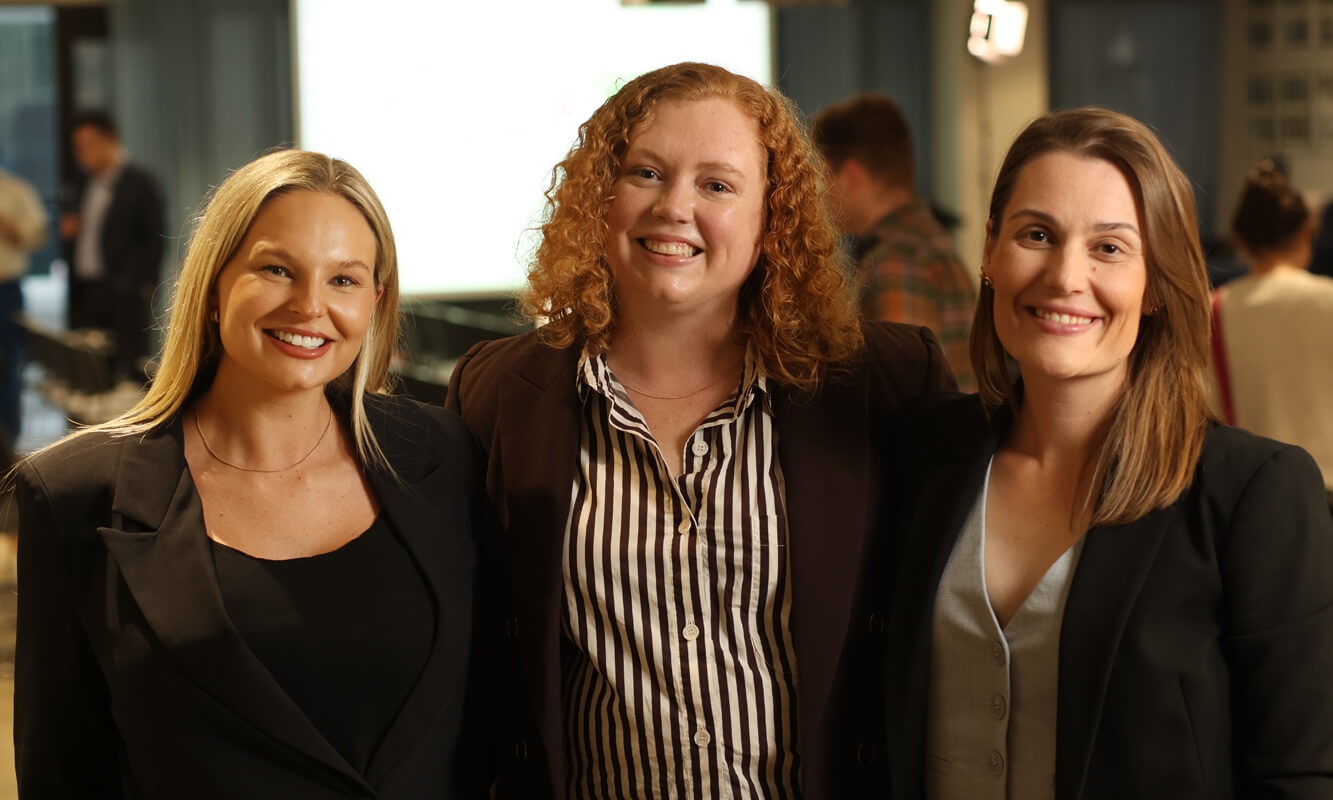
This article was written by: John Chesterman, the Queensland Public Advocate and a member of the Australian Law Reform Commission’s advisory committee for its inquiry into elder abuse; Cybele Koning, CEO of Caxton Legal Centre; and Geoff Rowe, CEO of Aged and Disability Advocacy Australia.
Footnotes
1 Education, Arts and Communities Committee, Queensland Parliament, Inquiry into Elder Abuse in Queensland, ‘About the inquiry’, available at https://www.parliament.qld.gov.au/Work-of-Committees/Committees/Committee-Details?cid=269&id=4455.
2 Communities, Disability Services and Domestic and Family Violence Prevention Committee, Queensland Parliament, ‘Inquiry into the adequacy of existing financial protections for Queensland’s seniors’ report, August 2015, available at https://www.parliament.qld.gov.au/Work-of-the-Assembly/Tabled-Papers/docs/5515t876/5515t876.pdf.
3 Australian Law Reform Commission (ALRC), Elder Abuse – A National Legal Response, Final Report, 2017, available at https://www.alrc.gov.au/wp-content/uploads/2019/08/elder_abuse_131_final_report_31_may_2017.pdf.
4 ALRC, Elder Abuse – A National Legal Response, Recommendation 3-5; Australian Institute of Family Studies (AIFS), National Elder Abuse Prevalence Study: Final Report, 2021, available at https://aifs.gov.au/sites/default/files/publication-documents/2021_national_elder_abuse_prevalence_study_final_report_0.pdf.
5 AIFS, National Elder Abuse Prevalence Study, p. 32.
6 ALRC, Elder Abuse – A National Legal Response, Recommendations 3-1 to 3-4; ‘National Plan to Respond to the Abuse of Older Australians [Elder Abuse] 2019-2023’, available at https://www.ag.gov.au/rights-and-protections/publications/national-plan-respond-abuse-older-australians-elder-abuse-2019-2023.
7 ALRC, Elder Abuse – A National Legal Response, Recommendation 5-3.
8 ALRC, Elder Abuse – A National Legal Response, Recommendation 14-1.
9 Royal Commission into Violence, Abuse, Neglect and Exploitation of People with Disability, Final Report, 2023, Recommendation 11.1; Independent Review into the National Disability Insurance Scheme, Working together to deliver the NDIS, Final Report, 2023, pp. 203, 206.
10 See, for example, Parliamentary Joint Committee on Corporations and Financial Services, Commonwealth Parliament, Financial abuse: an insidious form of domestic violence, December 2024, available at https://parlinfo.aph.gov.au/parlInfo/download/committees/reportjnt/RB000471/toc_pdf/Financialabuseaninsidiousformofdomesticviolence.pdf; Australian Human Rights Commission, Empowering futures: A national survey on the understanding and use of financial enduring powers of attorney, 2024, available via https://humanrights.gov.au/our-work/age-discrimination/publications/empowering-futures-report-enduring-powers-attorney-2024; John Chesterman, ‘Supporting and safeguarding at-risk adults’, Policy Futures: A Reform Agenda, University of Queensland and Winston Churchill Trust, Issue 3, 2024, pp. 34-39.
11 Queensland Public Advocate, ‘Adult Safeguarding in Queensland. Volume 2. Reform Recommendations’, 2022, Recommendations 1 and 10; available at https://www.justice.qld.gov.au/__data/assets/pdf_file/0011/749027/adult-safeguarding-vol-2-final.pdf.
12 ‘Model financial enduring powers of attorney law’, 2023, available at https://www.justice.qld.gov.au/__data/assets/pdf_file/0007/770794/final-qpa-model-financial-enduring-powers-of-attorney-law.pdf.
13 See, for example, A. Gillbard, ‘Elder abuse statistics in Queensland: Year in review 2023–24’, Elder Abuse Prevention Unit, UnitingCare, 2024, available at https://eapu.com.au/wp-content/uploads/2024/12/UC-Elder-Abuse-Statistics-in-QLD-Year-in-Review-2024.pdf.
14 Queensland Public Advocate and Queensland Law Society, ‘Elder Abuse: Joint Issues Paper’, 2022, available at https://www.justice.qld.gov.au/__data/assets/pdf_file/0006/707973/elder-abuse-joint-issues-paper-20220209.pdf.
15 Guardianship and Administration Act 2000 (Qld), s. 125.
16 Submissions to the Education, Arts and Communities Committee, Queensland Parliament, Inquiry into Elder Abuse are available via https://www.parliament.qld.gov.au/Work-of-Committees/Committees/Committee-Details?cid=269&id=4455. Our submissions are numbered 31, 109 and 119.





Share this article