




The name Trilby Misso became synonymous with personal injury law in Queensland after first opening its doors in 1956, at Redcliffe.
The Sri Lankan founder was proudly joined by son Hilton in 1964. While the firm has changed hands and Hilton’s career changed tact, he never lost his passion for justice.
Now aged 80, the honorary member of the Queensland Law Society has branched out yet again to write his own story.
How to Manifest Success: 50 Lessons on Leadership, Love and Life is seen as part memoir, part manifesto and part business book.
In his book, Hilton shares how he learnt to succeed and how difficult early experiences helped him pioneer legal innovation and build a lengthy career spanning law, property, childcare, tech and philanthropy.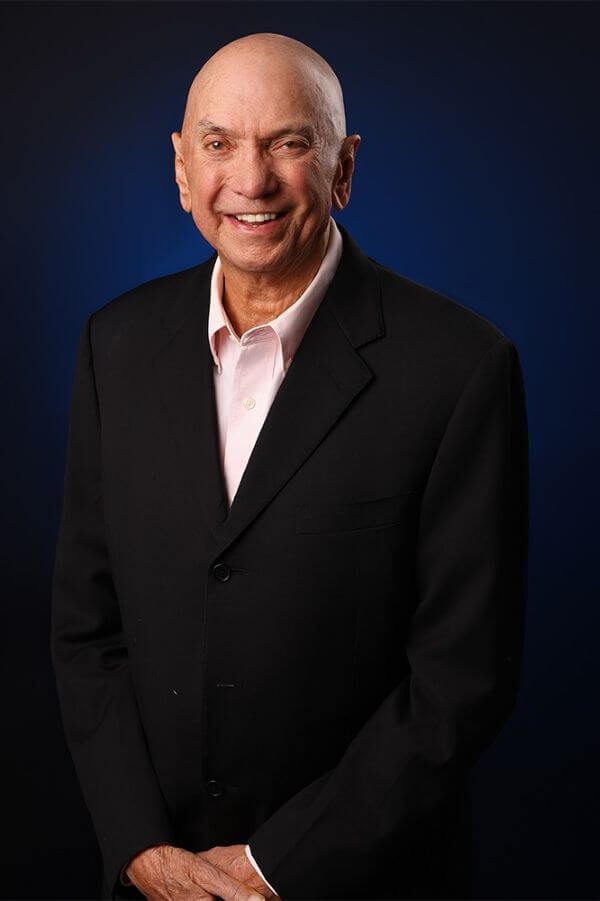
Hilton Misso spoke to Proctor about his latest venture.

What first attracted you to the law ?
“I was inspired by my father who was himself a criminal lawyer and later a general practitioner, but one who was principled in always representing the less fortunate. As a young boy I always uttered the dreams of being a lawyer like my dad and that I wanted to do business and pursue life’s dreams and purpose in a grand way. Dad always wanted one of his children to be a lawyer and when it became apparent that I was his only hope both my mum and dad did everything to keep me engaged whereupon I made a ‘pledge’ to Mum that I would become a lawyer no matter what. This however was easier said than done.”
You mentioned civil unrest, childhood illnesses and educational struggles in your book, could you explain those challenges?
“The civil unrest (in Sri Lanka) was foreshadowed by my father when Bandaranaike came to be elected to lead the country. My father predicted political unrest and decided immediately to leave the country which he did within three weeks of the election. In 1956 my father left with us as family, taking with him only the carry-on luggage. He knew it meant the surrender of all his property in the country otherwise, which eventually occurred. I was then 10 years of age.
“My childhood illnesses comprised of, as a result of a complicated breach birth, having a history of poor health all my life and of all forms of respiratory including asthma, all forms of virus and other infections of that era. My parents were informed that I would not survive the hour, the night the day, the week, the month, the year etc and here I am today more excited and enthusiastic about life than most at the age of 80 (December 2025), with a continued aspiration to ‘serve’ for as long as I can and hopefully to the age of 105.
“Educational struggles were many given numerous factors too many to mention, but which were caused by my being challenged with my poor health and also weak physique which enabled my being the subject of bullying. I thus suffered low self-esteem and low confidence. I was promoted a grade mid year in primary school, which was a big mistake because from that time I struggled with my grades and the new group in class. This caused me to protest within and became less interested in study, even though I knew within that I would be ‘something’ when I grew up.
“I suffered in my grades throughout primary and secondary often failing to make the required standard to go up but I refused to stay back. This eventually caught up with me when I had to repeat grade 12 but, I failed yet again a second time. My nemesis was English (even though it was the only language I ever spoke). The book talks of those struggles and how I eventually beat the odds and finally made it to University of Queensland and thereafter passed all the subjects well in university.”
What do you think is the key to success?
“Success is best defined as ‘the achievement of a desired outcome or the fulfilment of a goal that aligns with your personal values purpose and vision for life’…
“I always approached life and success as a journey rather than a destination. It was more about philosophy and human behaviour rather than materialism. I always wanted to do law and psychology/philosophy and wanted to pursue a double degree but did not because I felt was not smart enough. I made up for that by making the study of the above as my hobby and passion in life. This included the subject of ‘Why do some have and others have not’ and what is the pivotal difference?
“The book is framed with 50 lessons but this does not mean you need to follow all or even any of the lessons but I promise that there will be something of value in there for the reader, and it takes only one little of that something, that has the power to ignite the reader to achieve a success beyond one’s wildest imagination if they so choose to apply themselves accordingly. The key is ‘action’ and the differentiator is ‘belief’.”
How did the “no win, no fee” idea come about ?
“As a young lawyer I was excited and enthusiastic about an amazing future because I had by now been studying all the dynamics of ‘success’ as a lifetime passion hobby and commitment. I travelled far and wide to learn which included numerous trips to America to learn how they did it at a ground level of the ‘simple and ordinary’ general advocates. America was exciting and different as they worshipped their heroes and did not suffer the tall poppy syndrome that we so often seem to encounter here in Australia.
“America was a great source of inspiration to me. Naturally, the system of no win no pay was big in America but they had the benefit of contingency fee levels which made it worthwhile but we did not in Australia. I did however feel there was a shift happening with the liberalisation of advertising.”
What lessons would a young lawyer learn from reading your book?
“There are 50 lessons takeaways and drills each relating to firsthand experiences I had in my journey. They are practical and not just theoretical. I have travelled a journey of learning success and business since 1964. I have done so with the commitment of earning my stripes to enable me to rise and tell the world to inspire and empower all those interested in ‘lifetime growth for a better future through mindfulness’.
“There is lots in the book that a young lawyer would learn from. It is not necessarily about learning and applying all or any one of the 50 lessons. It may be just something that they read within the book that will ignite their passion. This could come from anywhere within the book and which is for the reader to find. Reading the book will reveal the secret.”
What does it mean to you to have been awarded Honorary Membership of QLS?
“It is the epitome of one’s legal career. To me it meant more than having served this amazing profession for so long but for being acknowledged for the value of the service that you have provided.
“Sure, I have been a practising lawyer for nearly 55 years now but during that time I followed my father’s lead with serving the less fortunate in so many different ways and was really inspired by the personal vision I adopted in my late 20s with the view that any mission I undertake must be aligned with that vision. Needless to say, that all that is underpinned by what dominates the culture which is one’s values, which must again be always aligned from your personal life to all the missions you undertake in life. I can with a degree of pride say that I have done exactly that.
“In particular the Law Society convened and hosted two formal functions to acknowledge and award those lawyers, the lawyers who had proudly served the profession for defined periods. I was invited to both such functions. In particular, a retired judge who hosted one such occasion kindly acknowledged me for having lead an amazing team in not only introducing the no win no pay in the way we did, but to have also disrupted and transformed the way in which personal injury law claims services were provided. I was truly blessed by having had the support of the most amazing professional services legal team that I had ever worked with over that time in the profession.”






Share this article