


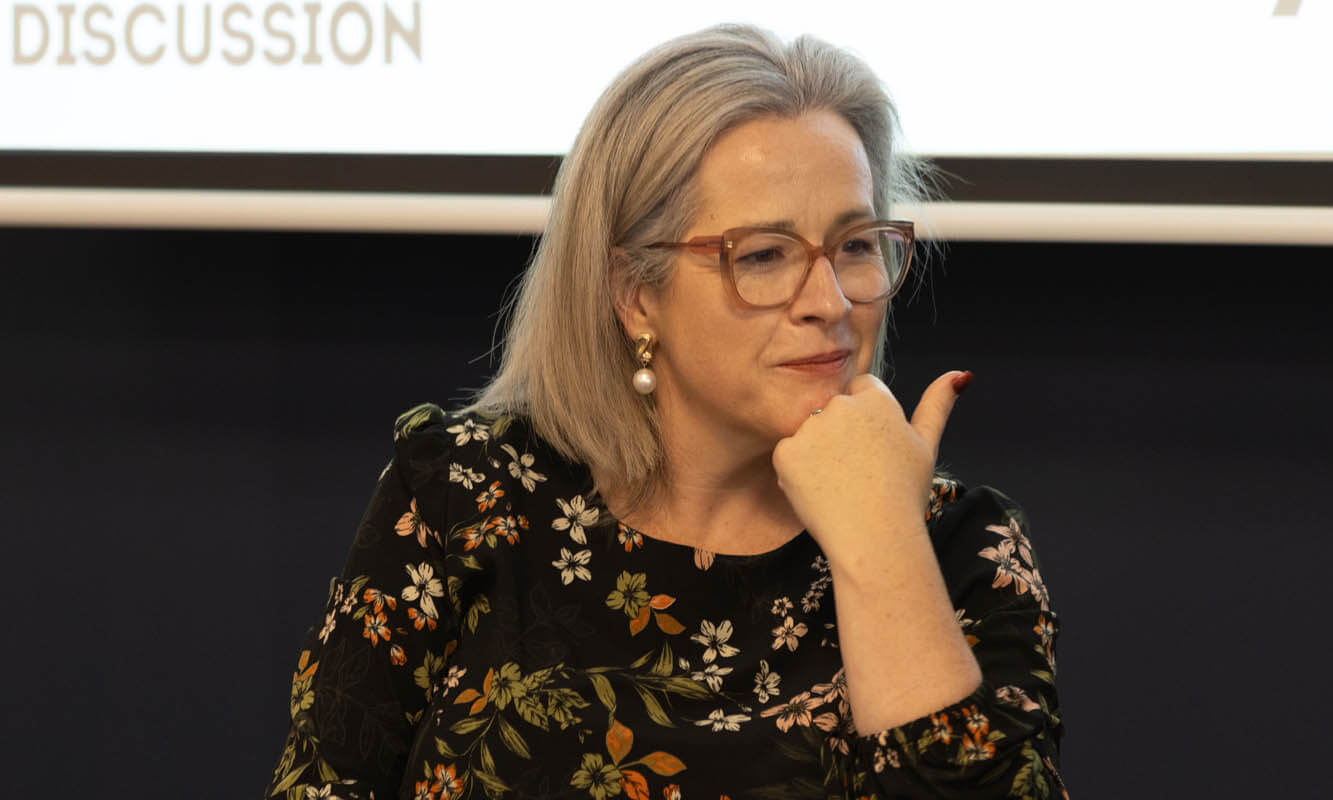
Federal Circuit and Family Court of Australia Judge Her Honour Kara Best urged the profession to “soften its gaze” to help stop the justice system from failing women and children at a recent International Women’s Day event in Brisbane.
Speaking as part of the Australian Legal Practice Management Association (ALPMA) panel on 18 March, Judge Best was joined by Legal Aid Queensland CEO Nicky Davies, Challenge DV General Manager Linda Smith and host Ann‑Maree David, College of Law National Executive Director, to examine the structural and cultural barriers that still shape women’s experiences of justice.
The panel warned that Queensland’s justice system continued to fall short for women, particularly those seeking protection, despite “on paper doing well”.
Judge Best told the audience that while reforms have been introduced across jurisdictions, the system still reflects assumptions and processes built decades ago.
Her Honour noted that women reporting violence or coercive control often face fragmented support pathways and delays that compound trauma.
“I think we need to soften our gaze,” Judge Best said. “Soften our gaze upon those who find themselves in difficult circumstances.

“Because there but by the grace of God go all of us … I think that we sometimes make a mistake when we mutualise some of what goes on in difficult families.
“When I say difficult families, families are struck by difficult circumstance.
“So what we know through the work that the Court does in recognising risk at the outset is that some 77 per cent of notices of risk that are filed at the beginning of a family law matter reveal an allegation as to the exposure or incidence of family violence.
“Thereafter, the statistics are nearly as high in relation to allegations of abuse, exposure to risks of abduction, mental health difficulties and alcohol and drug abuse.”

Judge Best said the evidence further reflected that many of these risks occurred together.
“We know that maladaptive behaviours tend to flow from being subjected to long-term violence and coercive control,” Her Honour said.
“We know that many perpetrators then use that maladaptive behaviour in a victim; the fact that a mother for example might be drinking too much or using another drug which is not appropriate, as a way of targeting and controlling any prospect of them leaving or thinking that they would retain the care of a child or could potentially get a job or in any way move forward in their life away from the abuser.
“What that tells us is that we can’t mutualise these situations, and dismiss both parents.
“Just because there are problems on both sides, they need to be individually assessed and assessed in detail rather than writing off both parents as being problematic and a risk to their children.
“That is rarely the case. It is rarely the case that both parents are at risk of the same nature or severity.
“It doesn’t mean there isn’t risk on both sides, but it needs to be weighed accordingly.”
A pattern emerges
Ms Davies said LAQ could identify patterns of behaviours with disadvantaged women who had difficulty accessing justice.
“The pattern we see is that they have a whole cluster of problems,” she said.
“Legal problems, social problems, and we need to try and get them through it to give them a pathway to safety and security.
“It’s becoming increasingly difficult to do that, and it’s becoming increasingly difficult to find practitioners who are prepared to do this work.
“Often, it’s the legal aid lawyers and other parts of the legal assistance sector that are actually there to try and glean the information and provide it to the courts, if it’s necessary to go to court.
“And often, it’s not just the family law courts. It’s domestic and family violence, child protection.
“Often, some of these women are criminalized because of their behaviours, particularly when gendered violence and poverty intersect.
“That is a really challenging area and we find that the further people are from South-East Queensland, the more difficult it can be for them to access services, both legal and social supports and other supports and housing.
“Most women and children leave their homes because of domestic and family violence.
“It’s the leading reason for people leaving home.”
In addressing gaps in access to justice and ways to affect cultural change, Ms Smith had two items on her “wish list”.
“The first is more practical. I’d really like you to introduce a pro bono policy within each of your firms, which requires your lawyers to spend some time in a community legal setting if you’re not prepared to go on the panel and to do a certain amount of work in that space,” she said.
“It’s fantastic education in terms of not only the practice of law in difficult circumstances, but importantly, those socio-factors and psychological factors that impact. It’ll only help your lawyers to become better people and lawyers.
“The second aspect is to say we get the behaviour we tolerate, and you know we’re dealing with misogyny, it just can’t be tolerated. We know that it’s at the source of violence in this country.”





Share this article