



Removing board members or CEOs from health organisations without grounds and due process could affect their reputation, mental health and future prospects, Queensland Law Society Legal Policy Manager Wendy Devine told a recent public hearing.
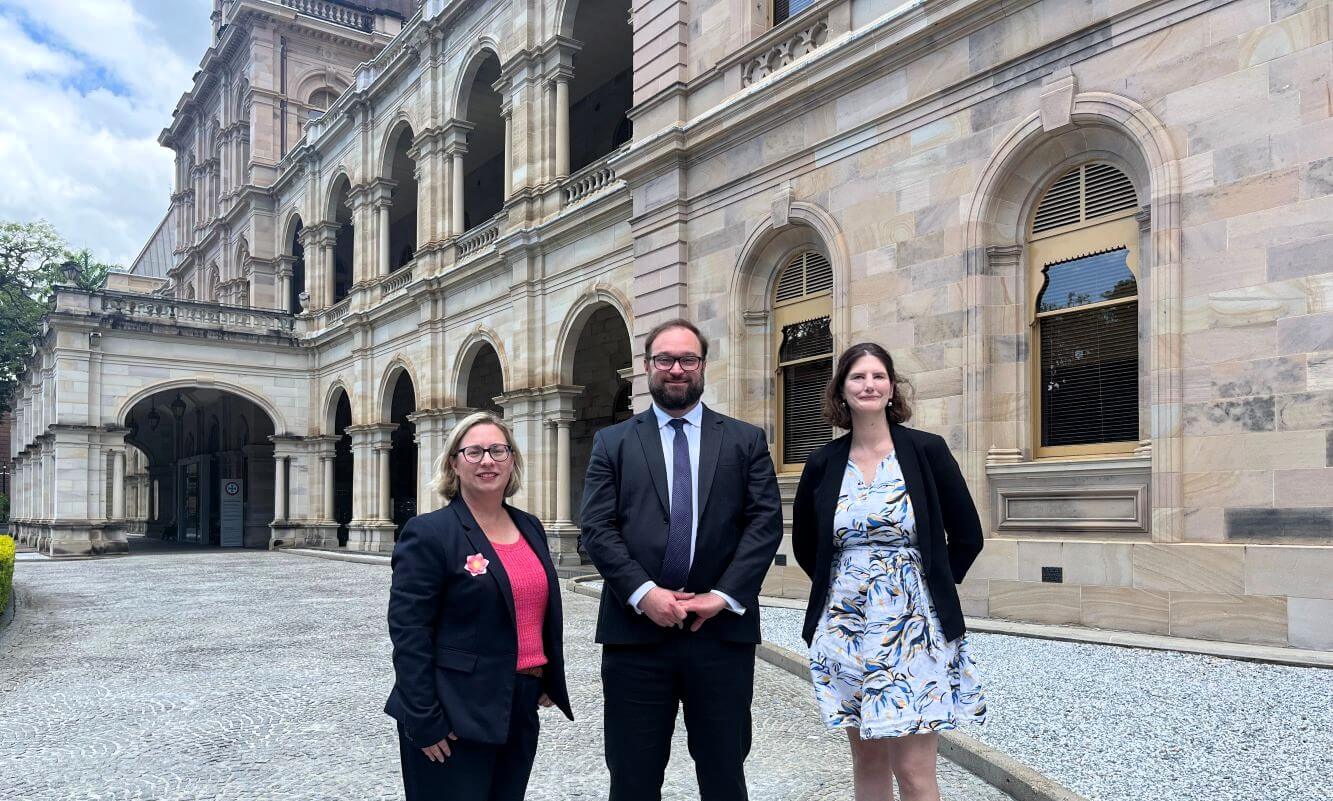
Wendy joined QLS Industrial Law Committee member Rohan Tate and QLS Principal Policy Solicitor Kate Brodnik at the 19 November hearing before the Health, Environment and Innovation Committee into the Health Legislation Amendment Bill (No. 3) 2025.
The Bill amends eight pieces of health portfolio legislation with the intent to improve the governance of the health system and ensure relevant legislation operates effectively.
Wendy told the committee that the QLS written submission focused on the amendments to the Hospital and Health Boards Act 2011 and other legislation regarding the processes for the removal of board members, and the amendments regarding the CEO for Health and Wellbeing Queensland and the Queensland Pharmacy Business Ownership Council.
“The amendments allow a board member or CEO to be removed from their position without grounds which is inherently unfair and lacking in transparency; denying those impacted with any meaningful natural justice and procedural fairness,” Wendy said.
“This new process risks creating psychosocial hazards for the impacted individuals.

“In its briefing to this committee, the department indicated that ‘the broadened removal powers in the Bill will enable the Governor in Council to act swiftly on the rare occasions where the government or the public have lost confidence in an office holder’.
“However, the Bill as drafted does not refer to extraordinary or rare circumstances.
“The Bill also does not reflect the explanatory notes which suggest that natural justice would ordinarily be observed when exercising these powers, including giving an affected person notice of a proposed action, and an opportunity to be heard.”
She said the submission outlined several proposed amendments to the Bill that would “lessen the adverse effects of these broadened powers, while still allowing for change to deal with the issues outlined by the department about the timeframes under the current processes”.
“However, we would also support broader reform,” Wendy said. “QLS supports the timely progress of the revised Welcome Aboard materials and appointment guidelines published by the Department of Premier and Cabinet to ensure that office holders are appropriately appointed and candidates are managed pursuant to a clear evaluation process prior to appointment and renewal.
“We also suggest preparation of specific guidance around processes for removal of office holders.
“Robust appointment and other processes would likely address some of the concerns raised in the explanatory materials, while ensuring individuals’ fundamental legal rights are protected.
“Transparency in these processes will promote public confidence in the roles and in government’s decision-making. This would also help attract good candidates to these very important positions.”
Committee chair and Member for Southport Robert Molhoek said the committee had been given a brief which demonstrated significant precedents, more than 30 examples, for the clause and questioned if the Society had previously raised concerns.
“It seems to be common practice to have a fairly broad clause on this matter,” he said.
Wendy responded, saying while the clause was “not unusual”, it was appropriate to take the opportunity to revisit the drafting.
“We would suggest simply because it has been written in the past does not mean we should not reconsider it again,” she said.
“Each time legislation is introduced is an opportunity to consider it and scrutinise again, and to assess if it is really meeting with the needs of what these boards need and what the community needs as well.
“There are multiple boards affected by this legislation. We also note that it has some retrospective effect as it affects those already in positions. The fact it has been written before doesn’t mean that we perhaps shouldn’t call it out now and check whether that is really the best way forward.”
The QLS written submission identified legislation dealing with similar issues which took a better approach and highlighted legislative examples protecting a CEO’s employment entitlements.
Kate said QLS routinely advocated for robust procedural fairness and natural justice provisions in other legislation.
Wendy said QLS recognised the government needed flexibility and there were rare circumstances where quick action was needed.
“Our concern is that the explanatory notes suggest that natural justice would be afforded. In reviewing the health and hospital guidance material for board appointments that process isn’t reflected in there with respect to removal,” she said.
“Our recommendation as we flagged in our submission is if this bill proceeds in its current form then we would recommend at the very least that those documents be updated to reflect natural justice procedures.
“That would mean that those who take on these positions understand the process that’s likely to apply to them in the event that something needs to happen.
“We’d also flag that the advantage of a natural justice process and the opportunity to be heard by the person affected can often give rise to further facts or to a better understanding of their position and what their particular situation is.
“That opportunity to be heard is really important to make sure that all of the facts are understood before a final decision is made because removal from a board does affect someone’s reputation and does affect their potential to be appointed in similar positions in the future.”
Deputy Chair and Member for Greenslopes Joe Kelly asked about the practice of removing someone from a workplace setting if they posed a risk to an organisation and still having procedural fairness.
Rohan replied: “That is how it should be done … there would be a capacity to stand down and put someone effectively on gardening leave while an investigation occurs and findings can be made. “
In its written submission, QLS highlighted the amendments have retrospective effect. The changed processes will apply to existing office holders, introducing a power to remove without reasons which did not exist when the individuals agreed to enter into their current contracts.
QLS recommended amending the Bill to preserve a CEO’s contractual and other employment entitlements following removal, noting existing legislative examples which give such protection.
The committee is due to table its report on Friday, 28 November 2025.





Share this article